


Hartek Power Private Limited and the Global Quest for Grid Stability with Renewable Energy
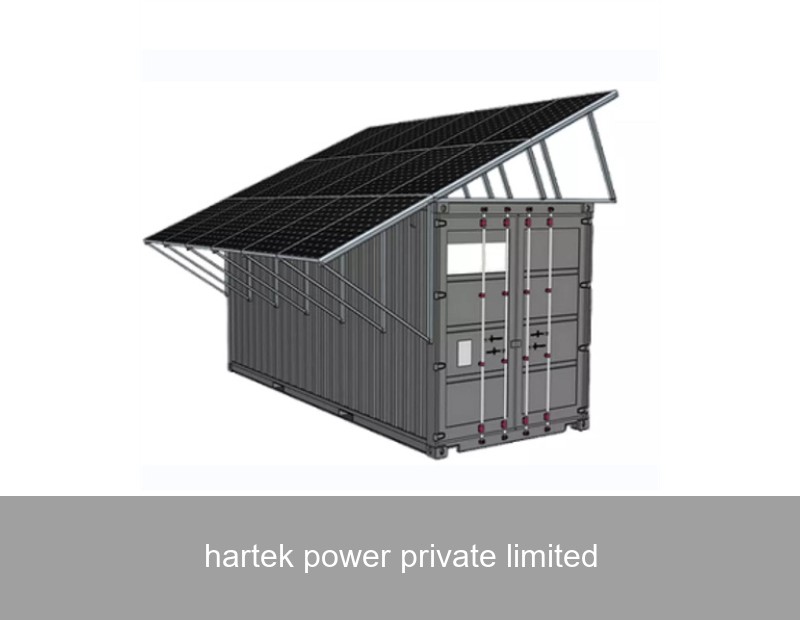
Imagine a world where the sun doesn't always shine and the wind doesn't always blow, yet our power grid remains perfectly stable, reliable, and clean. This isn't a fantasy; it's the critical engineering challenge at the heart of the global energy transition. Companies worldwide, from innovators like Hartek Power Private Limited in India to utilities across Europe and North America, are grappling with a fundamental question: how do we integrate massive amounts of variable renewable energy without compromising the stability of the electrical grid? The answer, increasingly, lies not just in generation, but in intelligent storage and control.
The Modern Grid Challenge: Stability in an Era of Renewables
Traditional power grids were designed for one-way flow: from large, predictable coal or gas plants to consumers. The grid's stability—the maintenance of a constant frequency and voltage—was managed by carefully controlling these giant rotating turbines. Now, enter solar and wind. A sudden cloud cover can cause a massive solar farm's output to plummet in seconds. A gust of wind can inject unexpected power. This variability creates a rollercoaster effect, leading to frequency deviations and voltage sags or surges.
Why is this a problem? Modern digital infrastructure, from data centers to manufacturing robots, requires pristine power quality. Even minor grid instability can cause production losses, data corruption, or widespread blackouts. The International Energy Agency (IEA) highlights that grid-scale storage is now essential for security, stating it "can play a crucial role in managing the variability of renewables."

Image Source: Unsplash - Illustrating renewable energy variability
The Data Behind the Demand
Let's look at the numbers. In California, renewable energy (solar and wind) regularly meets over 50% of instantaneous demand during peak daylight hours. In Germany, renewables accounted for over 50% of public net electricity generation in 2023. This high penetration is a triumph for clean energy, but it forces grid operators to seek new tools for balance and stability—tools that can respond in milliseconds, not minutes.
A Closer Look: Hartek Power Private Limited and India's Grid Evolution
A compelling case study in this global narrative comes from India, a nation with an ambitious target of 500 GW of renewable capacity by 2030. Hartek Power Private Limited, a leading Indian EPC (Engineering, Procurement, and Construction) player in the power T&D (Transmission & Distribution) sector, is at the forefront of building the infrastructure to support this goal. Their work involves constructing substations, power systems, and renewable integration solutions.
One of their key challenges mirrors those in Europe and the U.S.: managing the intermittent nature of solar power fed into the grid. For instance, in a project integrating a 100 MW solar plant in Punjab, the utility faced issues with voltage fluctuation during rapid cloud transients and needed a solution for evening peak demand when solar generation falls to zero. While specific project data is proprietary, the technical requirements are public knowledge: the need for Grid-Scale Battery Energy Storage Systems (BESS) to provide frequency regulation, voltage support, and shift solar energy to later in the day.
This is where the expertise of global energy storage specialists becomes vital. Companies like Hartek Power require partners who can deliver not just battery racks, but fully integrated, grid-compliant systems with advanced energy management software. The synergy between robust EPC and cutting-edge storage technology is what turns a renewable project from a grid liability into a grid asset.
The Core Solution: How Advanced Energy Storage Systems Ensure Grid Stability
So, what exactly does an advanced BESS do to stabilize the grid? Think of it as both a shock absorber and a high-speed battery for the entire electricity network.
- Frequency Regulation: The grid must stay at 50 Hz (Europe/India) or 60 Hz (North America). If frequency dips (due to high demand or lost generation), the BESS instantly discharges power to bring it back up. If frequency rises (sudden renewable surge), it absorbs excess power. This happens in fractions of a second.
- Voltage Support: By injecting or absorbing reactive power, BESS can maintain proper voltage levels, preventing damage to equipment and ensuring efficient power delivery over long lines.
- Ramp Rate Control: It smooths out the sharp "ramp up" at sunrise and drastic "ramp down" at sunset from solar farms, creating a gentler, more manageable curve for grid operators.
- Energy Time-Shift (Arbitrage): It stores cheap, abundant solar energy produced at midday and dispatches it during the expensive, high-demand evening peak, improving economics and reliability.
| Grid Service | Response Time | Benefit | Analogy |
|---|---|---|---|
| Frequency Regulation | < 1 Second | Maintains grid balance and prevents cascading outages | A gyroscope stabilizing a ship |
| Voltage Support | Milliseconds to Seconds | Ensures power quality and protects end-user equipment | A voltage regulator in a car |
| Ramp Rate Control | Seconds to Minutes | Smooths renewable output, reducing stress on traditional plants | Shock absorbers on a car | Energy Time-Shift | Hours | Increases renewable utilization and defers grid upgrades | A warehouse storing seasonal goods |
Highjoule's Role: Delivering Intelligent Stability for Global Grids
At Highjoule, with nearly two decades of experience since 2005, we've moved beyond providing just battery storage. We deliver intelligent grid stability platforms. For utilities, independent power producers, and industrial partners—whether they are facing challenges similar to Hartek Power Private Limited in India or managing a microgrid in Germany—our solutions are engineered for reliability and performance.
Our GridSynergy™ BESS platform is specifically designed for large-scale transmission and distribution applications. It features:
- Ultra-Fast Power Conversion Systems (PCS): For sub-cycle response to grid frequency events.
- Predictive Energy Management Software (EMS): Using AI and weather data to forecast renewable generation and optimally schedule charge/discharge cycles, maximizing value and stability.
- Utility-Grade Safety & Compliance: Built to the strictest international standards (UL, IEC, IEEE) for fire safety, grid interconnection, and cybersecurity.
- Modular & Scalable Architecture: From a 2 MW containerized system to a 500 MW+ storage park, our design allows for seamless expansion.
Image Source: Unsplash - Monitoring advanced energy storage systems
For a commercial or industrial facility with on-site solar, our PowerStack™ solutions provide the same grid-forming capabilities at a smaller scale. They allow businesses to operate as stable "islands" during grid outages (using solar + storage) and to provide demand response services to the local utility, creating a new revenue stream while contributing to community resilience.
The Future Grid: More Renewable, More Intelligent, More Stable
The journey of Hartek Power Private Limited and countless other grid builders worldwide points to an inevitable conclusion: the future grid will be a digital, decentralized, and dynamic network. It will rely on a symphony of distributed resources—solar, wind, electric vehicles, and storage—all coordinated by intelligent software. The U.S. Department of Energy's Energy Storage Grand Challenge roadmap emphasizes this vision, aiming to create and sustain global leadership in energy storage utilization.
In this future, the role of energy storage transitions from a niche application to the central nervous system of the grid. It will not only store energy but will provide the essential services that keep our lights on, our factories running, and our economies growing on a foundation of clean energy.
Your Grid, Your Stability
Whether you are an EPC contractor like Hartek Power, a utility planner in Spain, a factory owner in Ohio, or a municipality planning a microgrid, the question is no longer if you need to consider advanced energy storage, but how and when. What is the single biggest grid stability or energy cost challenge you foresee for your operations in the next three years, and how could a controllable asset like storage transform that challenge into an opportunity?
 Inquiry
 Online Chat