


Energia Fotovoltaica Ecuador: Harnessing the Andean Sun for a Sustainable Future
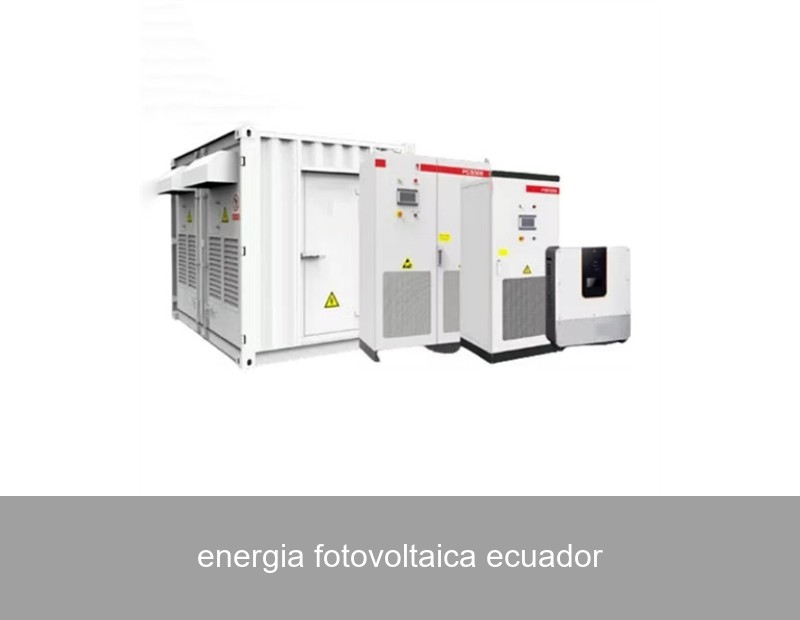
Imagine a country bisected by the equator, blessed with remarkably consistent solar irradiance nearly year-round. This isn't a futuristic vision; this is Ecuador today. The potential for energía fotovoltaica Ecuador is staggering, offering a clear path to energy independence, reduced carbon emissions, and significant savings. For homeowners, businesses, and entire communities, the question is no longer "if" but "how" to best capture this abundant resource. The answer, however, goes beyond just installing panels on your roof. To truly unlock the promise of solar energy in Ecuador, one critical component must be part of the conversation from the start: intelligent energy storage.
The Storage Imperative: Why Solar Alone Isn't Enough
Here's a common scenario many solar adopters face: your panels are most productive in the middle of the day when the sun is highest. But what happens in the evening when energy demand peaks—for lighting, cooking, and cooling—and your panels are no longer generating? Traditionally, you'd draw power from the grid, negating some of your savings and self-sufficiency goals. This mismatch between solar production and consumption patterns is the fundamental challenge of a solar-only system.
This is where battery energy storage systems (BESS) become the game-changer. Think of storage as your personal energy bank. You deposit excess solar energy produced during the day and make a withdrawal whenever you need it—at night, during cloudy periods, or even during a grid outage. For a country like Ecuador, with its diverse geography from the coast to the Andes, this reliability is paramount. It transforms a solar installation from a supplementary power source into a primary, resilient energy asset.
The Data Behind the Need
According to Ecuador's Regulation and Control Agency for Energy and Non-Renewable Natural Resources, renewable sources are playing an increasingly vital role. However, the intermittent nature of sources like solar and wind requires complementary technologies to ensure grid stability. A study by the International Renewable Energy Agency (IRENA) highlights that coupling solar PV with storage is key to achieving high penetration rates of renewables in national grids, enhancing both flexibility and security of supply.
Case Study: A Leap Towards Zero Fossil Fuels in the Galápagos
Ecuador is already home to a pioneering example of solar-plus-storage on a grand scale. The Galápagos Islands, a UNESCO World Heritage site, have long sought to protect their fragile ecosystem by reducing dependency on imported diesel for power generation.

On the island of Baltra, a hybrid system combining a 1.5 MW solar photovoltaic plant with a 2.2 MWh battery storage system was implemented. This project, crucial for the energía fotovoltaica Ecuador landscape, allows solar energy to power the island during the day while the batteries store excess energy. This stored energy is then dispatched during peak evening hours and at night, dramatically cutting diesel consumption.
- ~15% Reduction in annual diesel fuel consumption for the island.
- Elimination of an estimated 2,000 tons of CO2 emissions per year.
- Enhanced reliability of the local microgrid, providing cleaner, more stable power to residents and vital conservation facilities.
This case isn't just about large-scale infrastructure; it's a powerful model that scales down. The same principle of storing daytime solar surplus for nighttime use applies directly to residential, commercial, and industrial installations across mainland Ecuador.
Battery Essentials for a Stable Solar Future
Not all battery storage is created equal. When evaluating a system for your energía fotovoltaica project in Ecuador, consider these key technological pillars:
| Feature | Why It Matters for Ecuador |
|---|---|
| Lithium-Ion Chemistry (LFP) | Lithium Iron Phosphate (LFP) batteries offer superior safety, longer lifespan (often over 6,000 cycles), and better performance in varied climates—essential for Ecuador's coastal humidity and Andean cooler temperatures. |
| Scalable Capacity | Your energy needs will grow. A modular system allows you to start with what you need and easily add more battery modules later without replacing the entire unit. |
| Advanced Battery Management System (BMS) | The BMS is the brain of the storage unit. It ensures each cell operates safely, optimizes charging/discharging to maximize battery life, and provides critical performance data. |
| Grid Independence & Backup Power | In areas with less stable grid infrastructure or for critical operations, a storage system with a seamless backup function keeps essential loads running during outages. |
Powering Ecuador's Future with Highjoule's Intelligent Solutions
This is where Highjoule's nearly two decades of expertise come into play. Since 2005, we've been at the forefront of designing smart, efficient, and sustainable energy storage solutions for the most demanding environments worldwide. We understand that a successful energía fotovoltaica Ecuador project requires more than just hardware; it requires intelligent integration.
Our HI-Stack Commercial & Industrial (C&I) Series is engineered for resilience and ROI. These modular, high-capacity lithium-ion systems are perfect for businesses, agro-industrial facilities, or small communities looking to stabilize energy costs and ensure operational continuity. With advanced thermal management and a robust BMS, they perform reliably in Ecuador's diverse climates.

For homeowners seeking energy independence, our HI-Res PowerWall integrates seamlessly with leading solar inverters. It's designed for simplicity and safety, allowing families to maximize their solar self-consumption, protect against blackouts, and build a cleaner energy future from their own rooftops. Highjoule systems are built with a core philosophy: to make solar energy truly dependable, 24 hours a day.
Beyond Residential: Solar-Storage for Commerce and Industry
The potential extends far beyond the home. Ecuador's productive sectors stand to gain immensely from pairing solar with storage:
- Agro-Industry: Cold storage facilities for dairy, meat, or fruit can use solar+storage to maintain critical temperatures continuously, protecting inventory and profits from grid fluctuations.
- Tourism & Hospitality: Eco-lodges in the Amazon or beach resorts can significantly reduce generator use, offering guests a genuinely sustainable experience powered by the sun.
- Remote Telecom & Infrastructure: Off-grid or weak-grid communication towers and public lighting can achieve 100% renewable operation with a properly sized solar-plus-storage system.
In each case, Highjoule's team of technical experts works with local partners to conduct detailed energy audits, design custom systems, and provide remote monitoring support, ensuring every installation delivers on its promise of sustainability and savings.
What's the First Step in Your Solar Energy Journey?
The journey to a fully optimized energía fotovoltaica system in Ecuador begins with understanding your unique energy profile. How much power do you consume, and when do you consume it? What are your goals—pure savings, backup security, or reducing your carbon footprint? By answering these questions, you can design a system that isn't just about generating energy, but about intelligently managing it for maximum benefit.
Are you ready to explore how intelligent energy storage can transform your solar investment from a daytime solution into a round-the-clock power strategy for your home or business in Ecuador?
 Inquiry
 Online Chat