


Battery Renewable Energy: The Key to Unlocking a 24/7 Clean Power Future
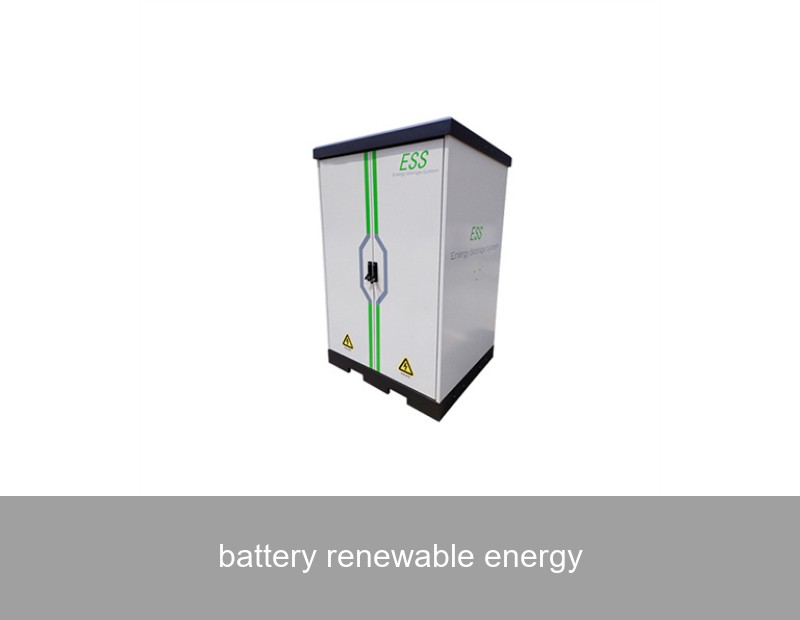
Imagine a world where the sun doesn't set on solar power, and the wind's energy is available even on a calm day. This isn't a distant dream—it's the reality being built today by pairing battery renewable energy systems. As the global push for decarbonization accelerates, a critical challenge has emerged: renewable sources like solar and wind are intermittent. The solution? Advanced battery energy storage systems (BESS) that capture clean energy when it's abundant and deliver it precisely when it's needed. For nearly two decades, Highjoule has been at the forefront of this revolution, engineering intelligent storage solutions that make renewable energy reliable, efficient, and truly sustainable for businesses, industries, and communities worldwide.
The Intermittency Challenge: More Than Just a Cloudy Day
The phenomenal growth of renewables is undeniable. In 2023, the U.S. alone added a record 33 GW of solar capacity, according to the International Energy Agency. Europe continues to break records for wind power generation. But this success reveals a fundamental grid management issue: supply and demand must always be in perfect balance. When the sun dips below the horizon or the wind stops, generation plummets, potentially leading to instability and the need to fire up fossil-fueled "peaker" plants. This is where the simple yet powerful concept of battery renewable energy pairing comes in. Think of it not just as a battery, but as a "time machine" for electrons—capturing clean power from one moment and delivering it to another.
How Battery Storage Transforms Renewable Energy
Modern battery storage systems, particularly those using lithium-ion technology, are the linchpin for a resilient clean energy grid. They perform several critical functions:
- Energy Time-Shifting (Arbitrage): Storing cheap, abundant midday solar energy for use during expensive evening peak hours.
- Frequency Regulation: Providing instant injections or absorptions of power to keep the grid's frequency stable—a service traditionally provided by spinning turbines.
- Renewable Firming: Smoothing out the short-term fluctuations in wind or solar output, making them behave more like predictable conventional power plants.
- Backup Power: Ensuring critical operations continue during grid outages, enhancing energy security for facilities.
The technology's impact is best understood through its explosive growth. The U.S. Energy Information Administration projects that utility-scale battery storage capacity will nearly double in 2024. This isn't just about capacity; it's about enabling a higher penetration of renewables on the grid than ever thought possible.
From Theory to Grid: A Real-World Case Study in Texas
Let's look at the ERCOT grid in Texas, a market with massive wind and solar penetration and a famously independent grid. In the summer of 2023, during a prolonged heatwave, the state faced consecutive days of record electricity demand. Traditional models would have predicted tight margins and potential outages.
However, something different happened. Battery storage systems, many co-located with solar farms, played a pivotal role. On the evening of August 10th, 2023, as solar generation faded but air conditioning demand remained sky-high, batteries delivered over 2,300 MW of power to the Texas grid at a critical time. That's the equivalent of two large nuclear reactors coming online in minutes. This discharge helped stabilize prices and maintain reliability. This real-time data from ERCOT's own reports illustrates the tangible grid-saving potential of integrated battery renewable energy assets. They are no longer just ancillary players; they are becoming central to grid resilience.

Image Source: Unsplash (Representative image of a grid-scale BESS)
Beyond the Battery: The Intelligence Behind Modern BESS
A common misconception is that a battery renewable energy system is just a collection of battery cells. In reality, the hardware is only half the story. The true value is unlocked by the power conversion system (PCS), the battery management system (BMS), and, most importantly, the advanced energy management system (EMS). This software is the "brain" that decides when to charge, when to discharge, and at what rate, based on a multitude of signals: electricity prices, weather forecasts, grid frequency, and facility load patterns.
For a commercial or industrial user, this intelligence translates directly to the bottom line. The system can autonomously perform tasks like peak shaving—reducing the facility's draw from the grid during the most expensive 15-minute period of the month, which often determines a large portion of the electricity bill. This requires predictive analytics and flawless execution, a far cry from a simple backup generator.
Highjoule's Integrated Approach to Battery Renewable Energy Systems
At Highjoule, we've spent nearly 20 years refining not just the components, but the seamless integration of hardware and software for optimal performance. Our philosophy is that a storage system must be more than just a cost; it must be a strategic asset that delivers a clear return on investment.
Our flagship product line, the Highjoule H-Series, exemplifies this. These containerized, plug-and-play BESS solutions are designed for commercial and industrial applications, as well as utility-scale support. What sets them apart is the AdaptiveOS™ platform. This proprietary EMS uses machine learning to continuously optimize the system's operation for multiple value streams simultaneously—maximizing financial return while ensuring battery health and longevity.
For a manufacturing plant in Germany, this might mean prioritizing self-consumption of on-site solar during the day, providing frequency containment reserve (FCR) services to the European grid in milliseconds when called upon, and then discharging stored energy to cover the plant's night shift operations. Our systems are built with safety as the paramount concern, featuring multi-layer protection, active thermal management, and comprehensive remote monitoring through our Highjoule Insight Portal.

Image Source: Unsplash (Representative image of BESS monitoring)
Applications We Power
| Application | Challenge | Highjoule Solution |
|---|---|---|
| Commercial & Industrial | High demand charges, grid dependency, sustainability goals. | H-Series for peak shaving, solar time-shifting, and backup power. |
| Utility & Microgrids | Grid congestion, renewable integration, deferred infrastructure upgrades. | Modular, scalable BESS for firming, ancillary services, and islanded operation. |
| Community & Residential Aggregations | Enabling energy communities, maximizing rooftop solar value. | Integrated storage systems managed by AdaptiveOS™ for collective benefits. |
The Future Landscape: What's Next for Stored Clean Power?
The journey of battery renewable energy is just beginning. We are on the cusp of advancements in battery chemistry, like sodium-ion and solid-state batteries, which promise greater sustainability, safety, and potentially lower costs. Furthermore, the convergence of electric vehicle (EV) charging infrastructure with stationary storage will create new nodes of grid flexibility. Imagine a fleet of smart-charging EVs that can also send power back to a building or the local grid during a peak event—a concept known as vehicle-to-grid (V2G).
For businesses and grid operators, the question is evolving from "Should we invest in storage?" to "How can we best integrate and optimize storage within our energy ecosystem?" The focus is shifting toward long-duration storage (8+ hours) for deeper grid decarbonization and creating truly resilient microgrids that can operate independently for extended periods.
As you consider your organization's energy resilience and sustainability roadmap, what single energy challenge—be it cost volatility, reliability concerns, or a net-zero commitment—would you want a tailored battery renewable energy system to solve first?
 Inquiry
 Online Chat