


Energia Solar en Paraguay: Un Faro de Energía Limpia y su Futuro con Almacenamiento Inteligente
Paraguay stands as a unique beacon in the global energy landscape. Blessed with the immense Itaipu Dam, it is a net exporter of clean, hydroelectric power. Yet, beneath this green success story lies a growing conversation about diversification, resilience, and true energy independence. This is where energía solar en Paraguay transitions from a complementary idea to a strategic imperative. With some of the highest solar irradiance levels in South America, the country's potential is staggering. But to truly harness this potential and move beyond daytime-only generation, a critical component must enter the discussion: advanced energy storage systems. This article explores the rise of solar energy in Paraguay and how intelligent battery storage is the key to unlocking its full economic and environmental promise.
Table of Contents
- The Paraguayan Energy Paradox: Hydro Abundance and Solar Potential
- The Data Behind Paraguay's Solar Power Boom
- The Inherent Challenge: Intermittency and the Need for 24/7 Power
- The Game Changer: Integrating Battery Energy Storage Systems (BESS)
- Highjoule's Role: Tailored Storage Solutions for the Paraguayan Market
- Case Study: A Paraguayan Agro-Industrial Plant's Journey to Energy Autonomy
The Paraguayan Energy Paradox: Hydro Abundance and Solar Potential
It seems counterintuitive. A country that generates over 99% of its electricity from hydroelectric sources, and even exports about 90% of its production from Itaipu to Brazil, would seemingly have little need for other renewables. However, this reliance on hydro creates its own vulnerabilities. Seasonal river flow variations, the impacts of climate change on rainfall patterns, and the geographical concentration of generation pose long-term risks to energy security. Furthermore, remote communities and industries often face connection challenges or seek to reduce operational costs. This is the paradox: immense clean generation coexists with unmet demand for localized, reliable, and controllable power. Energía solar en Paraguay emerges as the perfect decentralized partner to the nation's centralized hydro power, and companies like Highjoule provide the technology to make this partnership seamless and intelligent.
The Data Behind Paraguay's Solar Power Boom
The numbers speak volumes. According to the National Electricity Administration (ANDE), Paraguay's average solar irradiance ranges from 4.5 to 5.5 kWh/m²/day, placing it among the top countries globally for solar potential. To put that in perspective, Germany, a world leader in installed solar capacity, averages only about 2.9 kWh/m²/day. Despite this, Paraguay's installed solar capacity was just over 200 MW by the end of 2023, a fraction of its multi-gigawatt potential. The growth, however, is accelerating. The commercial and industrial (C&I) sector is leading the charge, driven by compelling economic factors. With rising electricity costs and falling prices for solar photovoltaic (PV) panels, the payback period for a C&I solar installation in Paraguay can now be as short as 4-6 years. The government's "National Development Plan 2030" also emphasizes renewable energy diversification, providing a policy tailwind. You can explore more on global solar potential data from authoritative sources like the International Renewable Energy Agency (IRENA).

Image Source: Global Solar Atlas, World Bank Group. This map visually confirms Paraguay's exceptional solar resource.
The Inherent Challenge: Intermittency and the Need for 24/7 Power
Here's the core issue every solar developer or business owner in Paraguay faces: the sun doesn't shine at night, and clouds can reduce output. A solar PV system alone generates power primarily between 9 AM and 5 PM. What happens to a factory that runs 24-hour shifts? Or a dairy farm that needs refrigeration overnight? Traditionally, the answer has been to rely on the grid—which in Paraguay is clean but not always optimal for managing peak demand charges—or on polluting diesel generators. This intermittency is the single largest barrier to energía solar en Paraguay becoming a primary, rather than just a supplemental, power source. The question shifts from "How do we generate solar power?" to "How do we store and manage it intelligently?"
The Game Changer: Integrating Battery Energy Storage Systems (BESS)
Battery Energy Storage Systems are the missing link that transforms solar from a variable source into a firm, dispatchable one. Think of it as a "solar battery" for an entire facility. A BESS does three critical things:
- Energy Time-Shifting: Stores excess solar energy produced during the day for use at night, maximizing self-consumption.
- Peak Shaving: Discharges power during periods of high grid demand (and high tariffs), dramatically reducing electricity bills.
- Backup Power: Provides seamless, instantaneous power during grid outages, ensuring business continuity.
For the Paraguayan context, this means a factory can operate on its own solar power around the clock, drastically cutting its energy expenses and carbon footprint while gaining independence from grid volatility. The technology, particularly lithium iron phosphate (LFP) chemistry, is now safer, more durable, and more affordable than ever.
Highjoule's Role: Tailored Storage Solutions for the Paraguayan Market
At Highjoule, with nearly two decades of experience since 2005, we understand that deploying storage in diverse climates and grid environments requires more than just hardware. Our solutions for the Paraguayan and broader Latin American market are built on three pillars:
| Pillar | Highjoule Solution | Benefit for Paraguay |
|---|---|---|
| Intelligent Software | Highjoule's ApexOS™ energy management platform | Automatically optimizes when to charge, store, or discharge based on weather forecasts, consumption patterns, and tariff schedules, maximizing ROI. |
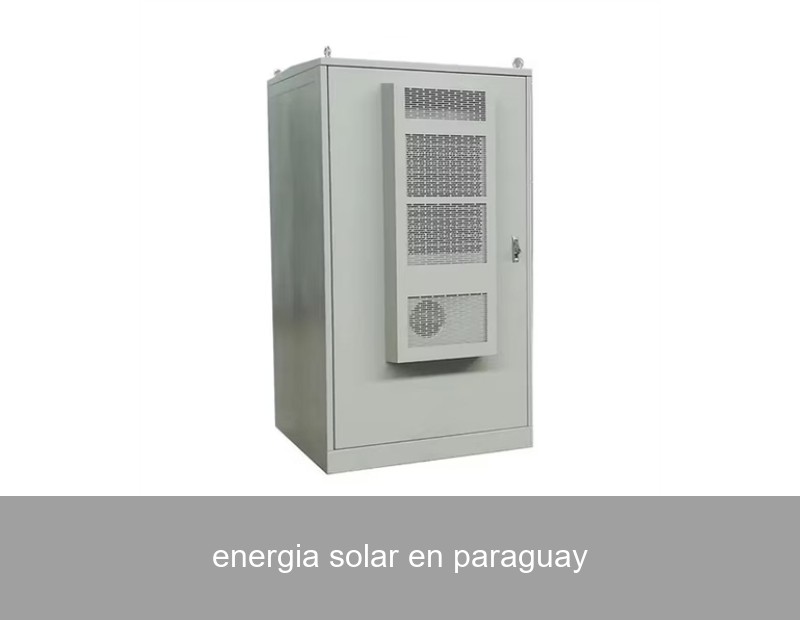
| Robust Hardware | Containerized & modular BESS (e.g., H-Joule Cube series) | Engineered for high-temperature performance, with passive safety features ideal for Paraguay's climate. Scalable from 100 kWh to multi-MWh for large agro-industry. |
| Full-Service Partnership | Design, installation, commissioning, and remote monitoring | We provide turnkey solutions, working with local Paraguayan partners to ensure reliable performance and long-term support. |
Our systems are designed to integrate seamlessly with existing or new solar PV installations, creating a true smart energy ecosystem for businesses, industries, and communities.
Case Study: A Paraguayan Agro-Industrial Plant's Journey to Energy Autonomy
Let's look at a real-world application. A major soybean processing plant in the Department of Alto Paraná was facing escalating energy costs, which comprised over 30% of its operational expenses. While they had considered solar, their 24/5 operation meant they would still be buying expensive power from the grid at night.
The Solution: Highjoule, in partnership with a local integrator, designed and deployed a hybrid system: a 1.2 MW rooftop solar array coupled with a 500 kWh / 750 kW Highjoule H-Joule Cube battery storage system.
The Results (12 months post-installation):
- Energy Bill Reduction: 78% decrease in monthly electricity costs.
- Self-Consumption Rate: Increased from 35% (solar only) to over 90% (solar + storage).
- Peak Demand Charge Reduction: Cut peak power draw from the grid by 95%, eliminating demand penalties.
- ROI: Projected payback period of 5.2 years, with a system lifespan of 15+ years.
- Emission Reduction: Equivalent to taking 180 cars off the road annually.
This case, documented in part with data from the Paraguayan National Electricity Administration (ANDE) tariff structures, exemplifies the transformative power of pairing energía solar en Paraguay with smart storage.

Image Source: Unsplash. Representative image of a commercial-scale solar installation similar to agro-industrial applications.
The Future of Energía Solar en Paraguay: Microgrids and Energy Sovereignty
The ultimate expression of this technology is the creation of renewable-powered microgrids. For remote communities in the Chaco region or industrial parks seeking ultimate resilience, a combination of solar, storage, and a backup generator (or grid connection as a backup) can create a self-sufficient energy island. Highjoule's systems are at the heart of such projects globally, managing complex energy flows to prioritize the cheapest and cleanest sources first. This moves the nation's energy narrative from one of large-scale export towards one of localized energy sovereignty, where communities and businesses control their own clean power destiny.
As battery technology continues to evolve, with research into longer duration storage, we can look to leading institutions like the National Renewable Energy Laboratory (NREL) for insights into the future. The question for Paraguayan business leaders and policymakers is no longer if solar and storage will become mainstream, but how quickly they can be integrated to secure a competitive and sustainable economic advantage.
 Inquiry
 Online Chat