


En Qué Se Usa la Energía Solar: Powering Our World Beyond Imagination
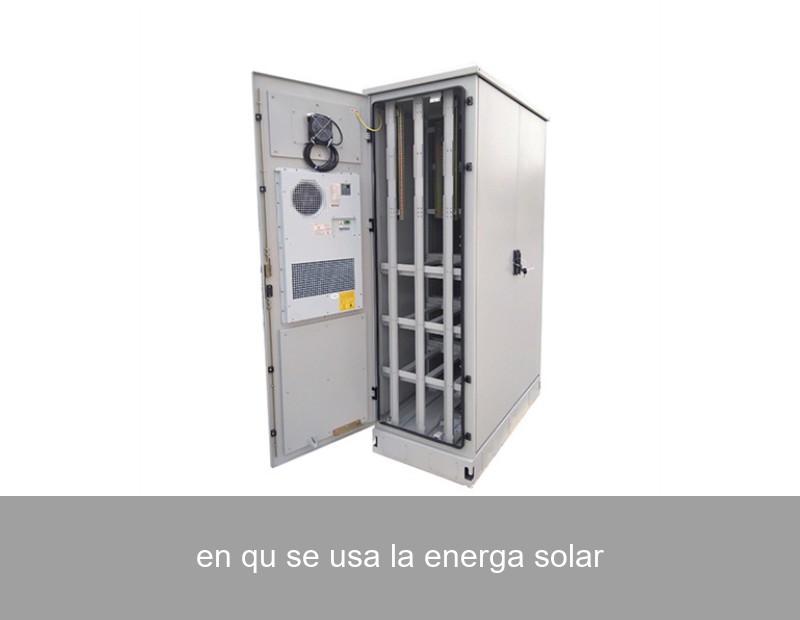
You see the panels on rooftops and in vast fields, but have you ever stopped to wonder, en qué se usa la energía solar—what is solar energy actually used for? The answer is evolving from simply powering a home to fundamentally reshaping how our societies and industries operate. As a global leader in advanced energy storage, Highjoule has witnessed this transformation firsthand since 2005. The true power of solar isn't just in capturing sunlight; it's in harnessing its energy intelligently, storing it, and deploying it precisely when and where it's needed most. This article explores the expansive and innovative applications of solar power, demonstrating how it's integrated with cutting-edge storage solutions to create a resilient and sustainable energy future.
Table of Contents
- Beyond Rooftops: The Expanding Universe of Solar Applications
- The Data Behind the Solar Revolution
- Case Study: Powering a German Manufacturing Plant
- The Critical Key: Energy Storage Systems (ESS)
- Highjoule's Role: Intelligent Storage for Every Solar Application
- Future Horizons: Where Solar is Headed Next
Beyond Rooftops: The Expanding Universe of Solar Applications
Solar energy has dramatically moved past its early identity. Today, it's a versatile primary or complementary power source across diverse sectors. Let's break down the key areas en qué se usa la energía solar.
1. Residential & Commercial (Rooftop Solar)
The most visible application. Homeowners and businesses install photovoltaic (PV) panels to reduce electricity bills, gain energy independence, and lower their carbon footprint. The modern evolution here isn't just the panels, but the integrated home energy storage system. This allows excess solar power generated during the day to be stored for use at night, maximizing self-consumption and providing backup power during grid outages.

Image Source: Unsplash - A modern home solar and storage installation.
2. Utility-Scale Solar Farms
These are the power plants of the solar world. Vast arrays of panels, often covering hundreds of acres, generate massive amounts of electricity fed directly into the public grid. They provide clean, bulk power to utilities, helping regions meet renewable portfolio standards and decarbonization goals.
3. Industrial & Agricultural Applications
Industries with high energy demands (manufacturing, data centers, mining) are turning to solar to stabilize energy costs and ensure operational continuity. In agriculture, solar powers irrigation systems, greenhouse operations, and remote equipment, reducing reliance on diesel generators and grid extensions.
4. Transportation and Mobility
Solar is charging the electric vehicle revolution. Solar carports and canopies at parking lots generate clean electricity to power EVs directly. Furthermore, solar is being integrated into public transit, powering electric bus charging depots and even railway infrastructure.
5. Microgrids & Off-Grid Solutions
This is perhaps one of the most transformative uses. Solar-powered microgrids, often paired with robust battery storage, provide reliable electricity to remote communities, islands, and critical facilities (like hospitals or military bases) that are disconnected from the main grid or have an unreliable connection.
The Data Behind the Solar Revolution
The growth isn't just anecdotal; it's quantifiable. According to the International Energy Agency (IEA), renewables are set to contribute 80% of new power capacity to 2030 under current policies, with solar PV alone accounting for more than half of this expansion. In the United States, the Solar Energy Industries Association (SEIA) reports that solar has experienced an average annual growth rate of 24% over the last decade. In Europe, ambitious targets like the EU's REPowerEU plan aim to accelerate solar deployment to reduce dependence on fossil fuels. This data underscores a fundamental shift: solar is no longer alternative; it's mainstream.
Case Study: Powering a German *Mittelstand* Manufacturing Plant
Let's look at a concrete example from Bavaria, Germany. A mid-sized automotive parts manufacturer (*a classic *Mittelstand* company) faced volatile energy prices and strict corporate sustainability targets. Their goal was to cover 70% of their daytime operational energy with renewables and ensure critical production lines never went down due to a grid fluctuation.
The Solution: A 2.1 MW rooftop solar PV system was installed across their factory buildings. However, the cornerstone of the project was a 1.5 MWh containerized battery energy storage system (BESS). This BESS does three critical jobs: it stores excess solar from midday for use during peak evening hours (arbitrage), provides instantaneous backup power to ride through short grid outages, and helps stabilize the local grid by offering frequency regulation services.
| Metric | Result |
|---|---|
| Annual Solar Generation | 2,100 MWh |
| Grid Energy Cost Reduction | 68% during peak hours |
| Carbon Footprint Reduction | Approx. 1,200 tonnes of CO2 annually |
| Backup Power for Critical Loads | Up to 4 hours |
| ROI Period | Estimated under 7 years |
This case perfectly illustrates *en qué se usa la energía solar* in a modern industrial context: not just for generation, but for cost savings, resilience, and grid services, enabled by sophisticated storage.
The Critical Key: Energy Storage Systems (ESS)
As the German case shows, the question of *en qué se usa la energía solar* is increasingly answered with: "It's used in tandem with storage." Solar panels produce intermittently—when the sun shines. An Energy Storage System (ESS) is the enabling technology that breaks this constraint. It allows for:
- Energy Time-Shifting: Store solar energy for use at night or on cloudy days.
- Backup Power: Provide uninterrupted power during grid failures.
- Peak Shaving: Reduce demand charges for commercial users by discharging the battery during periods of highest grid cost.
- Grid Stability: Advanced systems can support the grid with frequency regulation and voltage control.
Without storage, a significant portion of solar's potential value is lost. With it, solar becomes a reliable, dispatchable, and financially optimized asset.
Highjoule's Role: Intelligent Storage for Every Solar Application
This is where Highjoule's nearly two decades of expertise becomes crucial. Understanding *en qué se usa la energía solar* means understanding the unique storage needs of each application. We don't just provide batteries; we provide intelligent, integrated storage solutions.
For residential users, our HelioHome ESS features seamless integration with major solar inverter brands, an intuitive energy management app, and ultra-safe lithium iron phosphate (LFP) battery chemistry. It empowers homeowners to maximize their solar self-consumption.
For commercial & industrial (C&I) clients, like the German manufacturer, our VoltStack C&I series offers modular, containerized solutions. These systems are engineered for high-cycle life, advanced grid interaction capabilities, and can be tailored for peak shaving, backup, and renewable integration.
For large-scale utility and microgrid projects, our GridMax Utility BESS platform provides the utility-grade robustness, scalability, and grid-forming capabilities required to turn a solar farm into a stable power plant or to anchor a 100% renewable microgrid.

Image Source: Unsplash - Technician inspecting a commercial battery energy storage system.
Highjoule's smart energy management system (EMS) is the brain behind all our products, ensuring every kilowatt-hour of solar energy is used in the most efficient and economically beneficial way possible.
Future Horizons: Where Solar is Headed Next
The applications for solar energy continue to multiply. We are seeing the rise of agrivoltaics (combining agriculture with solar panels), floating solar farms on reservoirs, and building-integrated photovoltaics (BIPV) where solar cells are part of the building materials themselves. Furthermore, the coupling of solar with green hydrogen production is emerging as a key pathway to decarbonize heavy industry and long-haul transport. In every one of these frontiers, advanced, intelligent storage will be the indispensable partner that unlocks solar's full potential.
So, as you think about the question *en qué se usa la energía solar*, what does your vision for a resilient, cost-effective, and sustainable energy future look like? Could an intelligent solar-plus-storage system be the key piece for your home, business, or community's energy strategy? We invite you to explore what's possible.
 Inquiry
 Online Chat