


Energiespeicher Container: The Modular Powerhouse Revolutionizing Energy Storage
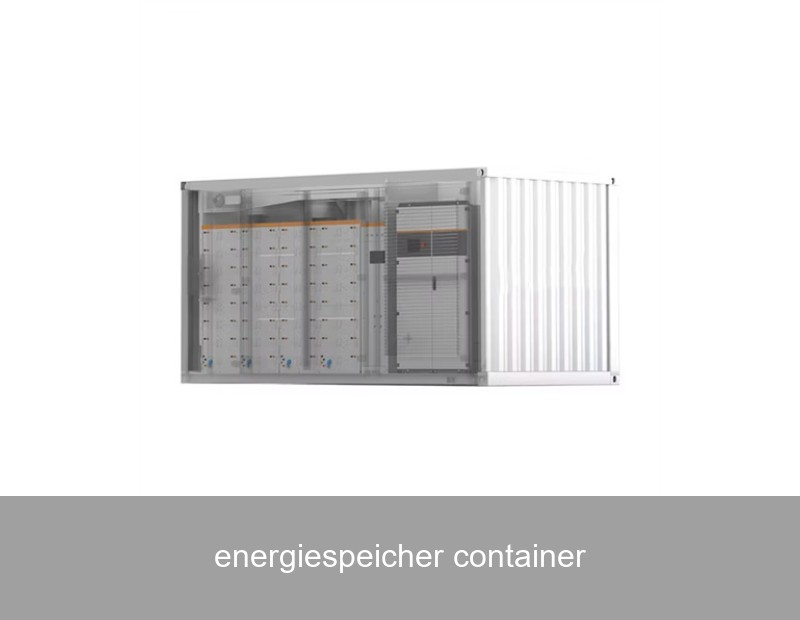
Imagine a standard shipping container. Now, imagine it transformed into a self-contained, plug-and-play powerhouse capable of storing enough renewable energy to power a factory, a neighborhood, or stabilize an entire local grid. This is the reality of Energiespeicher Container – a rapidly scalable solution that is answering some of the most pressing questions in the global energy transition. For businesses and communities across Europe and the US, these containerized battery energy storage systems (BESS) are no longer a futuristic concept but a practical, deployable asset for energy independence, cost savings, and sustainability. As a leading provider, Highjoule has been at the forefront of this innovation since 2005, engineering intelligent containerized storage that delivers resilience and intelligence to modern energy challenges.
Table of Contents
- What Exactly is an Energiespeicher Container?
- The Driving Forces: Why Containerized Storage is Booming
- Key Components and Technologies Inside
- Real-World Impact: A Case Study from Germany
- Highjoule's Smart Container Solutions: Engineered for Performance
- Choosing the Right System: Key Considerations
- The Future Landscape of Mobile Energy Storage
What Exactly is an Energiespeicher Container?
At its core, an Energiespeicher Container is a fully integrated battery storage system housed within a standardized, weatherproof shipping container. This modular approach bundles all critical components – lithium-ion battery racks, battery management systems (BMS), thermal management, power conversion systems (PCS), and fire safety systems – into a single, transportable unit. The genius lies in its standardization. Because it's built to standard container dimensions, it can be easily transported by truck, ship, or rail, deployed on virtually any flat surface, and stacked or combined for increased capacity. This makes it an ideal solution for temporary needs, such as construction sites or event power, as well as permanent installations for commercial, industrial, and utility-scale applications.

For companies like Highjoule, this containerized format is the perfect vessel for our advanced technology. It allows us to pre-assemble and rigorously test every Highjoule PowerCube in a controlled factory environment, ensuring reliability and slashing on-site installation time from months to mere weeks.
The Driving Forces: Why Containerized Storage is Booming
The surge in demand for Energiespeicher Container solutions isn't accidental. It's a direct response to several interconnected market phenomena and data-driven realities.
Phenomenon: The explosive growth of intermittent renewable energy (solar and wind) creates grid instability and curtailment issues, where excess energy is wasted because it can't be used when produced.
Data: According to the International Renewable Energy Agency (IRENA), global renewable capacity needs to triple by 2030 to meet climate goals. The U.S. Energy Information Administration (EIA) notes that battery storage, particularly at utility-scale, is among the fastest-growing energy sources. This creates a critical need for flexible, fast-responding storage to balance supply and demand.
Case Insight: For a manufacturing plant, this volatility translates to unpredictable energy costs and potential downtime. A containerized BESS acts as a buffer, storing cheap solar energy during the day and discharging it during expensive peak evening hours. This simple arbitrage strategy, known as peak shaving, can reduce a facility's energy bills by 20-40%.
Key Components and Technologies Inside
Not all containers are created equal. The performance and safety of an Energiespeicher Container depend on the quality and integration of its internal systems. Let's break down the essentials:
- Battery Cells & Modules: Typically using Lithium Iron Phosphate (LFP) chemistry for its superior safety, longevity, and stability. Highjoule exclusively uses top-tier, certified LFP cells, ensuring a lifecycle of over 6,000 cycles while maintaining high capacity.
- Battery Management System (BMS): The "brain" that monitors cell voltage, temperature, and state of charge, ensuring optimal performance and preventing dangerous conditions.
- Power Conversion System (PCS): The "muscle" that converts DC battery power to AC grid power and vice versa. Highjoule integrates bi-directional inverters with high round-trip efficiency (often over 95%) to minimize energy loss.
- Thermal Management: A crucial, often overlooked system. Proper liquid or air cooling maintains the battery at an ideal operating temperature, extending its life and preventing thermal runaway.
- Safety & Fire Suppression: Multi-layered protection including gas detection, automatic fire suppression (like aerosol or inert gas systems), and physical isolation of battery compartments.
Highjoule's engineering philosophy is integration. Our Highjoule PowerCube doesn't just pack these components together; it unifies them with a proprietary energy management system (EMS) that enables smart, grid-responsive operations.
Real-World Impact: A Case Study from Germany
Let's move from theory to tangible results. A compelling example comes from a medium-sized automotive parts supplier in Baden-Württemberg, Germany.
The Challenge: The company had a large rooftop PV system, but over 30% of its solar generation was being fed into the grid at low feed-in tariffs, while the factory simultaneously purchased expensive power from the grid during morning and evening peaks. They needed to maximize self-consumption and reduce demand charges.
The Solution: In 2023, the company deployed a Highjoule PowerCube 500, a 500 kWh / 250 kW Energiespeicher Container, seamlessly integrated with their existing PV infrastructure.
The Data & Results (12-month period):
| Metric | Before Installation | After Installation |
|---|---|---|
| Solar Self-Consumption | 68% | 92% |
| Peak Grid Power Draw | 450 kW | 280 kW |
| Annual Energy Cost Savings | Baseline | €41,200 |
| CO2 Emissions Reduction | Baseline | 62 tonnes |
Insight: The containerized system provided a rapid, non-invasive installation with zero disruption to factory operations. The Highjoule EMS intelligently schedules charging and discharging, not just based on solar production, but also on real-time electricity prices, adding another layer of savings. This case, verified by an independent Fraunhofer Institute analysis, exemplifies the dual financial and environmental ROI of a well-implemented container storage system.
Highjoule's Smart Container Solutions: Engineered for Performance
At Highjoule, we view an Energiespeicher Container as more than a battery in a box. It's a intelligent energy asset. Our PowerCube Series is designed for scalability from 100 kWh to multi-MWh installations. What sets our solutions apart is the Highjoule Neuron™ Platform, a cloud-based EMS that turns stored energy into active grid support and revenue.
Our services extend beyond hardware delivery:
- Full Turnkey Delivery: From site assessment and grid connection approval to installation, commissioning, and ongoing remote monitoring.
- Performance Guarantees: We back our systems with robust performance warranties, giving our clients long-term investment security.
- Grid Services Integration: For eligible projects, we can configure systems to participate in frequency regulation markets (like FCR in Europe or ancillary services in the US), creating an additional revenue stream for the owner.

Choosing the Right System: Key Considerations
Selecting an Energiespeicher Container requires careful planning. Here are the critical questions to ask any provider:
- What is my primary use case? (Peak shaving, backup power, renewable integration, grid services?)
- What is the true total cost of ownership? Consider not just upfront cost, but efficiency losses, lifecycle, maintenance, and degradation over 10+ years.
- How is safety engineered? Demand detailed documentation on cell chemistry, BMS protocols, and fire suppression system certifications.
- What is the software intelligence? Can the system adapt to changing energy prices and grid conditions autonomously?
- What are the logistics and local codes? Ensure the provider has experience with permitting and installation in your specific region (EU or US).
The Future Landscape of Mobile Energy Storage
The evolution of the Energiespeicher Container is leaning towards even greater intelligence and sustainability. We're researching second-life battery integration and exploring solid-state battery technology for future iterations. The concept of "storage-as-a-service," where customers pay for storage outcomes rather than owning hardware, is also gaining traction, lowering the barrier to entry.
As grids become more decentralized, these modular, transportable power nodes will form the building blocks of resilient urban and community microgrids. They are the physical enablers of a flexible, renewable-powered future.
Is your organization ready to assess how a modular Energiespeicher Container could transform your energy economics and sustainability profile? What specific energy challenge—be it unpredictable costs, grid dependency, or renewable integration—is most critical for you to solve in the next 18 months?
 Inquiry
 Online Chat