


Your Guide to Choosing the Best Estación de Energía Portátil (Portable Power Station)
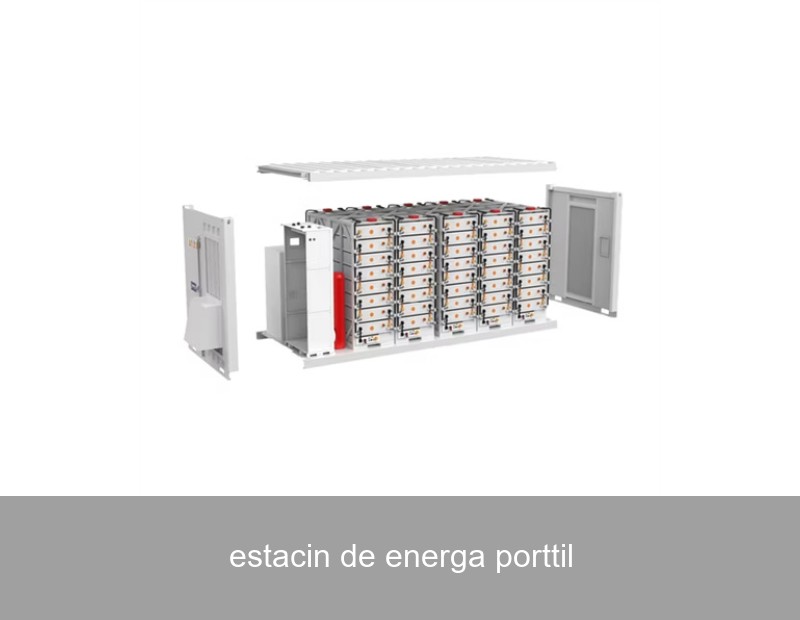
Have you ever been in the middle of a crucial work video call when a sudden storm knocked out your home's power? Or perhaps you've been camping, wanting to keep your camera and lights charged, only to find a sea of drained power banks. This modern frustration—the need for reliable, clean electricity anywhere—is exactly what has fueled the massive rise of the estación de energía portátil, or portable power station. These aren't the loud, fume-spewing gas generators of the past. Today's portable power stations are silent, solar-ready battery systems that store energy for you to use on demand, whether you're working remotely, enjoying the outdoors, or preparing for grid outages. As a product technology expert at Highjoule, a company at the forefront of advanced energy storage since 2005, I'll guide you through what makes a great portable power solution and how to choose one that truly fits your life.
Table of Contents
- What is a Portable Power Station?
- Key Specifications Explained
- The Solar Compatibility Advantage
- Highjoule's Approach to Portable & Home Energy
- Future Trends in Portable Power
What Exactly is an Estación de Energía Portátil?
In simple terms, a portable power station is a large, rechargeable battery in a box with multiple output ports. It stores electrical energy (typically from a wall outlet, a car socket, or solar panels) and then releases it via AC outlets, USB ports, and DC carports to power or charge your devices. The core difference from a traditional generator is the absence of a combustion engine. This means zero emissions, minimal noise, and the ability to use it safely indoors. The market has exploded because it solves a clear need: energy independence and mobility. From a weekend festival in California to a remote cabin in the Swedish woods, access to power is no longer a luxury but an expectation.
Decoding the Specs: What to Look For
Choosing the right unit can be confusing. Let's break down the three most critical specifications:
- Capacity (Wh - Watt-hours): This is the "fuel tank." A 300Wh station can theoretically power a 30W laptop for 10 hours (30W * 10h = 300Wh). For context, 500Wh can charge a smartphone ~30 times, while a 1000Wh (1kWh) unit could run a mini-fridge for several hours.
- Power Output (W - Watts): This is the "engine size." It determines what you can power. A 300W output can handle laptops, lights, and small TVs. For appliances with motors (like blenders, power tools) or heating elements (coffee makers), you often need 1000W or more to handle the startup surge.
- Battery Chemistry: Most premium stations, including those developed by Highjoule for larger systems, now use Lithium Iron Phosphate (LFP) cells. They are safer, last significantly longer (3,000+ cycles vs. 500 for older lithium-ion), and perform better in a wider temperature range, making them ideal for demanding use.
| Use Case Scenario | Recommended Capacity | Recommended Output | Sample Devices |
|---|---|---|---|
| Weekend Camping & Device Charging | 300 - 500 Wh | 300 - 500 W | Phones, LED lights, camera, drone, small fan |
| Home Backup & Remote Work | 1000 - 2000 Wh | 1000 - 2000 W | Internet router, laptop, monitor, TV, coffee maker, medical CPAP |
| Professional/Job Site & Off-Grid Living | 2000+ Wh | 2000+ W | Power tools, electric coolers, induction cooktops, small appliances |
Beyond the Outlet: The Game-Changer of Solar Compatibility
The true potential of a portable power station is unlocked when you pair it with solar panels. This transforms it from a finite battery into a personal, renewable microgrid. You can recharge it anywhere the sun shines, achieving true energy freedom. This isn't just for off-grid enthusiasts; it's a practical resilience strategy. During extended power outages in regions like Florida or Southern Europe, grid restoration can take days. A solar-compatible station can be recharged daily, keeping essential devices running indefinitely.
When evaluating solar compatibility, look for the Maximum Solar Input (e.g., 500W) and the panel connector type (like MC4 or proprietary). It's crucial to use panels that match the station's voltage input range. At Highjoule, our expertise in designing large-scale solar-plus-storage systems directly informs our understanding of efficient solar charging for portable units—maximizing every watt harvested from the sun is in our DNA.

Image Source: Unsplash - A portable power station being charged with foldable solar panels.
Case Study: The Portable Office – A Freelancer's Solution in Southern France
Let's look at a real example. Sarah, a graphic designer based in Toulouse, France, loves to work from different rural locations but was constantly hampered by unreliable cafe power or a lack of outlets. She invested in a 1500Wh, 1800W LFP power station with a 400W portable solar panel.
- Problem: Need for a reliable, all-day power source for a high-performance laptop (65W), a 27-inch monitor (50W), and a drawing tablet, away from the grid.
- Solution: The power station provided a silent, clean base. On a typical sunny day, her 400W solar panel would fully recharge the station in 4-5 hours, while she only consumed about 500Wh over an 8-hour workday.
- Data & Outcome: Over a 3-month summer period, Sarah calculated she avoided using an estimated 90 kWh of grid electricity, much of it fossil-fuel based in her region. Her station's battery cycled daily but, thanks to LFP chemistry, was projected to maintain over 80% of its capacity even after 5 years of such use. This estación de energía portátil wasn't just a convenience; it became the core of her mobile business infrastructure.
Highjoule's Expertise: From Portable Power to Whole-Home Resilience
While Highjoule is renowned for its commercial and residential energy storage systems, our core technology principles directly apply to the portable market. We understand that energy storage, at any scale, is about intelligence, safety, and longevity.
Our residential product line, like the Highjoule HomeStack, is essentially a massive, integrated estación de energía for your entire house. It uses the same advanced LFP battery chemistry and sophisticated Battery Management Systems (BMS) that are crucial for safe, durable portable units. This BMS monitors cell voltage, temperature, and health, ensuring safety and maximizing lifespan. For our commercial clients, this reliability is non-negotiable, and it's a standard we believe all power products should meet.
For homeowners in Europe and the U.S. looking to extend the concept of a portable power station to their entire property, Highjoule provides seamless solar integration and smart energy management. Our systems can automatically switch during a blackout, prioritize solar self-consumption to reduce bills, and even participate in grid-balancing programs. The journey often starts with a portable unit for small-scale needs, and evolves into a whole-home solution for complete energy security and sustainability.

Image Source: Unsplash - A modern home with solar panels and a wall-mounted battery storage system.
What's Next? The Future of Portable Power
The technology is advancing rapidly. We're seeing trends like modular designs that allow you to add extra battery packs, bi-directional charging (using your station to charge your EV in a pinch), and even smarter integration with home AI and IoT systems. The line between a portable power station and a whole-house battery buffer is beginning to blur, with some units offering "home backup" modes when paired with a transfer switch.
Ready to Take Control of Your Energy?
Choosing the right estación de energía portátil ultimately comes down to understanding your personal energy patterns. Start by auditing the devices you need to power: list their wattage and how long you'll use them. That simple exercise will point you to the capacity and output you truly need. And remember, investing in solar compatibility today future-proofs your purchase against tomorrow's unexpected outage or adventure.
As you consider your options, think about this: If your portable power station became your primary power source for three days, what would your energy day look like, and how would it change your relationship with the energy you use?
 Inquiry
 Online Chat