


Understanding Energy Battery Integrated Dynamics for a Resilient Power Future
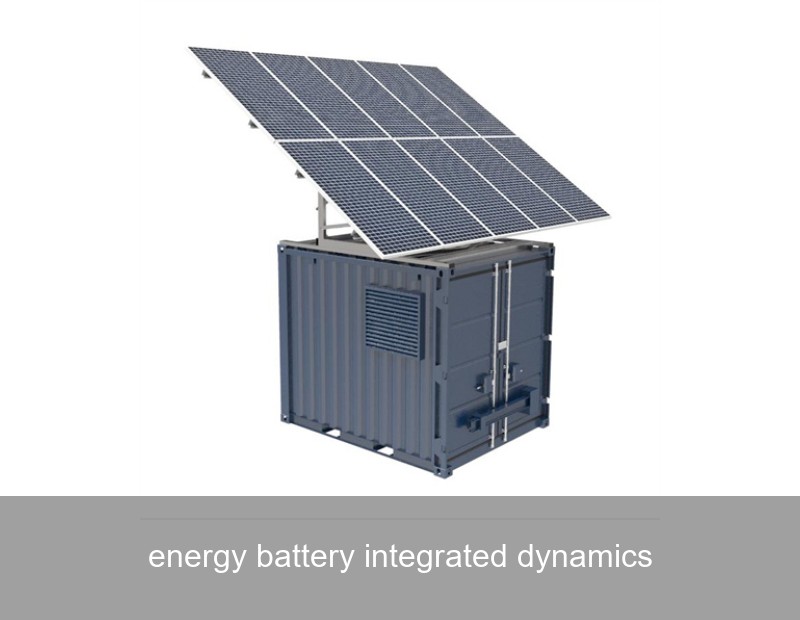
Have you ever wondered how modern businesses, communities, and even homes can maintain seamless power while integrating unpredictable renewable sources like solar and wind? The answer lies in a sophisticated concept gaining critical importance: energy battery integrated dynamics. This isn't just about having a battery in the corner; it's about the intelligent, real-time orchestration of energy storage within a larger system. It's the difference between a simple power backup and a truly adaptive, efficient, and self-optimizing energy asset. As grids evolve and energy independence becomes paramount, mastering these dynamics is key to unlocking resilience, sustainability, and significant cost savings.
Table of Contents
The Phenomenon: From Static Storage to Dynamic Asset
Traditionally, energy storage was viewed as a passive component—a reservoir to be filled and emptied. Today, that view is obsolete. The modern challenge involves managing bidirectional power flows from rooftop solar, fluctuating grid prices, dynamic building loads, and even electric vehicle charging. A battery operating in isolation cannot address this complexity. Energy battery integrated dynamics refer to the holistic performance of a storage system as it continuously communicates with and responds to these external and internal variables. Think of it as the central nervous system of your energy ecosystem, making millisecond-by-millisecond decisions to optimize for cost, carbon footprint, and reliability.

This shift is driven by necessity. In Europe and the U.S., grid constraints and the phase-out of fossil fuel baseload power are creating volatility. A well-integrated battery system doesn't just cushion these shocks; it turns them into opportunities, such as providing grid services or avoiding peak demand charges.
The Data: Why Integration is the Real Game-Changer
Let's look at the numbers. According to the International Energy Agency (IEA), global grid-scale battery storage capacity is set to multiply by a factor of 35 by 2030. However, the value captured by these assets varies wildly—by up to 40%—based not on hardware alone, but on the sophistication of software, controls, and system integration. For instance, a commercial facility in California might see a 5-year payback period with a basic storage setup, but advanced integration that layers energy arbitrage, demand charge management, and frequency regulation can slash that to under 3 years. The dynamics transform a capital expense into a strategic revenue center.
The Case Study: A German Industrial Park in Action
Consider a real-world example from our portfolio at Highjoule. A mid-sized automotive parts manufacturer in Bavaria, Germany, faced a dual challenge: rising strompreise (electricity prices) and a corporate mandate to achieve 80% renewable energy usage for their production facility. They had a sizable rooftop PV installation, but overproduction at midday was being sold to the grid at low rates, while they bought power back at high rates during the morning and evening peaks.
Highjoule's solution was a 1.2 MWh Highjoule HiveStack Commercial BESS with our proprietary Adaptive System Integration (ASI) Platform. The project wasn't just about installing batteries; it was about integrating them into the factory's energy management system (EMS), the PV inverters, and even the grid operator's balancing signals.
The results after one year of operation, powered by these sophisticated dynamics:
| Metric | Before Integration | After Integration |
|---|---|---|
| On-site renewable consumption | 48% | 94% |
| Peak grid power draw | 1.8 MW | 0.9 MW |
| Annual energy cost savings | - | €182,000 |
| Revenue from grid frequency services | €0 | €28,000 |
The energy battery integrated dynamics here meant the system autonomously decided when to store solar excess, when to discharge to shave the peak, and when to hold capacity in reserve to respond to a grid frequency event—all without disrupting manufacturing operations. This is the power of true integration.
The Insights: Core Principles of Superior Integrated Dynamics
Based on thousands of deployments, we at Highjoule have identified the non-negotiable pillars that define effective integrated dynamics:
- Predictive, Not Just Reactive Intelligence: Systems must use weather and load forecasting to pre-schedule charge/discharge cycles, not just react to immediate conditions.
- Open Protocol Architecture: The battery system must "speak" multiple languages (like Modbus, SunSpec, IEEE 2030.5) to connect seamlessly with any existing inverter, meter, or building management system. Vendor lock-in cripples dynamics.
- Granular Power Electronics: The ability to control individual battery packs or even cells within a rack (a feature in our HiveStack design) allows for unparalleled efficiency and longevity, adapting to uneven loads and wear.
- Cybersecurity from the Ground Up: As a critical, connected asset, integrated systems must be built with robust security protocols to protect against digital threats, a core tenet of our ASI Platform.

Highjoule's Role: Engineering Intelligent Energy Harmony
Since 2005, Highjoule has moved beyond being a hardware provider to become an architect of energy resilience. Our focus is on delivering the full spectrum of energy battery integrated dynamics through our tailored products and services.
For commercial and industrial clients, our HiveStack modular battery systems are the physical foundation. But the true magic is unlocked by our Adaptive System Integration (ASI) Platform, a software layer that acts as the maestro, continuously analyzing data from the grid, weather feeds, and on-site generation to execute the most economically and energetically optimal strategy. For microgrid and utility-scale projects, our GridSynch solutions provide the grid-forming capabilities necessary for true islanding and black-start operations.
Our services encompass everything from initial feasibility studies and financial modeling to system design, installation, and 24/7 performance monitoring. We ensure the integrated dynamics we promise on paper are delivered and maintained in the field for the lifetime of the system. As noted by research from the National Renewable Energy Laboratory (NREL), the value of storage is maximized through "co-optimization across multiple value streams," which is precisely the problem our technology solves.
Looking Ahead: The Integrated Grid
The future is a network of millions of distributed energy assets—home batteries, EV fleets, industrial storage—all interacting with the central grid. The winners in this future won't be those with the cheapest battery per kWh, but those with the most intelligent, secure, and adaptable integration platform. The dynamics become the product.
Is your current energy strategy merely adding a component, or is it designed to harness the full, dynamic potential of integrated storage? What single grid constraint or energy cost is most dynamic in your region, and how could a intelligently integrated system turn it into an advantage?
 Inquiry
 Online Chat