


Beyond the Sticker Shock: A Deep Dive into Solar Panel Price in Uganda and Maximizing Your Investment
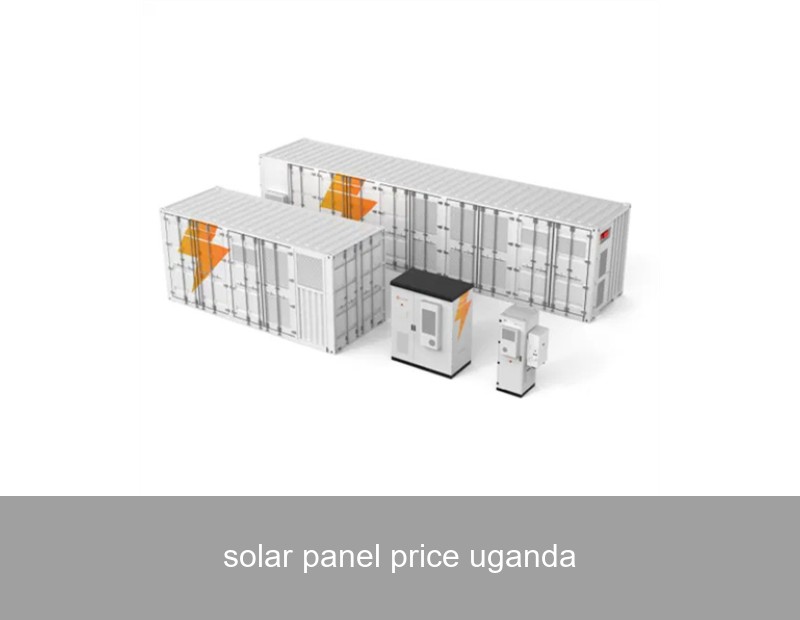
If you're exploring solar energy in Uganda, your first search was likely for "solar panel price Uganda." That initial figure you find is just the starting point of a much more important conversation. While the cost per watt of a photovoltaic module is a critical data point, the true value—and the ultimate return on investment—is determined by what happens after the sun hits the panel. For businesses, farms, and communities across Uganda and similar markets, the real question isn't just "what does a panel cost?" but "how do I build a resilient, cost-effective power system that delivers reliable electricity day and night?"
Understanding the Solar Panel Price Puzzle in Uganda
The quoted solar panel price in Uganda is influenced by global polysilicon markets, import duties, logistics, and local market competition. Prices have fallen dramatically globally over the past decade, making the technology more accessible. However, in East Africa, the final installed cost involves a complex web of components beyond the panel itself. Focusing solely on the module price can lead to under-sized or poorly balanced systems that fail to meet energy needs, especially during the critical evening hours when demand peaks but solar generation is zero.
The Phenomenon: A Surge in Demand, A Tangle of Costs
Uganda, like many sun-rich nations, is witnessing a renewable energy revolution. With abundant solar resources averaging over 5 kWh/m²/day, the potential is staggering. The phenomenon is clear: there's a massive push towards solar to combat grid instability, high diesel costs, and to power growth. Yet, the initial excitement often meets the reality of system quotes. Why does a "cheap" panel setup sometimes lead to a surprisingly high total project cost or disappointing performance? The answer lies in the system's anatomy.
Breaking Down the Costs: More Than Just the Panel
A functional, reliable solar power system is an ecosystem. Let's deconstruct a typical commercial or industrial installation cost breakdown in Uganda:
- Solar Panels (Modules): Typically 25-35% of total system cost. This is the solar panel price Uganda component everyone focuses on.
- Inverters & Balance of System (BOS): 20-25%. This includes crucial components that convert and manage the DC power from panels.
- Battery Energy Storage System (BESS): 30-45%. Often the single largest cost, but also the component that defines system capability and reliability.
- Mounting, Cabling, and Installation: 10-15%. Quality here ensures longevity and safety.
As you can see, the panel is just one part. The storage system is the linchpin. A low-quality or undersized battery bank can ruin the economics of even the most efficiently priced panels, requiring frequent replacements and failing to capture solar energy for use when it's needed most.

Credit: Photo by American Public Power Association on Unsplash - A quality installation is key for long-term performance.
The Game-Changer: Why Storage is Key to Unlocking True Solar Value
Think of it this way: solar panels are excellent energy producers, but they are not power managers. Without storage, excess energy generated at midday is wasted, and you have no power after sunset. This drastically reduces the utilization and financial return of your solar asset. Integrating a high-performance Battery Energy Storage System (BESS) transforms solar from a partial solution into a comprehensive one. It allows you to:
- Shift Energy: Store cheap midday solar for use during expensive peak evening hours.
- Ensure Reliability: Provide backup power during grid outages, ensuring business continuity.
- Stabilize Power: Improve power quality, protecting sensitive equipment.
Therefore, evaluating a solar investment in Uganda must shift from "cost per panel" to "levelized cost of energy (LCOE)" over the system's 20+ year life, with storage as a core component.
The Highjoule Solution: Intelligent Systems for a Brighter ROI
This is where Highjoule's expertise becomes critical. As a global leader in advanced energy storage since 2005, we don't just supply batteries; we provide intelligent, integrated power solutions. For partners and clients in markets like Uganda, our value lies in optimizing the entire system around the storage core to maximize the return on your solar investment.
Highjoule's IntelliBESS series for commercial and industrial applications is engineered for harsh environments and long cycle life, directly addressing the need for durability in tropical climates. Our systems feature advanced lithium iron phosphate (LFP) chemistry, known for its safety, stability, and longevity. More importantly, our integrated energy management system (EMS) is the "brain" that intelligently dispatches stored solar energy based on consumption patterns, weather forecasts, and tariff schedules, ensuring every kilowatt-hour generated is used in the most economical way possible.
For larger-scale applications like microgrids for communities or industrial parks, Highjoule's GridSynch platform allows for seamless integration of solar PV, multiple storage units, and existing diesel gensets or the main grid, creating a resilient, cost-optimized hybrid power plant. This means our solutions help you extract maximum value from your solar panels, making the initial solar panel price in Uganda part of a smarter, more valuable long-term asset.
Real-World Impact: A Case Study from Kampala
Let's move from theory to practice. A prominent textile factory in the Kampala Industrial Park faced crippling grid instability and exorbitant diesel costs for backup generators. Their goal was to reduce operational costs and ensure 24/7 power for continuous production.
- Challenge: Unreliable grid, $0.35/kWh diesel generation cost, need for uninterrupted power.
- Solution: A 500 kW rooftop solar PV system coupled with a 1 MWh Highjoule IntelliBESS, configured for solar self-consumption and peak shaving.
- Outcome: The system now supplies over 60% of the factory's daily energy needs. The intelligent EMS prioritizes solar consumption, charges the batteries during the day, and discharges them during peak grid tariff hours and outages. Diesel generator usage has been reduced by over 90%.
| Metric | Before Installation | After Highjoule System |
|---|---|---|
| Grid/Diesel Dependency | ~100% | <40% |
| Effective Energy Cost | ~$0.28/kWh | ~$0.12/kWh |
| Estimated Payback Period | N/A | 5.2 years |
| CO2 Emissions Reduction | Baseline | ~450 tons/year |
This case, verified by IRENA's data on solar costs, illustrates that the premium for an integrated, high-quality storage solution pays for itself multiple times over by transforming solar from a supplementary power source into the primary, reliable backbone of operations.

Credit: Photo by Michael Fousert on Unsplash - A modern, containerized battery storage system like Highjoule's solutions.
The Future Outlook: Smart Investment for Long-Term Gains
The trajectory for solar panel prices in Uganda and globally remains favorable. However, the future of energy is not just about generation; it's about intelligent control and storage. As battery technology continues to advance and costs decline, the economic case for solar-plus-storage becomes unassailable. The key is to partner with technology providers who understand the total system lifecycle, not just component sales.
Highjoule's commitment extends beyond hardware. We offer comprehensive design support, remote monitoring, and lifecycle management services, ensuring our clients' systems perform optimally for decades. This holistic approach de-risks the investment and guarantees that the focus on the initial solar panel price evolves into a celebration of long-term, low-cost, and reliable clean energy.
So, as you evaluate your solar project in Uganda or the wider East African region, what will be your defining metric: the upfront cost of the panels, or the lifetime value and reliability of your entire power system?
 Inquiry
 Online Chat