


Why the Energy Conference in Dubai is a Global Turning Point for Renewables and Storage
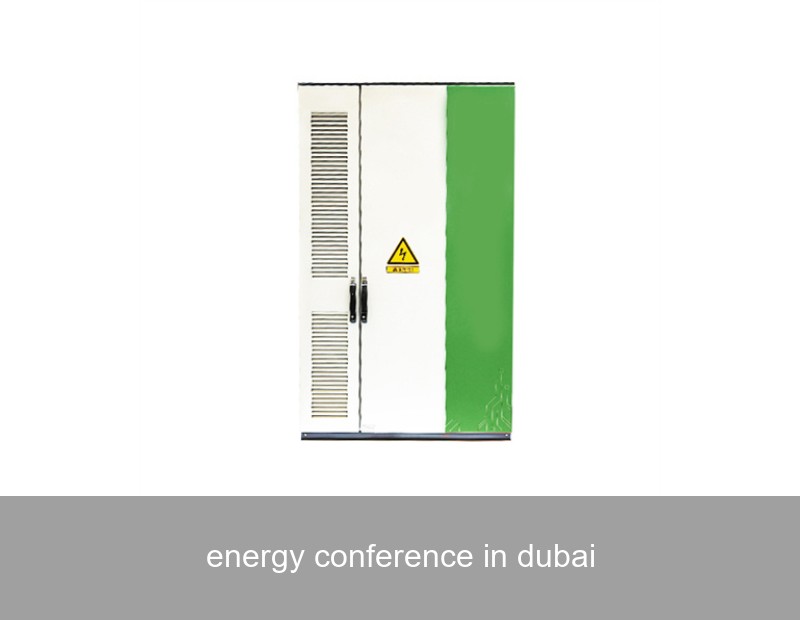
The world's energy leaders are gathering, and the spotlight is firmly on the sun-drenched metropolis of Dubai. An energy conference in Dubai is no longer just a regional meeting; it has become a critical nexus for global dialogue on our sustainable future. These events, set against the backdrop of ambitious national visions like the UAE's Net Zero by 2050 strategic initiative, highlight a universal truth: the transition to renewables is accelerating, but its success hinges on one pivotal technology—advanced energy storage. This article explores the key themes from these global summits and how they translate into real-world, reliable power for businesses and communities worldwide.
Table of Contents
The Dubai Dialogue: From Megawatts to Manageability
At any major energy conference in Dubai, the conversation has decisively shifted. A decade ago, the primary focus was on achieving cost parity for solar panels and wind turbines. Today, the talk is about integration, stability, and intelligence. The phenomenal growth of renewable capacity—with global renewable power capacity expanding by a record 50% in 2023 to nearly 510 gigawatts(IEA)—presents a new challenge: variability. The sun doesn't always shine, and the wind doesn't always blow, creating a mismatch between generation and demand that traditional grids weren't designed to handle.
This is the central puzzle being solved in Dubai's conference halls: How do we turn intermittent renewable energy into a firm, dispatchable power source? The resounding answer, echoed by policymakers, utility executives, and engineers alike, is through sophisticated energy storage systems (ESS).
The Storage Imperative: More Than Just a Backup
Think of energy storage not just as a battery, but as the "brain" of the modern power system. It performs several critical functions that will be repeatedly discussed at any forward-looking energy conference in Dubai:
- Grid Stabilization: Provides frequency regulation and voltage support, acting as a shock absorber for the grid to maintain power quality.
- Energy Arbitrage: Stores cheap, abundant solar power during the day and releases it during expensive peak evening hours, saving money.
- Renewables Firming: "Smooths out" the output from a solar farm during passing clouds, ensuring a predictable delivery to the grid.
- Backup Power: Provides critical electricity during outages, ensuring business continuity and community resilience.
The technology of choice for grid-scale and large commercial applications is increasingly the Lithium-Iron-Phosphate (LFP) battery, prized for its long life, safety, and stability. Deploying these systems effectively, however, requires deep expertise.

Credit: Image by American Public Power Association on Unsplash. Large-scale battery storage is essential for integrating solar farms into the main grid.
From Conference Hall to Real-World Grid: A German Case Study
Theories debated in Dubai are already in practice elsewhere. Let's consider a real-world example from Europe. A mid-sized German industrial manufacturer, committed to decarbonization, installed a 5 MW rooftop solar array. Their goal was to cover 60% of their daytime energy needs. However, they faced two problems: they were exporting excess solar power at low noon prices and still drawing expensive power from the grid in the morning and evening, missing their sustainability and cost targets.
The solution, implemented in 2023, was a 2.5 MWh / 2.5 MW battery energy storage system. Here’s the impact data:
| Metric | Before ESS | After ESS | Change |
|---|---|---|---|
| Solar Self-Consumption | 35% | 85% | +143% |
| Grid Peak Demand | 1.8 MW | 0.9 MW | -50% |
| Annual Energy Costs | €480,000 | €310,000 | €170,000 saved |
This case mirrors the solutions championed at global energy conferences: storage transformed their solar investment from a partial solution into a comprehensive, cost-saving power asset. It provided predictable budgeting, reduced grid strain, and significantly advanced their carbon reduction goals.
The Highjoule Role: Intelligent Storage for a Complex Grid
As discussions at a premier energy conference in Dubai underscore, success isn't just about the battery cells; it's about the system intelligence wrapped around them. This is where Highjoule's expertise, honed since 2005, becomes critical. We move beyond simple hardware provision to deliver integrated, intelligent storage solutions.
For our commercial and industrial clients in Europe and the U.S., Highjoule’s H-Series battery storage systems provide the robust, safe backbone for energy independence. These scalable, containerized solutions feature our proprietary Energy Management System (EMS)—the true "brain" that makes the storage smart. Our EMS doesn't just charge and discharge; it forecasts energy production and consumption, analyzes real-time electricity prices, and automatically optimizes the system's operation to maximize financial return and grid support.
For larger-scale applications like microgrids for communities or industrial parks, Highjoule provides end-to-end Microgrid as a Service (MaaS) solutions. We design, build, finance, and operate resilient microgrids that seamlessly integrate solar, wind, storage, and backup generators, ensuring a 24/7 clean power supply. This turnkey approach de-risks the transition for our partners, allowing them to benefit from clean, stable power without upfront capital or operational complexity.

Credit: Image by ThisisEngineering RAEng on Unsplash. Intelligent energy management software is key to unlocking storage value.
The Future Focus: What's Next After the Conference?
The dialogues in Dubai point to an exciting, interconnected future. The next frontier is the creation of virtual power plants (VPPs)—networks of decentralized energy resources like rooftop solar, home batteries, and commercial storage systems, aggregated and controlled as a single, tradable power plant. This concept turns every business with a Highjoule system into a potential grid stakeholder, earning revenue by providing stability services.
Furthermore, the integration of green hydrogen as a long-duration storage medium is a hot topic. While batteries excel at short-to-medium duration cycles (hours to days), hydrogen can store summer solar energy for use in winter. Highjoule is actively involved in hybrid system design that combines our battery storage for daily cycling with hydrogen solutions for seasonal storage, creating a truly 100% renewable year-round energy supply.
Your Energy Transition, Powered by Intelligence
The insights from a global energy conference in Dubai make one thing clear: the future of energy is not just renewable, it is intelligent, flexible, and resilient. The question for forward-thinking business leaders, utility managers, and project developers is no longer if to invest in storage, but how to implement it most effectively to meet your specific financial, operational, and sustainability goals.
What is the first step your organization will take to move from conference insight to on-the-ground energy resilience and savings?
 Inquiry
 Online Chat