


Unlocking Grid Resilience and Savings: The Power of the 3kV Energy Storage Cabinet
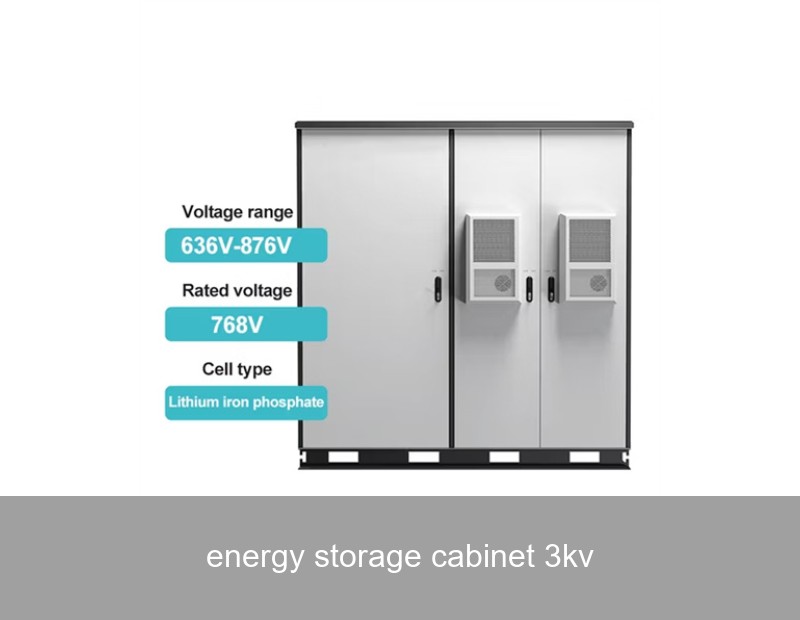
Have you ever wondered how modern businesses and communities ensure a stable power supply, integrate renewable energy seamlessly, and keep electricity costs predictable? The answer increasingly lies in a sophisticated yet often unseen piece of technology: the energy storage cabinet 3kV. This isn't just a battery in a box; it's the intelligent heart of a modern energy management system. As grids face pressure from electrification and variable renewable sources like solar and wind, these medium-voltage cabinets are becoming critical for stability, efficiency, and sustainability. In this deep-dive, we'll explore why the 3kV energy storage cabinet is a game-changer and how it's powering a more resilient future.
Table of Contents
What is a 3kV Energy Storage Cabinet?
At its core, an energy storage cabinet 3kV is a containerized, self-contained system that stores electrical energy at a nominal voltage of 3000 Volts (3 kilovolts). It integrates several key components:
- Battery Racks: High-density lithium-ion (typically LFP or NMC) cells arranged to deliver the required capacity and power.
- Power Conversion System (PCS): The "brain" that converts DC battery power to AC grid power and vice versa.
- Battery Management System (BMS): Continuously monitors cell health, temperature, and state of charge for safety and longevity.
- Thermal Management: An advanced cooling system to maintain optimal operating temperatures.
- Safety & Control Enclosure: Houses switchgear, fire suppression, and communication interfaces.
Unlike lower-voltage systems that require extensive parallel cabling, the 3kV design operates at a higher voltage, reducing current for the same power level. This means lower electrical losses, thinner cables, and more efficient power transfer—a crucial advantage for commercial and industrial (C&I) scale applications.
The Problem: Volatility is Costly
Let's set the scene. A manufacturing plant in Germany or a data center in Texas sees its electricity demand spike during production hours or peak grid periods. These demand charges can constitute up to 50% of a commercial electricity bill. Furthermore, grid instability or outages can halt operations, costing thousands per minute. The traditional solution? Just pay the bill and hope the grid holds. The modern solution? Take control with on-site storage.
Why 3kV? The Technical Sweet Spot for C&I Applications
You might ask, "Why 3kV specifically?" The answer lies in a balance of efficiency, cost, and safety. For medium-scale energy storage applications in the 500 kW to 5 MW range—perfect for factories, shopping malls, hospitals, and microgrids—3kV hits a sweet spot.
| Voltage Level | Typical Use Case | Advantages | Limitations |
|---|---|---|---|
| Low Voltage (<1000V) | Residential, Small Commercial | Simple installation, standard components | High currents for large power, significant losses, bulky cables |
| Medium Voltage (3kV-5kV) | Commercial & Industrial (C&I), Microgrids | Optimal efficiency, reduced cabling costs, scalable, direct transformer coupling | Requires specialized design and safety protocols |
| High Voltage (>10kV) | Utility-Scale Storage Plants | Extreme efficiency for massive power transfer | Very high cost, complex infrastructure, stringent regulations |
By operating at 3kV, systems can deliver more power with less current. This translates directly into lower system costs (copper isn't cheap!) and higher overall round-trip efficiency, often exceeding 90%. This efficiency means more of your stored renewable energy—say, from your rooftop solar array—actually gets used, maximizing your return on investment.
A Real-World Case: Peak Shaving Saves Real Money
Let's move from theory to hard data. Consider a food processing plant in the Netherlands, a country with ambitious sustainability goals and high energy costs. The plant's operations, especially refrigeration and packaging lines, caused sharp daily demand peaks, leading to crippling capacity tariffs (a common charge based on your highest power draw in Europe).
The Solution: The facility deployed a containerized energy storage cabinet 3kV system with a capacity of 1.2 MWh and a power rating of 750 kW. The system's intelligent controller was programmed for "peak shaving": it would seamlessly discharge the batteries during the plant's operational peaks, flattening the demand curve drawn from the grid.
The Results (12-month period):
- Demand Charge Reduction: Peak grid demand was reduced by 22%, saving over €65,000 annually on capacity tariffs alone.
- Energy Arbitrage: The system charged during low-cost, off-peak hours (often at night) and discharged during expensive peak hours, adding another €18,000 in savings.
- Backup Power: Provided 2 hours of critical runtime for essential cold storage, preventing spoilage during two brief grid disturbances.
- CO2 Footprint: Enabled greater use of the facility's own solar PV, increasing self-consumption from 35% to over 60%, reducing grid-related emissions.
This case, mirrored by thousands of C&I sites across the US and EU, demonstrates that a 3kV energy storage cabinet isn't an expense; it's a strategic asset with a clear and calculable ROI. For more on how demand charges work and their impact, see this explainer from the U.S. Department of Energy.

Credit: A modern industrial energy storage installation. Systems like Highjoule's are designed for seamless integration into commercial facilities.
The Highjoule Approach: Intelligence Meets Durability
At Highjoule, with nearly two decades of experience since 2005, we've refined the energy storage cabinet 3kV into more than just hardware. Our H-Cube 3000 Series is engineered for the demanding environments of C&I and microgrid applications.
What sets our solution apart?
- Predictive Energy Management (PEM): Our AI-driven software doesn't just react; it forecasts. By analyzing weather patterns, historical consumption, and real-time grid price signals, it optimizes charge/discharge cycles for maximum financial return and grid support.
- Cell-Level Precision Cooling: Battery lifespan is paramount. Our proprietary thermal management system ensures each cell operates within a +/- 2°C window, dramatically extending life beyond standard warranties. We use industry-leading Lithium Iron Phosphate (LFP) chemistry for its safety and long cycle life.
- Grid-Interactive Capabilities: The H-Cube 3000 can be configured to provide grid services like frequency regulation, helping to stabilize the local network and potentially creating an additional revenue stream for our clients.
- Modular & Scalable Design: Start with what you need and expand capacity as your business grows. Our cabinet-based design allows for straightforward scalability on-site.
We don't just sell cabinets; we deliver a Highjoule Power Platform—a complete service from initial energy audit and financial modeling to installation, commissioning, and 24/7 remote monitoring. Our goal is to provide a seamless, sustainable, and intelligent power solution tailored to your specific load profile and energy goals.
Beyond Savings: Contributing to Grid Decarbonization
When you install a Highjoule system, you're participating in a larger transition. By enabling higher penetration of local solar and wind, these storage systems reduce the need for peaker plants—often fossil-fueled—that are called upon during grid stress. A study by the National Renewable Energy Laboratory (NREL) highlights how distributed storage is key to a reliable, high-renewables grid. Your investment not only saves you money but also builds community resilience.

Credit: Pairing solar PV with storage, like Highjoule's solutions, maximizes self-consumption and energy independence.
Future Trends and Your Next Step
The landscape is evolving rapidly. We're moving towards virtual power plants (VPPs), where thousands of distributed assets like your 3kV energy storage cabinet are aggregated to act as a single, flexible power plant. Policies like the EU's Green Deal and the U.S. Inflation Reduction Act are creating unprecedented incentives for storage adoption. The technology itself is advancing, with solid-state batteries and even more sophisticated grid-forming inverters on the horizon.
This brings us to the most important question: Is your business merely consuming energy, or are you ready to manage it as a strategic resource? The potential for cost control, sustainability gains, and operational resilience has never been more accessible.
What would a 20% reduction in your facility's peak demand charges do for your bottom line this year?
 Inquiry
 Online Chat