


Bharat Sarkar Solar Panel Yojana: A Blueprint for Global Energy Independence?
If you've been following the global energy transition, you've likely heard about India's ambitious solar revolution. At its heart lies the Bharat Sarkar Solar Panel Yojana—a suite of government schemes driving one of the world's largest renewable energy expansions. But what can homeowners in Europe or businesses in the US learn from a program on the other side of the globe? As it turns out, a lot. The core challenge India is tackling—integrating vast, intermittent solar power into reliable, everyday electricity—is the same one facing grids worldwide. The solution isn't just about generating more clean energy; it's about storing it intelligently. This is where advanced energy storage systems (ESS) become the unsung hero, transforming solar from a supplemental source into a foundational pillar of a modern grid. Companies like Highjoule, a global leader in smart energy storage since 2005, are at the forefront of this very transformation, providing the critical technology that makes solar dreams a 24/7 reality.
Table of Contents
- Understanding the "Yojana": More Than Just Panels
- The Global Storage Imperative: Lessons from India's Scale
- Case Study: Gujarat's Solar Success and the Next Challenge
- The Highjoule Role: From Megawatts to Managed Microgrids
- Implementing the "Yojana" Principle Abroad: A Practical Guide
Understanding the "Yojana": More Than Just Panels
The term "Bharat Sarkar Solar Panel Yojana" broadly refers to key Indian government initiatives like the PM-Surya Ghar: Muft Bijli Yojana for rooftop solar and the large-scale Solar Park Scheme. The goal is audacious: achieve 500 GW of renewable energy capacity by 2030. While the subsidies and public awareness campaigns are vital, the real innovation is in the systemic approach. India isn't just installing panels; it's attempting to rewire a nation's energy psyche, encouraging prosumers (producer-consumers) and decentralizing power generation.
This creates a fascinating phenomenon: millions of points of generation feeding into the grid. Sounds ideal, right? But here's the catch. Solar power is inherently variable—it dips when clouds pass and vanishes at night. Without a buffer, this can lead to grid instability, curtailment (wasting excess solar), and failed promises of "muft bijli" (free electricity).
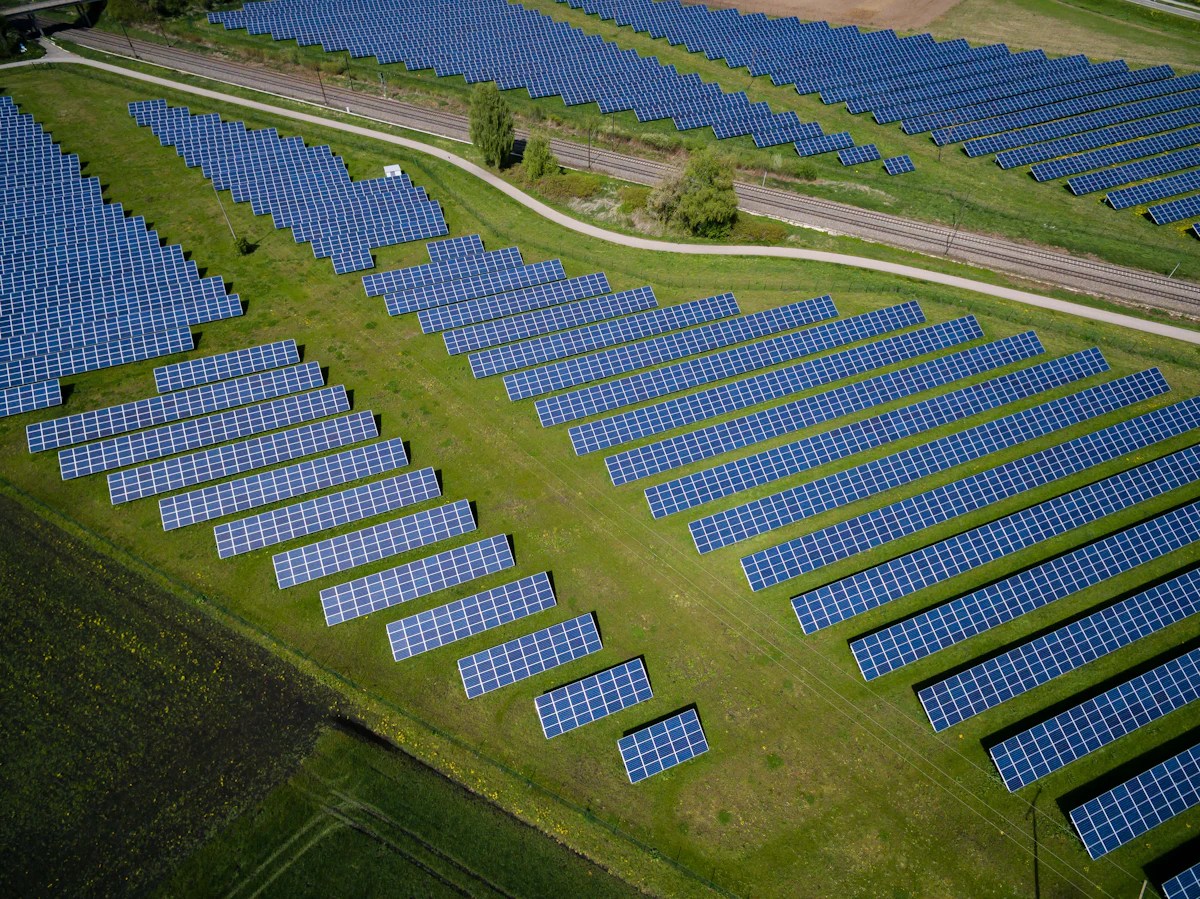
Image: Large-scale solar parks, like those propelled by Indian government schemes, require intelligent storage for grid stability. Source: Unsplash
The Missing Link in the Solar Value Chain
Think of it this way: a solar panel is like a water spring that flows only during the day. If you try to supply a city directly, you'll have floods and droughts. What you need is a reservoir. In the energy world, that reservoir is a Battery Energy Storage System (BESS). It captures excess solar generation during peak sunlight and dispatches it when needed—in the evening, during peak demand, or when the grid is stressed.
The Global Storage Imperative: Lessons from India's Scale
Europe and the US face similar, if not more immediate, grid pressures. With ambitious climate targets and rising electricity costs, the shift to renewables is accelerating. However, the International Energy Agency (IEA) consistently highlights that grid-scale storage is crucial to integrating high shares of wind and solar. The Indian experience on a massive scale underscores a universal truth: solar policy without a storage strategy is only half a plan.
| Challenge | Impact (India Example) | Solution with BESS |
|---|---|---|
| Evening Peak Demand | Solar generation falls just as demand spikes, forcing reliance on fossil fuels. | Stored solar energy discharges to cover the "peak shaving" need. |
| Grid Frequency Fluctuation | Sudden cloud cover can cause rapid drops in solar output, destabilizing grid frequency. | BESS provides sub-second frequency response, acting as a grid shock absorber. |
| Curtailment of Renewable Energy | In 2023, Tamil Nadu state curtailed significant solar energy due to grid congestion. | Excess energy is stored instead of being wasted, improving project economics. |
Case Study: Gujarat's Solar Success and the Next Challenge
Let's look at a real-world example. Gujarat, India, is a solar leader, with over 11,000 MW of installed capacity as of 2024—far exceeding many European countries. The state's aggressive solar park development, supported by central and state policies, has been a textbook success. However, analysts at Wood Mackenzie note that India's renewable-rich states are increasingly facing grid integration challenges.
In 2023, during periods of high wind and solar output, Gujarat experienced instances of must-run conventional plants and renewable curtailment. This paradox—having abundant clean energy but being unable to use it all—highlights the critical next phase: deploying storage at scale. The state has now begun tendering for large-scale battery storage projects, recognizing that the future lies in hybrid renewable-storage plants. This evolution from pure solar to solar-plus-storage is a direct lesson for markets in Europe and the US currently on the first half of that journey.
The Highjoule Role: From Megawatts to Managed Microgrids
This is where global expertise in advanced energy storage becomes essential. For nearly two decades, Highjoule has been designing and deploying intelligent storage solutions that address the exact challenges foreshadowed by large-scale solar adoption. Our systems don't just store energy; they optimize it.
For a commercial or industrial facility in Germany or California inspired by the "prosumer" model of India's yojana, Highjoule's Intelligent Battery Storage (IBS) platform provides complete energy autonomy. It seamlessly integrates with onsite solar PV, storing surplus generation and enabling:
- Peak Shaving: Dramatically reducing demand charges by discharging batteries during costly peak periods.
- Backup Power: Providing a seamless transition to backup power during grid outages, ensuring business continuity.
- Energy Arbitrage: Buying grid electricity when cheap (at night) and using it or selling stored solar when prices are high.
On a larger scale, our Utility-Scale BESS solutions offer the grid services that Indian states and Western grids desperately need: frequency regulation, renewable firming, and capacity deferral. Using advanced lithium-iron-phosphate (LFP) battery chemistry for safety and longevity, Highjoule systems are engineered for the rigorous duty cycles required to balance modern grids.

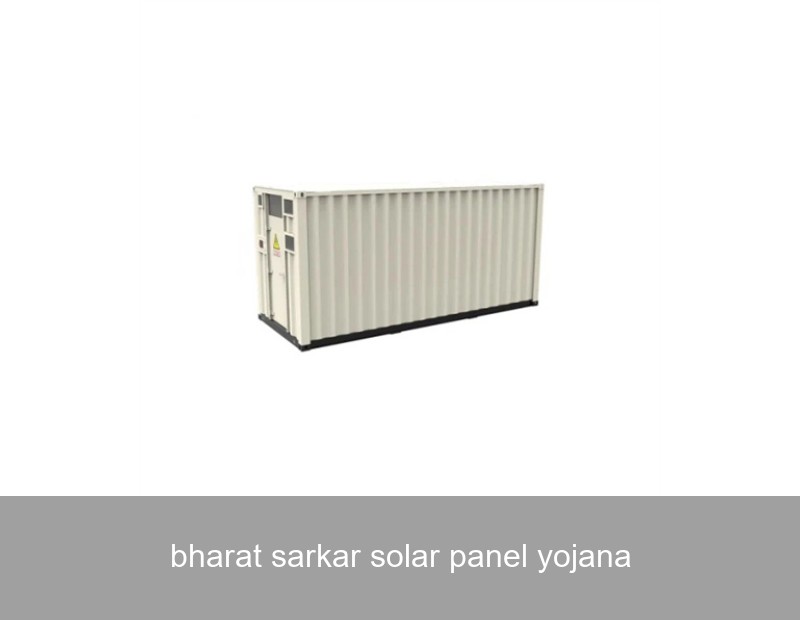
Image: A containerized Battery Energy Storage System (BESS), similar to Highjoule's utility-scale solutions, essential for grid stability. Source: Unsplash
Beyond Technology: The Intelligence Layer
What truly differentiates a modern ESS is its brain. Highjoule's Energy Management System (EMS) uses AI-driven forecasting and real-time optimization to make decisions that maximize financial return and system resilience. Whether for a residential microgrid in Spain or an industrial plant in Texas, this intelligence turns a passive battery into a dynamic financial and operational asset.
Implementing the "Yojana" Principle Abroad: A Practical Guide
So, how can you apply the integrated solar-storage principle of the Bharat Sarkar Solar Panel Yojana to your context? Here’s a framework:
- Start with an Audit: Analyze your energy consumption profile. When are your peaks? How much rooftop or land is available for solar?
- Design as a System: Don't just size a solar array. Model it with storage from the start. A smaller solar system paired with optimal storage often yields better ROI and reliability than an oversized solar-only setup.
- Explore Incentives: While not called a "yojana," many regions in Europe and the US offer tax credits (like the US ITC), grants, or favorable tariffs for solar-plus-storage installations. The U.S. Department of Energy is a key resource.
- Partner for Expertise: Choose a technology provider with proven global experience in system integration and long-term performance, like Highjoule, who can navigate the complexities of both hardware and software.
The Bharat Sarkar Solar Panel Yojana teaches us that energy independence is a two-step dance: capture the sun, then master its rhythm. As grids everywhere grow greener, the question is no longer if you need storage, but how smart your storage needs to be. Is your home, business, or community ready to build its own intelligent energy reservoir?
 Inquiry
 Online Chat