


Energy Gateway How Much? A Clear Guide to Costs, Benefits, and Smart Investment
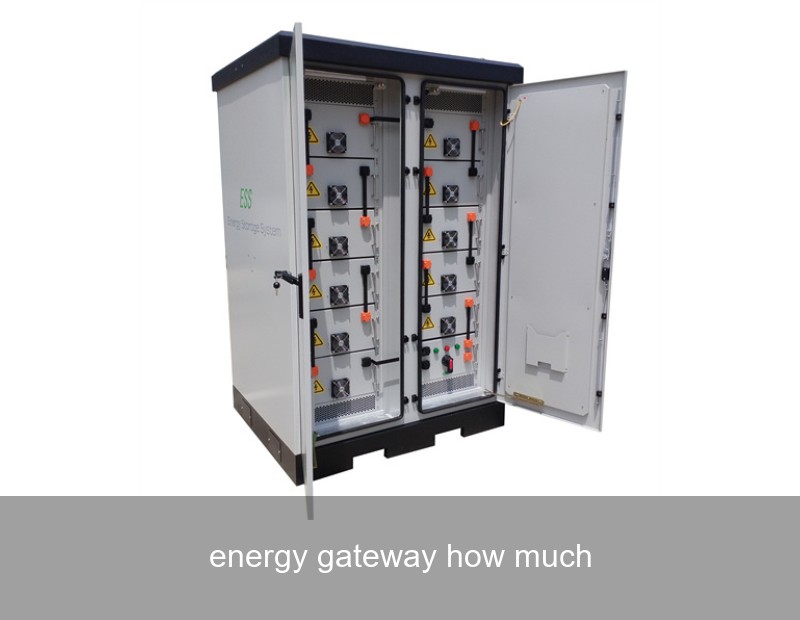
If you're exploring home energy independence, boosting your solar system's value, or simply seeking protection from volatile electricity prices, you've likely encountered the term "energy gateway." And your immediate, practical question is probably: "An energy gateway, how much does it actually cost?" It's a great starting point, but the answer is more nuanced than a single price tag. The true cost is intertwined with the immense value it unlocks. Think of it not just as a purchase, but as an investment in control, resilience, and long-term savings. As a global leader in smart energy storage since 2005, Highjoule is here to demystify this critical component. Let's break down what you're really paying for and how it transforms your energy experience.
Table of Contents
- What Exactly is an Energy Gateway?
- The Cost Breakdown: Hardware, Software, and Expertise
- Value Beyond the Price: Resilience, Savings, and Control
- A Real-World Case: The Smith Residence in California
- The Highjoule Solution: Integrated Intelligence for Maximum ROI
- Choosing the Right Gateway for Your Needs
What Exactly is an Energy Gateway?
Before we talk numbers, let's clarify the role. An energy gateway, often called a power conversion system (PCS) or smart inverter, is the brain and central nervous system of a modern energy storage setup. It's not just a simple switch. This sophisticated device sits between your solar panels, your battery bank, and your home's electrical panel (and the utility grid). Its primary jobs are:
- Intelligent Energy Routing: It decides, in real-time, whether to send solar power to your appliances, to charge your batteries, or to export back to the grid.
- Seamless Mode Switching: During a grid outage, it automatically disconnects your home safely (forming a "microgrid") and powers critical loads from batteries and solar within milliseconds.
- Advanced Communication: It connects to monitoring software, allowing you to track production, consumption, and savings via an app. It can also respond to utility signals for grid support.
In essence, it's the maestro orchestrating your personal energy symphony for maximum efficiency and reliability.
The Cost Breakdown: Hardware, Software, and Expertise
So, "energy gateway, how much?" Let's dissect the components. For a typical residential installation in Europe or the US, the gateway itself is usually part of an integrated storage system cost. A standalone gateway unit can range from $1,500 to $4,000 for the hardware. However, this is rarely the full story. The total installed cost is influenced by:
| Cost Component | Description & Typical Range | Why It Matters |
|---|---|---|
| Gateway Hardware | The physical unit, its power rating (e.g., 5kW, 10kW), and features (e.g., grid-forming capability). | Higher power ratings and advanced features increase cost but enable whole-home backup and greater solar self-consumption. |
| System Integration & Balance | Compatible batteries, cabling, safety disconnects, and electrical panel upgrades (if needed). | A quality gateway is only as good as the system it manages. Integrated, certified components ensure safety and performance. |
| Professional Installation | Labor, permitting, and interconnection fees with your local utility. | Proper installation is critical for safety, warranty validity, and system optimization. This is where expertise pays off. |
| Software & Monitoring | Often included, but some platforms have premium tiers. Essential for control and optimization. | This is your user interface for savings. Advanced AI-driven software, like Highjoule's EnergyOS™, can learn usage patterns to maximize financial returns. |
Therefore, when evaluating an "energy gateway, how much?", consider the total system solution. A premium, fully integrated system from a provider like Highjoule, including our Hypergate™ Smart Energy Gateway and PowerStack™ Lithium-Ion Batteries, might have a higher upfront cost but delivers superior long-term value through unmatched efficiency, durability, and intelligent software.

Image: A professional installation is key to system safety and performance. (Source: Unsplash, representative image)
Value Beyond the Price: Resilience, Savings, and Control
Focusing solely on the gateway's sticker price misses the forest for the trees. The real question is: What is the cost of *not* having one? Let's apply the PAS framework to the modern energy dilemma.
Problem: Homeowners face rising electricity costs, increasing grid instability (from storms to heatwaves), and the desire to use more of their self-generated solar power.
Agitation: Without an energy gateway, a standard solar system shuts down during a blackout—leaving you without power even when the sun is shining. Excess solar energy is sold to the grid at low rates, only to buy it back at night at high rates. You lack control and resilience.
Solution: The intelligent energy gateway solves this. It enables backup power, maximizes self-consumption of solar energy (often raising it from 30% to 70%+), and allows for time-of-use arbitrage (store cheap energy, use during expensive peaks). According to the U.S. Department of Energy, pairing storage with solar significantly increases energy independence and utility bill savings.
A Real-World Case: The Smith Residence in California
Let's look at concrete data. The Smith family in Northern California installed a 10kW solar array in 2020. Despite this, their bills remained significant due to high nighttime rates and the region's Public Safety Power Shutoffs (PSPS).
In 2023, they added a Highjoule integrated storage system featuring the Hypergate™ 10kW gateway and 20kWh of PowerStack™ battery storage. The results after one year:
- Bill Savings: Reduced their electricity bill by 92% annually, saving over $2,400.
- Self-Consumption: Increased solar usage on-site from 35% to 85%.
- Resilience: Experienced 5 grid outages totaling 42 hours. The system provided seamless backup, keeping lights, refrigeration, and internet running.
- Incentives: They qualified for the 30% Federal Investment Tax Credit (ITC) on the entire storage system, significantly offsetting the net cost.
Their effective payback period, considering savings and incentives, is projected to be under 7 years on a system with a 15+ year lifespan. For them, the question of "energy gateway, how much?" was answered in terms of ROI, not just cost.
The Highjoule Solution: Integrated Intelligence for Maximum ROI
At Highjoule, we don't just sell components; we deliver optimized energy outcomes. Our Hypergate™ Smart Energy Gateway is the core of this promise. What sets it apart?
- Grid-Forming Technology: It can create a stable, clean "grid" during outages, supporting sensitive electronics and even allowing other compatible inverters to operate—a feature often missing in standard systems.
- EnergyOS™ AI Platform: Our proprietary software doesn't just monitor; it forecasts weather and usage patterns, automatically choosing the most economical energy flow every minute of the day.
- Scalable & Modular Design: Start with what you need and expand your battery capacity over time without changing the gateway.
- Global Standards Compliance: Designed and certified for the stringent safety and grid codes of both the European and North American markets.
This integrated approach ensures that every dollar spent on the "gateway" is amplified by the intelligence of the entire system. We handle the complexity so you enjoy simple, reliable, and affordable power.

Image: Intelligent monitoring software puts energy control at your fingertips. (Source: Unsplash, representative image)
Choosing the Right Gateway for Your Needs
So, how do you navigate your decision? Ask these questions beyond just "energy gateway, how much?":
- What are my primary goals? (Emergency backup, bill savings, carbon footprint reduction?)
- What is my home's critical load? (What appliances must run during an outage?)
- Is the system future-proof? Can I add more solar or battery later?
- What is the total ecosystem? Does the company offer reliable long-term support, warranty, and software updates?
Consulting with a certified installer who can assess your home's energy profile is crucial. They can provide a tailored quote that reflects the true cost and value of a complete solution.
Ready to Transform Your Energy Question?
The journey from asking "energy gateway, how much?" to enjoying the peace of mind and savings of a smart energy system is exciting. It's an investment in your home's infrastructure, similar to upgrading a roof or HVAC system—but with direct, measurable returns on your utility bill.
What specific energy challenge in your home—be it a recent blackout, a daunting electricity bill, or a desire to go greener—makes you most curious about taking the next step with a solution like Highjoule's?
 Inquiry
 Online Chat