


Energy Generating Systems: Powering a Sustainable Future Beyond the Grid
Have you ever looked at your electricity bill and wondered, "What if I could generate my own power?" You're not alone. Across homes, businesses, and entire communities, a quiet revolution is underway. Energy generating systems—primarily solar photovoltaic (PV) panels—are moving from a niche alternative to a mainstream power source. But here's the catch: generation is only half the story. The true power of this revolution lies in what happens to that energy after it's created. Let's explore how modern energy generating systems are evolving into intelligent, self-sustaining power ecosystems.
Table of Contents
- The Phenomenon: From Consumers to "Prosumers"
- The Data: Why Generation Alone Isn't Enough
- Case Study: A German Industrial Park's Journey to Energy Independence
- The Complete Solution: Integrating Generation with Smart Storage
- How Highjoule Enables Advanced Energy Ecosystems
- The Future: Microgrids and Community Resilience
The Phenomenon: From Consumers to "Prosumers"
The traditional, one-way flow of electricity—from a centralized power plant to your outlet—is being fundamentally rewired. Thanks to plummeting costs (solar panel prices have fallen over 80% in the last decade [IRENA]) and strong policy support, millions in Europe and the U.S. have installed solar panels. They are no longer just consumers; they are "prosumers," both producing and consuming energy.
This shift creates a new set of challenges. Solar energy is inherently intermittent—it generates power when the sun shines, which often doesn't align perfectly with when we need to use it. This mismatch leads to a common scenario: excess energy being sold back to the grid at low rates during the day, only to be repurchased at high rates in the evening. The economic and environmental potential of your energy generating system is, quite literally, leaking away.

Image: Modern rooftop solar installations are the first step, but capturing their full value requires intelligent storage.
The Data: Why Generation Alone Isn't Enough
Let's look at the numbers. A typical residential solar system in Southern California might produce 90% of its energy between 9 AM and 4 PM. However, household energy demand often peaks between 4 PM and 9 PM, when the sun is setting. Without a solution, up to 60% of the generated electricity could be exported to the grid if not consumed immediately. With grid feed-in tariffs decreasing in many regions, the financial return on a solar-only system is diminishing.
For commercial and industrial (C&I) sites, the stakes are even higher. Demand charges—fees based on the highest 15-minute power draw in a month—can constitute 30-50% of a business's total electricity bill. A solar array alone does little to shave these peak demands if they occur after dark. The data clearly indicates that to maximize self-consumption, increase savings, and ensure reliability, energy storage is not an add-on; it's an essential component of a modern energy generating system.
Case Study: A German Industrial Park's Journey to Energy Independence
Consider the real-world example of a mid-sized manufacturing park in Bavaria, Germany. Facing rising energy costs and ambitious corporate sustainability goals, they installed a 2 MW solar carport system in 2021. Initially, they faced the classic problem: high grid dependency at night and during cloudy winter days.
In 2023, they integrated a 1.5 MWh battery energy storage system (BESS) with advanced energy management software. The results after one year were transformative:
| Metric | Before Storage (Solar Only) | After Storage (Solar + BESS) |
|---|---|---|
| On-site Self-Consumption of Solar Energy | 35% | 89% |
| Peak Grid Demand (Power Draw) | 1.8 MW | 0.6 MW |
| Annual Electricity Costs | €320,000 | €185,000 |
| Grid Carbon Footprint Offset | 42% | 76% |
The storage system intelligently dispatches energy: it captures midday solar excess, uses it to power evening operations, and even provides brief grid services for additional revenue. This case exemplifies the synergy between generation and storage, creating a resilient and cost-effective energy asset.
The Complete Solution: Integrating Generation with Smart Storage
So, what does the ideal system look like? It's a seamlessly integrated triad:
- Generation (Solar PV): The primary source of clean, low-cost energy.
- Storage (Battery System): The heart of the system, acting as an energy bank. It time-shifts solar power, provides backup during outages, and manages grid interaction.
- Energy Management System (EMS): The brain. This intelligent software platform forecasts generation and consumption, optimizes battery charging/discharging cycles, and can participate in grid flexibility programs.
This integrated approach turns a simple energy generating system into a smart power plant behind the meter. It ensures every kilowatt-hour you produce is used to its maximum potential, delivering tangible financial returns and energy security.
How Highjoule Enables Advanced Energy Ecosystems
This is precisely where Highjoule's expertise comes into play. Since 2005, we have focused on bridging the gap between energy generation and its optimal use. We understand that a one-size-fits-all approach doesn't work for a factory, a hospital, a school, or a neighborhood microgrid.
Highjoule provides end-to-end intelligent storage solutions that are the perfect partner to any energy generating system:
- For Homes (Residential): Our HomePower Stack series is a compact, wall-mounted lithium-ion battery system with integrated inverter and EMS. It's designed for easy retrofitting to existing solar arrays or as part of a new installation. Homeowners can monitor and control their energy flow via a simple app, maximizing self-consumption and providing peace-of-mind backup power.
- For Businesses & Industry (C&I): Our modular IndustrialPower Cube systems are scalable from 100 kWh to multi-megawatt-hour installations. They feature robust, UL-certified battery cabinets and a sophisticated EMS that can be programmed for peak shaving, load shifting, and even frequency regulation services, delivering a compelling ROI.
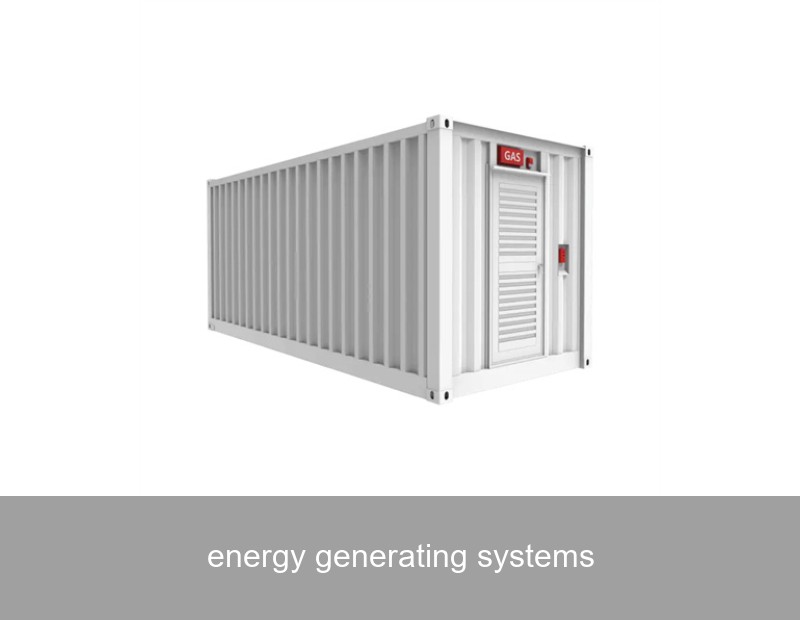
- For Microgrids & Utilities: Highjoule's GridSynch Platform is a containerized, utility-grade BESS solution. It enables the creation of stable, renewable-powered microgrids for campuses or remote communities and provides grid-support services like voltage regulation and black start capability for larger utilities.

Image: Advanced, modular battery storage systems like Highjoule's IndustrialPower Cube are key to unlocking the full value of on-site generation.
Our systems are built with safety, longevity, and cycle life as top priorities, using high-quality LiFePO4 (LFP) chemistry known for its stability and long lifespan. More than just hardware, Highjoule offers comprehensive energy analytics and monitoring services, helping our clients continuously optimize their energy assets over a 20+ year lifecycle.
The Future: Microgrids and Community Resilience
The logical evolution of integrated energy generating and storage systems is the microgrid. Imagine a neighborhood, a university campus, or an industrial park operating as its own intelligent, self-balancing energy island. It can connect to and disconnect from the main grid, providing unparalleled resilience during storms, wildfires, or other grid disruptions—events becoming more frequent due to climate change [Climate.gov].
In the U.S., states like California and Texas, and across Europe, from Scandinavia to the Mediterranean, community-led energy projects are demonstrating this future. They combine rooftop solar, shared battery storage, and smart controls to reduce collective costs and carbon footprints while strengthening local resilience.
The Open Question for You
Whether you're a homeowner with solar panels, a facility manager looking at energy budgets, or a community planner thinking about sustainability, the question is no longer just about generation. The critical question to ask now is: "How can I capture, control, and optimize the clean energy I generate to achieve true independence and maximum value?" What would energy security and cost predictability mean for your home or business in the next five years?
 Inquiry
 Online Chat