


How Energy Management Companies Are Powering a Smarter, More Resilient Grid
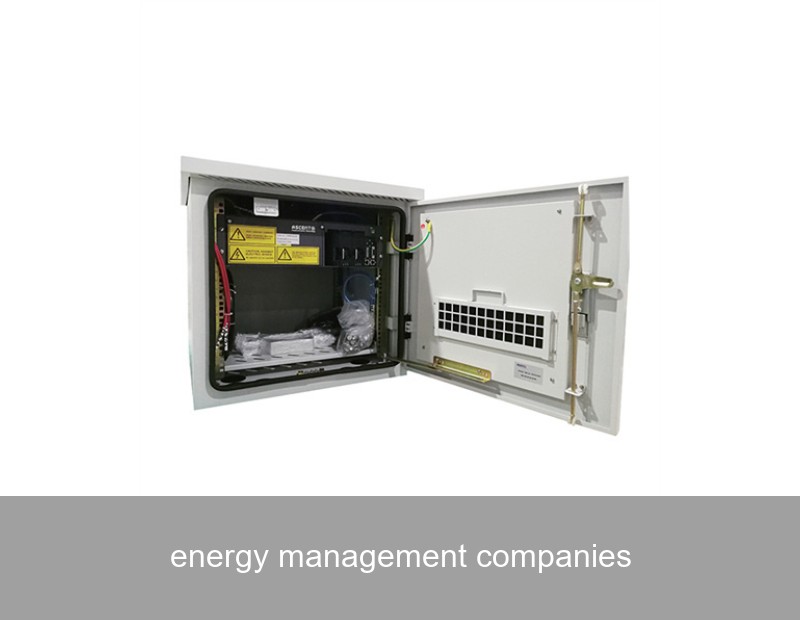
Have you ever wondered how large factories manage their massive energy consumption, or how a neighborhood can stay powered during a severe storm? The answer increasingly lies with specialized energy management companies. These firms are the masterminds behind the scenes, using technology, data, and innovative hardware to optimize how we generate, store, and use electricity. For businesses and communities in Europe and the US facing volatile energy prices and stricter sustainability goals, partnering with a capable energy management company is no longer a luxury—it's a strategic necessity for resilience and cost control.
Table of Contents
The Phenomenon: From Passive Consumer to Active Prosumer
For decades, the energy model was simple: utilities generated power, transmitted it over miles of cables, and consumers paid the bill. Today, that model is being turned upside down. The rise of distributed energy resources (DERs) like rooftop solar, home battery systems, and electric vehicles means that homes and businesses are becoming "prosumers"—both producing and consuming energy. This creates a complex web of energy flows that traditional grids weren't designed to handle.
This is where energy management companies come in. They provide the essential brain and nervous system for this new energy landscape. Their expertise lies in integrating diverse technologies—solar PV arrays, battery energy storage systems (BESS), EV chargers, and existing building loads—into a single, controllable network. The goal? To maximize self-consumption of renewable energy, provide backup power, and participate in grid services that stabilize the network and generate revenue.
The Data: Quantifying the Demand for Smart Energy
The shift towards advanced energy management isn't just theoretical; it's driven by compelling economic and environmental data.
- Cost Volatility: In Europe, wholesale electricity prices have experienced extreme fluctuations, with peaks exceeding €400/MWh in recent years, driven by geopolitical tensions. In the US, commercial electricity rates have risen steadily, increasing operational costs for businesses.
- Renewable Growth: The U.S. Energy Information Administration (EIA) projects that renewables will be the fastest-growing source of electricity generation through 2050. Managing this intermittent supply requires sophisticated storage and control.
- Grid Strain: Aging infrastructure and increasing climate-related outages are a major concern. The U.S. Department of Energy notes that power outages cost the American economy billions annually.
These pressures make the value proposition of energy management companies crystal clear: reduce energy costs, ensure operational continuity, and meet decarbonization targets with a measurable ROI.

Image: A modern industrial site integrating solar and storage, a typical project for energy management companies. Source: Unsplash
A Case Study: Manufacturing Resilience in Bavaria
Let's look at a real-world example. A mid-sized automotive parts manufacturer in Bavaria, Germany, was facing a dual challenge: skyrocketing energy costs and pressure from its parent company to achieve carbon neutrality. Their existing rooftop solar system was helpful, but much of its daytime generation was being exported to the grid at low rates, while they purchased expensive power in the evening.
They partnered with an energy management company that designed and deployed a turnkey solution. The core of the project was a 500 kWh lithium-ion battery energy storage system (BESS), integrated with their existing 300 kWp solar array and controlled by a proprietary energy management system (EMS).
The results, measured over one year, were significant:
| Metric | Before Implementation | After Implementation |
|---|---|---|
| Grid Energy Consumption | 100% Baseline | Reduced by 68% |
| Solar Self-Consumption | ~35% | Increased to 92% |
| Energy Cost Savings | N/A | €82,000 annually |
| Backup Power | None | Critical loads supported for 6+ hours |
This case illustrates the tangible impact a strategic energy partnership can have. The EMS didn't just store energy; it learned the facility's load patterns, predicted solar production, and automatically decided the most economical time to charge or discharge the battery—sometimes even selling power back to the grid during peak price events.
The Highjoule Solution: Intelligent Hardware Meets Smart Software
As a global leader in advanced energy storage since 2005, Highjoule operates at the intersection of cutting-edge hardware and intelligent software, embodying the modern energy management company. Our approach is holistic, providing tailored solutions for commercial, industrial, and microgrid applications.
Our core offering is the Highjoule Nexus Platform, which combines:
- High-Density Battery Storage: Our containerized and modular BESS units feature industry-leading safety standards, long cycle life, and high efficiency, built on proven lithium iron phosphate (LFP) chemistry.
- Adaptive Power Conversion: Our bi-directional inverters seamlessly connect storage to the grid and on-site generation, ensuring stable power quality.
- Orion Energy Management System (EMS): This is the true intelligence. Our AI-driven Orion EMS platform performs real-time optimization, forecasting, and control. It doesn't just react; it anticipates energy needs and market signals to make the most profitable and resilient decisions for our clients.
For a large retail chain in California, for instance, we deployed our systems not only for peak shaving and solar time-shift but also to participate in the state's Demand Response programs, creating an additional revenue stream. This multi-stack value approach is what sets comprehensive energy management companies apart from simple equipment vendors.

Image: An energy management system dashboard providing real-time insights and control. Source: Unsplash
Services Beyond the Hardware
Highjoule's role as an energy management company extends far beyond installation. We provide:
- Feasibility & System Design: Custom engineering to meet specific load profiles and financial targets.
- Financing & Ownership Models: We offer flexible options, including capital purchase, leasing, and Energy-as-a-Service (EaaS) agreements to reduce upfront barriers.
- Ongoing Monitoring & Optimization: Our team remotely monitors system performance, provides proactive maintenance, and continuously updates software strategies to adapt to changing tariffs and grid rules.
The Future of Energy Management: What's Next?
The evolution is towards ever-greater interconnection and intelligence. The next frontier for energy management companies is the orchestration of virtual power plants (VPPs), where thousands of distributed storage systems, solar installations, and flexible loads are aggregated to act as a single, reliable power plant for the grid. This requires unprecedented levels of communication, security, and algorithmic control.
Furthermore, the integration of electric vehicle fleets—both as loads and potential mobile storage assets—presents a new layer of complexity and opportunity. The companies that succeed will be those that view energy not as a static commodity, but as a dynamic, flowing resource that can be shaped and optimized in real-time.
So, as you look at your own energy bills, sustainability reports, or concerns about operational resilience, ask yourself this: Is your current approach to energy management reactive or proactive? What would be the impact on your bottom line and your environmental goals if you could control your energy destiny, rather than just respond to it?
 Inquiry
 Online Chat