


Centrales Eléctricas Solares: From Intermittent Source to Grid Cornerstone
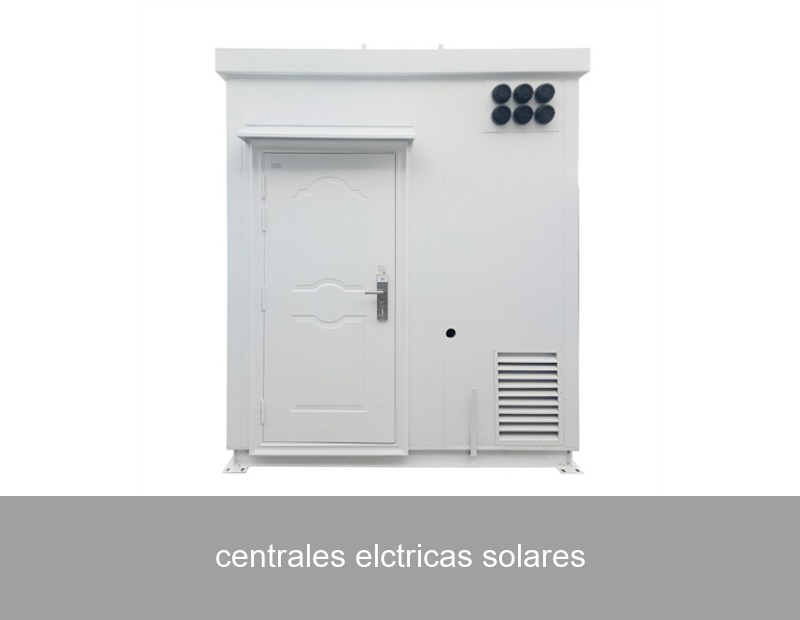
Imagine a power plant that fuels itself for free, emits nothing, and runs most reliably when energy demand often peaks—on sunny afternoons. This is the brilliant promise of centrales eléctricas solares (solar power plants). For over a decade, their growth has been phenomenal, transforming landscapes and energy portfolios across Europe and the United States. But as their contribution skyrockets, a fundamental question arises: what happens when the sun sets, or a cloud passes over? The evolution of these facilities is entering its most critical phase, moving beyond mere generation to become intelligent, dispatchable assets. The key to this transformation isn't just more panels; it's what happens to the energy after it's captured.
The Phenomenon: The Grid Flexibility Challenge
Solar power plants have an inherent, beautiful inconsistency. They follow the sun's rhythm, not the grid's demand curve. This creates the famous "duck curve"—a deep midday dip in net demand as solar floods the grid, followed by a steep evening ramp-up as solar production plummets just when homes and businesses need power most. Grid operators traditionally relied on fast-ramping natural gas "peaker" plants to bridge this gap. But this undermines solar's carbon-saving potential and is economically inefficient.
Let's look at the data. In 2023, solar PV generated over 6% of the EU's electricity, a figure that has doubled since 2019. In sun-rich markets like California, solar sometimes meets over 100% of daytime demand. This success, however, leads to frequent occurrences of "curtailment," where solar plants are paid to *not* generate because the grid cannot absorb the excess. This is wasted clean energy and lost revenue for plant operators.

Image: Large-scale solar farms are becoming a common sight, but their true potential is unlocked with integrated storage. Source: Unsplash
Energy Storage: The Missing Link for Solar Power Plants
This is where the narrative shifts. The most advanced centrales eléctricas solares are no longer just solar farms; they are solar-plus-storage hybrid facilities. By integrating Battery Energy Storage Systems (BESS), they can time-shift energy delivery. Excess midday sun is stored in batteries and released during the high-value evening peak or during periods of low solar generation. This simple addition solves multiple problems:
- Grid Stability: Provides critical ancillary services like frequency regulation.
- Enhanced Economics: Captures higher electricity prices and reduces curtailment.
- Improved Reliability: Acts as a buffer against rapid solar output changes from cloud cover.
The technology of choice for large-scale plants is increasingly lithium-ion battery systems, prized for their rapid response, high energy density, and declining costs. However, not all BESS solutions are created equal. The harsh, outdoor environments of solar plants demand robust thermal management, sophisticated control software, and system designs that ensure safety and longevity over thousands of charge cycles.
A Concrete Case Study: Managing the Peak in Southern Spain
Let's examine a real-world example from Andalusia, Spain, a region with some of Europe's highest solar irradiance. A 150 MW solar plant, operational since 2020, was facing significant curtailment during spring and summer months and could not participate in the lucrative evening power market.
In 2023, the operator partnered with Highjoule to integrate a 60 MWh grid-scale BESS. Here are the results after the first year of operation:
| Metric | Before BESS Integration | After BESS Integration |
|---|---|---|
| Energy Curtailment | ~12% of potential generation | Reduced to <2% |
| Revenue Streams | Wholesale market (daytime only) | Wholesale (day & evening), Frequency Regulation |
| Capacity Factor (Effective) | 18% | Increased to 31% |
| Grid Service Contribution | None | Provides 15 MW of automatic frequency response |
This transformation was powered by Highjoule's HiveGrid BESS Platform. The system's intelligent energy management software (EMS) autonomously decides the optimal moment to charge from the solar array or discharge to the grid, maximizing revenue based on real-time market prices and grid signals. Its advanced liquid cooling technology ensures consistent performance even during Andalusia's scorching summer heat, safeguarding battery life and safety.
Highjoule's Role in the Modern Solar Power Plant Ecosystem
Since 2005, Highjoule has been at the forefront of making renewable energy reliable. For developers and operators of centrales eléctricas solares, we provide more than just battery containers. We deliver a complete, intelligent storage solution tailored for large-scale renewable integration.
Our product suite for solar plant applications includes:
- HiveGrid Utility-Scale BESS: Modular, containerized systems from 2 MWh to hundreds of MWh, featuring industry-leading safety protocols and cycle life.
- Orion Energy Management System (EMS): The brain of the operation. This AI-driven platform optimizes dispatch for maximum profitability, can participate in multiple grid service markets simultaneously, and seamlessly integrates with existing solar plant controllers.
- Long-Term Performance Guarantee: We back our technology with comprehensive service agreements, ensuring your storage asset delivers on its financial model for decades.
Think of us as the partner that gives your solar plant a "brain" and a "bank account." We enable it to think ahead, store its wealth (energy), and deploy it at the most advantageous time.

Image: Advanced control systems are vital for managing the complex interplay between solar generation and battery storage. Source: Unsplash
The Future of Solar Generation: What's on the Horizon?
The trajectory is clear: the standalone solar power plant is becoming a legacy model. The future belongs to hybrid, flexible, and intelligent renewable power stations. We are moving towards plants that can not only provide clean energy but also act as virtual power plants (VPPs), stabilizing the grid and providing essential resilience during broader network disturbances.
Emerging trends include:
- DC-Coupled Systems: Connecting batteries directly to the solar array's DC side, increasing round-trip efficiency by reducing conversion losses.
- Multi-Hour Storage: As solar penetration deepens, 4-hour, 6-hour, or even longer-duration storage will be needed to cover multiple cloudy days or seasonal variations.
- Green Hydrogen Co-Location: Using excess solar energy to produce hydrogen, providing an ultra-long-duration storage vector for the hardest-to-decarbonize sectors.
The integration challenge is no longer technical—it's economic and operational. The winning solar plant operators will be those who view storage not as a cost, but as the essential upgrade that unlocks the full value and potential of every photon they capture.
Is your solar project or existing plant fully capitalizing on its potential in today's dynamic energy market? What would a 20% increase in your plant's effective capacity factor mean for your bottom line? We invite you to explore what a tailored Highjoule storage integration could look like for your assets.
 Inquiry
 Online Chat