


Energy Production and Management: The New Pillar of a Sustainable Future
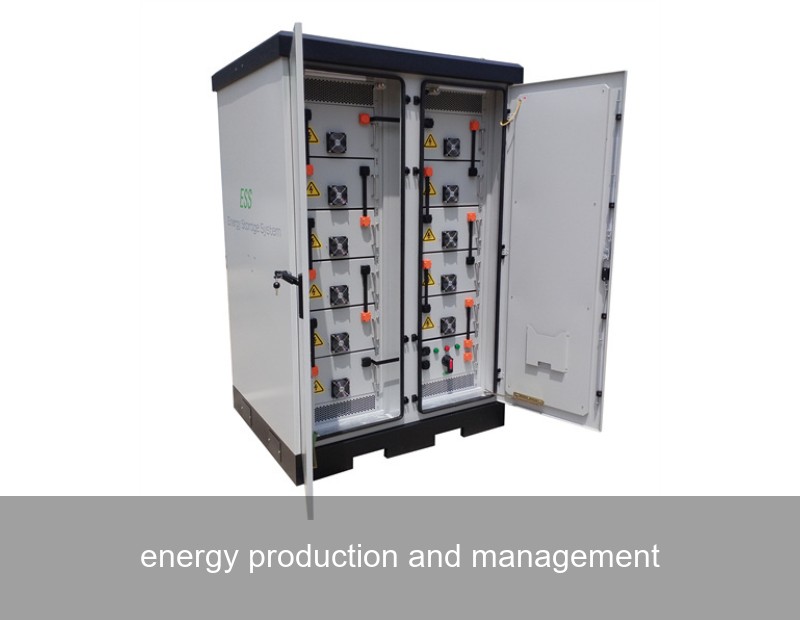
Let's talk about a quiet revolution. For decades, our relationship with electricity was simple: we flipped a switch, and power arrived, magically and reliably, from a vast, distant grid. But today, a profound shift is underway. The conversation is no longer just about energy production and management as separate, utility-scale concepts. It's about intelligent, integrated, and localized control. Why? Because the rise of renewables and volatile energy prices have exposed a critical gap: generating clean power is one thing; harnessing it intelligently, storing it efficiently, and deploying it precisely is what truly unlocks resilience and savings. This is where modern energy production and management systems become the indispensable brain of your power ecosystem.
Table of Contents
- The Phenomenon: From Passive Consumption to Active Prosumption
- The Data: Why Intelligent Management is No Longer Optional
- Case Study: A German Manufacturing Plant's Journey to Autonomy
- The Solution: Integrating Production with Smart Management
- Highjoule's Role: Your Partner in Intelligent Energy Orchestration
- The Future of Your Energy Independence
The Phenomenon: From Passive Consumption to Active Prosumption
Homes with solar panels feeding back to the grid, factories using battery storage to avoid peak tariffs, entire communities forming microgrids—this is the new energy landscape. You're not just a consumer anymore; you're a "prosumer," both producing and consuming energy. This is fantastic, but it introduces complexity. Solar panels produce intermittently. Grid prices can spike by 300% in an hour during peak demand. Relying solely on the grid means exposure to these volatilities. The core challenge of modern energy production and management is synchronizing supply (from solar, wind, grid) with demand (your machines, lighting, HVAC) in real-time, often with a battery buffer in between. Without a brain to manage this, you're leaving money and resilience on the table.
The Data: Why Intelligent Management is No Longer Optional
The financial and operational imperatives are clear. According to the U.S. Energy Information Administration, commercial electricity prices have seen significant volatility, with peak demand charges often constituting 30-50% of a business's total bill. In Europe, the day-ahead electricity price in Germany, for instance, hit record highs exceeding €700/MWh in 2022 following geopolitical tensions, though prices have since moderated. These fluctuations make predictable budgeting impossible.
Furthermore, data from the National Renewable Energy Laboratory (NREL) shows that pairing solar PV with battery storage can increase the onsite consumption of self-generated renewable energy from ~30% to over 60% for a typical commercial building. That's a doubling of efficiency simply by adding smart storage and controls. The message is clear: isolated energy production is good; integrated production and management is transformative.

Image Source: Unsplash - Representative image of modern commercial solar production.
Case Study: A German Manufacturing Plant's Journey to Autonomy
Let's make this tangible. Consider MusterFabrik GmbH, a mid-sized automotive parts manufacturer in Bavaria. They had a 500 kWp rooftop solar system, but faced two problems: 1) Their production lines ran mostly in the morning and evening, missing the solar noon peak, so they exported excess power at low feed-in tariffs. 2) Their grid power contract included crippling peak demand charges triggered by simultaneous machinery startup.
The Goal: Reduce energy costs, increase self-consumption, and gain backup power for critical processes.
The Solution & Implementation: They installed a turnkey integrated energy production and management system. This included a 400 kWh battery energy storage system (BESS) and a sophisticated Energy Management System (EMS). The EMS acts as the conductor, making real-time decisions based on solar forecast, real-time consumption, and grid price signals.
The Data-Driven Outcome (12-month post-installation):
| Metric | Before | After | Change |
|---|---|---|---|
| Renewable Self-Consumption | 31% | 78% | +151% |
| Peak Demand from Grid | 850 kW | 620 kW | -27% |
| Annual Energy Costs | €285,000 | €189,000 | -€96,000 (-34%) |
| Grid Backup during Brief Outage | Production Halt | 4 hours of Critical Load Coverage | Full Continuity |
The system strategically charges the battery with midday solar excess, then discharges it during the evening production shift and during the 15-minute window when peak demand is measured. The result? Slashed costs, maximized solar investment, and newfound operational resilience.
The Solution: Integrating Production with Smart Management
As the case shows, the solution is an integrated stack of technologies working in harmony. This stack typically consists of:
- Generation Assets: Solar PV, wind, or combined heat and power (CHP).
- Storage Buffer: A battery energy storage system (BESS) - the physical "bank" for your electrons.
- The Intelligence Layer: The Energy Management System (EMS) - the software brain that runs optimization algorithms.
- Grid Connection: The point of common coupling, now a dynamic interface rather than a single source.
The EMS is the star. It doesn't just react; it predicts. Using weather data, it forecasts solar yield. Using production schedules, it forecasts load. It then creates a cost-optimized plan for the next 24 hours: when to store, when to discharge, when to draw from the grid, and when to potentially sell back. This is energy production and management at its most effective.
Highjoule's Role: Your Partner in Intelligent Energy Orchestration
This is precisely where Highjoule excels. Since 2005, we've moved beyond just providing hardware to delivering holistic energy production and management solutions. Our approach is to be your long-term partner in energy independence.
For our commercial and industrial clients, we offer the Highjoule H-Series Industrial BESS, a modular, containerized solution scalable from 100 kWh to multi-MWh, coupled with our Neuron EMS Platform. Neuron is the AI-powered brain that seamlessly integrates your existing solar, new storage, and grid power. It provides a single-pane-of-glass dashboard for monitoring, control, and financial reporting, enabling strategies like peak shaving, energy arbitrage, and backup power customization.
For residential and smaller commercial applications, our Highjoule Home+ system offers integrated solar inverter, battery storage, and intuitive management software, allowing homeowners to effortlessly maximize self-consumption and secure their home's power.

Image Source: Unsplash - Representative image of a modern residential energy management setup.
Our systems are designed with safety, longevity, and cycle life as paramount concerns, using high-quality LiFePO4 battery chemistry. We handle everything from initial consultancy and system design to installation, grid compliance, and ongoing performance monitoring. As noted by industry bodies like the Smart Electric Power Alliance (SEPA), the value of storage is fully realized only through intelligent software—a principle at the core of every Highjoule deployment.
The Future of Your Energy Independence
The transition is inevitable. The question is no longer if you should integrate your energy assets, but when and how. The technology is proven, the economics are compelling, and the need for resilience is greater than ever. Whether you're a factory manager tired of unpredictable energy bills, a hospital administrator prioritizing uptime, or a homeowner seeking control, the paradigm of active energy production and management is your pathway forward.
What is the single biggest energy cost driver or reliability concern you face in your operations or home today, and how might a smarter system address it?
 Inquiry
 Online Chat