


Energy Storage Cabinet for Commercial Use: The Smart Business Power Solution
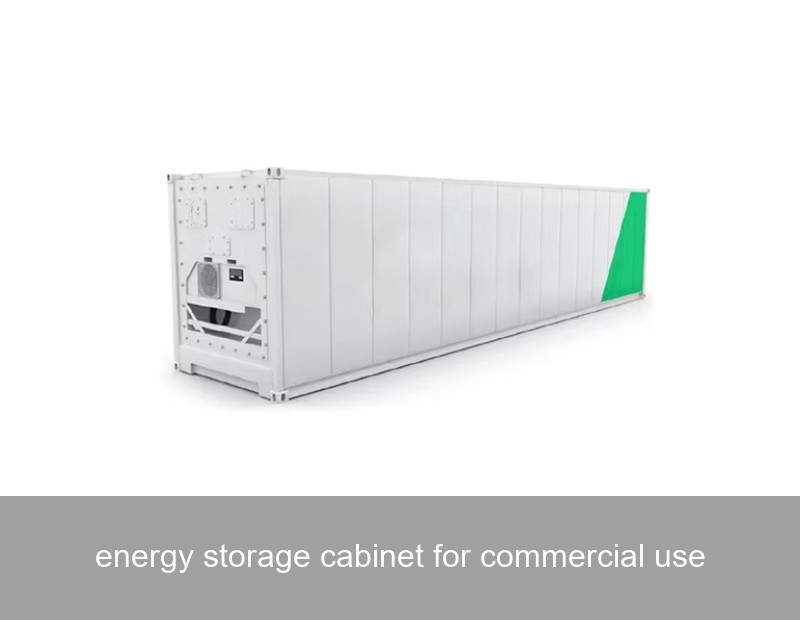
Have you noticed your commercial electricity bills becoming increasingly unpredictable? Or perhaps you're concerned about grid reliability impacting your core operations? You're not alone. A growing number of business owners and facility managers are turning to a powerful, on-site solution: the commercial energy storage cabinet. This isn't just a battery in a box; it's an intelligent energy asset that can transform how your business consumes, manages, and even profits from electricity.
Table of Contents
- The Problem: Rising Costs and Unreliable Grids
- What is a Commercial Energy Storage Cabinet?
- Key Business Benefits of On-Site Storage
- Real-World Impact: A European Supermarket Case Study
- Choosing the Right System: What to Look For
- The Highjoule Solution: Engineered for Commercial Performance
- The Future of Commercial Energy
The Problem: Rising Costs and Unreliable Grids
Commercial electricity rates are a major operational expense. In many parts of Europe and the U.S., time-of-use (TOU) tariffs mean power can be 2-3 times more expensive during peak evening hours. Add to this the rising incidence of grid congestion and extreme weather events causing outages, and the business case for taking control of your power becomes clear. Relying solely on the grid is a growing financial and operational risk.
What is a Commercial Energy Storage Cabinet?
Think of it as a strategic energy reserve for your business. A commercial energy storage cabinet is a pre-engineered, all-in-one system that houses advanced lithium-ion battery cells, a sophisticated battery management system (BMS), thermal controls, and safety mechanisms in a single, compact enclosure. It's typically installed outdoors or in a utility area and connects between your main electrical service and your facility's distribution panel. Unlike residential units, commercial cabinets are built for higher power output, longer cycle life, and seamless integration with existing commercial solar arrays or backup generators.

Image Source: Unsplash - Representative image of commercial energy equipment.
Key Business Benefits of On-Site Storage
Implementing an energy storage cabinet delivers a multi-layered return on investment:
- Peak Shaving & Cost Savings: Automatically discharge stored energy during expensive peak rate periods, slashing demand charges—which can constitute up to 50% of a commercial bill.
- Backup Power & Resilience: Maintain critical operations during grid outages. For sectors like cold storage, data centers, or manufacturing, this prevents costly downtime and spoilage.
- Solar Self-Consumption Optimization: Store excess solar energy generated during the day for use at night, increasing your on-site renewable usage from ~30% to over 80%.
- Grid Services & Revenue (in some markets): Participate in demand response programs, where utilities pay you to reduce grid load during times of stress.
- Sustainability Leadership: Reduce your carbon footprint and meet corporate ESG (Environmental, Social, and Governance) goals.
Real-World Impact: A European Supermarket Case Study
Let's look at concrete data. A mid-sized supermarket chain in Germany, facing high time-of-use rates and seeking to bolster its green credentials, installed a 120 kWh / 100 kW energy storage cabinet alongside an existing rooftop solar array. The results after one year were compelling:
| Metric | Before Installation | After Installation |
|---|---|---|
| Peak Grid Power Draw | 90 kW | 45 kW (50% reduction) |
| Solar Self-Consumption | 35% | 89% |
| Annual Electricity Cost | €42,000 | €28,500 (32% savings) |
| CO2 Emissions Reduction | Baseline | 24 tonnes annually |
The system provided sufficient backup power to keep refrigeration and lighting operational during two brief grid interruptions, preventing tens of thousands of euros in potential food spoilage. The project's payback period was calculated at under 5 years, a solid investment for the business.
Choosing the Right System: What to Look For
Not all energy storage cabinets are created equal. For commercial applications, key considerations include:
- Scalability & Modularity: Can you start with a smaller unit and expand as your needs grow?
- Depth of Discharge & Cycle Life: Commercial systems should offer a high usable capacity (e.g., 90%+) and a warranty for thousands of cycles.
- Integration Capabilities: The cabinet must seamlessly communicate with your solar inverters, building management system, and the grid.
- Safety Certifications: Look for UL 9540 (U.S.) or equivalent IEC standards (Europe) for the entire energy storage system (ESS).
- Intelligent Software: The brain of the system. It should automatically optimize for savings based on real-time electricity prices and your load patterns.
The Highjoule Solution: Engineered for Commercial Performance
At Highjoule, with nearly two decades of experience since 2005, we've designed our CommStore Pro Series energy storage cabinets specifically to meet the rigorous demands of commercial and industrial clients. Our philosophy is that reliability and intelligence are non-negotiable.
The Highjoule CommStore Pro is a modular, containerized solution built with automotive-grade LFP (Lithium Iron Phosphate) battery cells, renowned for their safety and long lifespan. Our proprietary Adaptive Energy Management Platform (AEMP) uses AI-driven forecasting to schedule charge and discharge cycles, not just for today's savings, but for the most economical outcome over the system's entire lifetime.

Image Source: Unsplash - Representative image of an engineer monitoring industrial energy systems.
We provide a full turnkey service—from initial energy audit and financial modeling to system design, installation, grid connection support, and ongoing remote monitoring. For businesses with microgrid ambitions, our cabinets are designed to be the cornerstone, integrating with multiple generation sources. As the National Renewable Energy Laboratory (NREL) notes, storage is a key enabler for resilient, cost-effective microgrids.
The Future of Commercial Energy
The landscape is shifting from passive consumption to active energy management. With policies like the U.S. Inflation Reduction Act (IRA) offering significant tax credits for storage, and European directives pushing for energy independence, the economic argument strengthens yearly. The question is no longer if businesses will adopt storage, but when and with which partner.
An energy storage cabinet is more than an expense; it's a strategic investment that pays dividends in reduced costs, enhanced resilience, and demonstrated sustainability. It puts you in the driver's seat of your energy future.
Is your business ready to analyze its specific load profile and uncover the potential savings a Highjoule CommStore Pro system could deliver? What would a 30% reduction in your peak demand charges mean for your bottom line this year?
 Inquiry
 Online Chat