


Unlocking Energy Independence: How Victory Energy Services Co Ltd and Behind-the-Meter Storage Are Reshaping Power
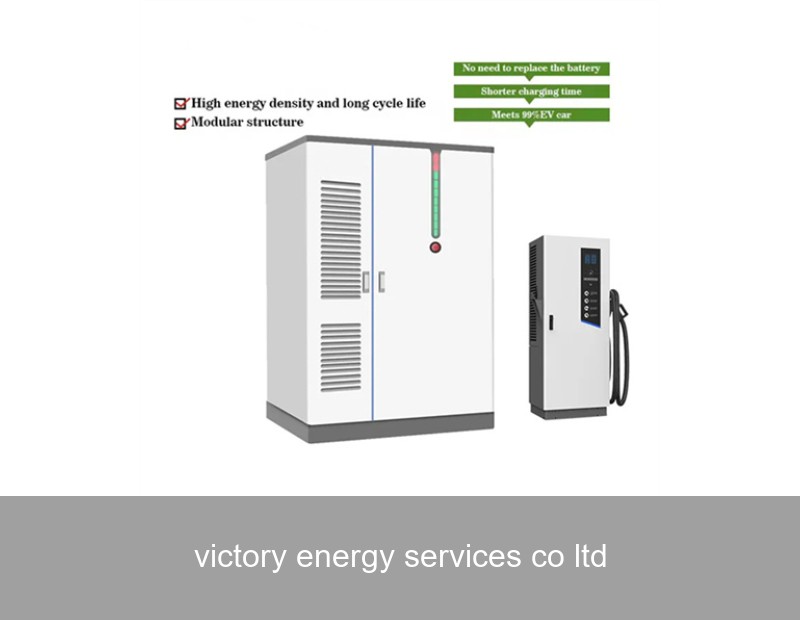
Imagine a manufacturing facility humming with activity. The sun is shining, and the facility's rooftop solar panels are generating more than enough power. Instead of sending that excess back to the grid for a minimal return, the facility intelligently stores it. Later, when the sun sets and grid electricity prices peak, the facility seamlessly switches to its stored, clean energy. This isn't a future vision; it's today's reality enabled by behind-the-meter (BTM) energy storage, a cornerstone strategy for forward-thinking energy service providers like Victory Energy Services Co Ltd. This approach is fundamentally changing how businesses and communities manage power, shifting from passive consumption to active, intelligent energy asset management.
The Energy Transition Imperative
The global push towards decarbonization is undeniable. Governments and corporations are setting ambitious net-zero targets, while energy price volatility and grid reliability concerns are pressing business issues. In this complex landscape, simply generating renewable energy isn't enough. The intermittent nature of solar and wind creates a mismatch between production and demand. This is where energy storage, particularly BTM systems, becomes the critical linchpin. It's the technology that transforms variable renewable generation into a firm, dispatchable resource. For energy service companies, integrating storage solutions is no longer optional; it's essential for delivering comprehensive, future-proof energy strategies to their clients.
Beyond the Meter: What is Behind-the-Meter Storage?
Let's break down the term. "Behind-the-meter" refers to energy assets located on the customer's side of the utility electricity meter. Unlike large grid-scale storage farms, a BTM system is dedicated to a specific site—a factory, a hospital, a shopping center, or even a residential community. Its primary goal is to serve the energy needs of that host site first.
The core value propositions are powerful and multi-faceted:
- Bill Management & Demand Charge Reduction: Commercial and industrial (C&I) customers often face high "demand charges" based on their peak power draw. A BTM battery can discharge during these short peak periods, dramatically slashing this portion of the utility bill.
- Renewables Integration & Self-Consumption: It maximizes the use of on-site solar PV by storing excess daytime generation for use at night, increasing energy independence from the grid.
- Backup Power & Resilience: Provides critical backup power during grid outages, ensuring operational continuity for essential services.
- Grid Services Participation: In some markets, aggregated BTM systems can provide valuable services like frequency regulation to the grid, creating an additional revenue stream.

Image: A commercial site combining solar generation with on-site battery storage. Credit: Unsplash
The Commercial & Industrial Advantage: A Data-Driven Case
Consider a real-world scenario in Southern California, a market with high electricity rates and strong solar incentives. A mid-sized food processing plant, facing an average monthly demand charge of $25,000, partnered with an energy service provider to deploy a 500 kW / 1,000 kWh BTM lithium-ion battery system.
The system was programmed for peak shaving. By discharging the battery during its predictable 2-hour daily operational peak, the plant reduced its peak demand from the grid by over 400 kW. The results were compelling:
- Demand Charge Savings: ~$12,000 per month ($144,000 annually)
- Increased Solar Self-Consumption: From 30% to over 70%, reducing energy charges.
- Payback Period: Achieved in under 5 years, thanks to combined savings and available incentive programs like SGIP (Self-Generation Incentive Program).
This case illustrates the tangible ROI. For a company like Victory Energy Services Co Ltd, presenting such data-driven outcomes is key to helping clients justify the capital expenditure and embrace storage technology.
Key Technologies Powering Modern BTM Systems
The effectiveness of a BTM solution hinges on its core components. Not all storage systems are created equal.
| Component | Function | Consideration for Energy Service Providers |
|---|---|---|
| Battery Cells (Li-ion NMC, LFP) | Core energy storage medium. Lithium Iron Phosphate (LFP) is increasingly favored for its safety, longevity, and cobalt-free chemistry. | Prioritize safety (thermal stability), cycle life, and degradation warranties. LFP offers a superior balance for C&I applications. |
| Battery Management System (BMS) | The "brain" of the battery pack, ensuring cell balance, temperature control, and safe operation. | A robust BMS is non-negotiable for system safety and longevity. It should provide detailed, accessible data for monitoring. |
| Power Conversion System (PCS) / Inverter | Converts DC battery power to AC for the building and vice-versa. Manages grid connection. | Look for high round-trip efficiency (>96%) and the ability to provide seamless backup power (islanding capability). |
| Energy Management System (EMS) | The top-level software intelligence that optimizes system dispatch based on tariffs, weather, and consumption patterns. | This is where value is maximized. The EMS must be adaptable, with smart algorithms for peak shaving, solar self-consumption, and market participation. |
Highjoule: Your Partner in Intelligent Energy Independence
For energy service providers navigating this technological complexity, choosing the right technology partner is paramount. This is where Highjoule's nearly two decades of expertise come into play. Since 2005, we have evolved into a global leader, not just in supplying hardware, but in delivering intelligent, integrated power solutions.
Our product suite is engineered to meet the exact needs of C&I and microgrid applications:
- HJ Cube Commercial Series: A modular, all-in-one energy storage system featuring UL 9540-certified LFP battery technology. Its containerized design simplifies installation and scaling, making it an ideal turnkey solution for partners like Victory Energy Services Co Ltd to deploy for clients ranging from small businesses to large industrial plants.
- IntelliMax EMS Platform: The true differentiator. Our cloud-based Energy Management System uses AI-driven predictive analytics to optimize every kilowatt-hour. It can forecast energy load, solar production, and grid prices to automatically choose the most economical and resilient operating strategy, ensuring maximum financial return for the end-customer.
- Hybrid Inverter Solutions: Seamlessly integrating solar PV, battery storage, and generator sets into a single, manageable interface, providing ultimate design flexibility for complex projects.
We understand that our partners need more than just equipment; they need a reliable collaborator. Highjoule provides comprehensive support, from initial feasibility studies and system design to commissioning and long-term performance monitoring. Our goal is to empower energy service companies with the tools and knowledge to build a robust, value-added service offering for their clients.

Image: A technician monitoring a sophisticated energy storage control system. Credit: Unsplash
Future-Proofing Your Energy Strategy
The energy landscape is evolving towards decentralization and digitalization. Technologies like vehicle-to-grid (V2G) and virtual power plants (VPPs) are on the horizon. A modern BTM system, with intelligent software at its core, is the foundational asset that positions a site to participate in these future markets. According to a 2023 IEA report, global energy storage capacity is set to multiply exponentially this decade, with BTM systems leading much of that growth.
For an energy services leader, this is a moment of significant opportunity. The question is no longer if storage will be a standard part of the energy portfolio, but how quickly it can be mastered and deployed to deliver superior customer value.
 Inquiry
 Online Chat