


House Energy Storage Cabinet Battery: The Heart of Your Modern, Resilient Home
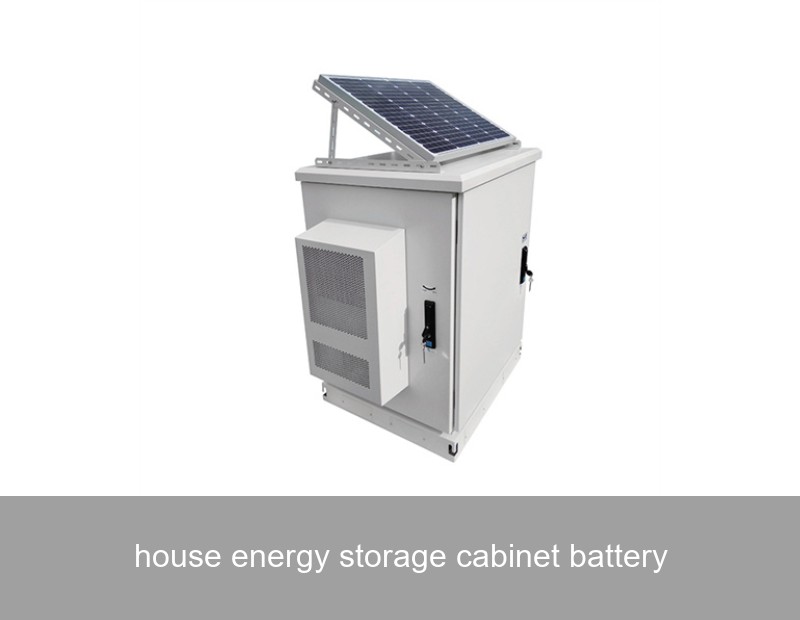
Table of Contents
- The Quiet Revolution in Your Utility Room
- What Exactly is a House Energy Storage Cabinet Battery?
- The Data: Why Energy Independence is No Longer a Luxury
- A Real-World Case Study: The Smith Family in Texas
- Choosing the Right System: Key Features to Look For
- The Highjoule Difference: Engineered for Reliability & Intelligence
- Your Energy Future: Questions to Consider
If you've been considering solar panels, or simply want more control over your electricity bill and security, you've likely heard the term "house energy storage cabinet battery." But what is it, really? Think of it not just as a big battery, but as the intelligent core of your home's energy system—a personal power station that stores electricity for when you need it most, ensuring your lights stay on and your life runs smoothly.
The Quiet Revolution in Your Utility Room
Gone are the days when a home's energy system was a one-way street: power flows from the grid, you consume it, end of story. Today, with the rise of rooftop solar and increasing concerns about grid stability, homeowners are taking charge. The house energy storage cabinet battery is the enabling technology. It's a sleek, self-contained unit, typically wall-mounted, that quietly manages your home's energy flow. It captures surplus solar energy you generate during the day, stores it securely, and releases it at night, during peak rate periods, or—crucially—during a power outage. This isn't just about backup; it's about optimizing every kilowatt-hour for comfort, savings, and sustainability.
What Exactly is a House Energy Storage Cabinet Battery?
Let's break it down. A modern residential energy storage system is more than cells in a box. It's an integrated system comprising:
- Battery Cells: The core chemistry, usually Lithium Iron Phosphate (LFP), known for its safety, long life, and stability.
- Battery Management System (BMS): The "brain" that monitors cell voltage, temperature, and health, ensuring safe operation.
- Power Conversion System (PCS): The "interpreter" that converts DC battery power to AC for your home, and vice-versa.
- Thermal Management: A cooling/heating system to keep the battery at its optimal operating temperature.
- Energy Management Software: The intelligent controller that decides when to charge, discharge, or hold based on your habits, electricity rates, and weather forecasts.
All these components are housed in a single, robust, and often UL-certified cabinet designed for safe installation in garages, basements, or utility rooms.
The Data: Why Energy Independence is No Longer a Luxury
The drivers for adopting a house energy storage cabinet battery are backed by compelling data. In the U.S., the average duration of a power outage has been increasing, with major events caused by weather often leading to multi-day disruptions. Financially, time-of-use (TOU) rates are becoming the norm in many regions. In California, for instance, the difference between off-peak and peak electricity prices can exceed $0.20 per kWh. By storing cheap solar or off-peak grid energy and using it during expensive peak windows, a storage system can significantly reduce demand charges for homes and create a predictable energy cost.
| Key Driver | Impact | Storage Solution |
|---|---|---|
| Grid Outages & Resilience | Average outage duration up 50%+ in some regions over the past decade. | Provides seamless backup power for essential loads. |
| Rising & Volatile Electricity Rates | Peak rates can be 2-3x higher than off-peak rates. | Arbitrage: Use stored energy during high-cost periods. |
| Maximizing Solar Self-Consumption | Without storage, up to 60% of solar energy may be exported at low feed-in tariffs. | Increase self-consumption to 70-90%, maximizing ROI on solar. |
A Real-World Case Study: The Smith Family in Texas
Let's look at a concrete example. The Smith family in Austin, Texas, installed a 10 kW solar array in 2022. While it cut their bill, they still faced high charges during summer evenings and anxiety during the rolling blackouts Texas occasionally experiences. In early 2023, they integrated a house energy storage cabinet battery—a Highjoule HES-C15 system with 15 kWh of usable capacity.
- Energy Bill Reduction: Their annual electricity costs decreased by an additional 40% on top of solar savings, primarily by avoiding peak-time grid use.
- Outage Protection: During three brief grid outages that year, their home's essential circuits (refrigeration, lighting, internet, HVAC fan) operated uninterrupted. The transition was automatic and seamless.
- Solar Utilization: Their system's smart logic increased their direct solar consumption from ~40% to 85%, making them far less reliant on selling power back to the grid at unfavorable rates.
"It's peace of mind," says John Smith. "We're not just saving money; we feel in control. During the last heatwave when the grid was stressed, we simply powered our house from our cabinet. It just worked."

Image: A modern home equipped for energy independence. (Source: Unsplash)
Choosing the Right System: Key Features to Look For
Not all storage cabinets are created equal. When evaluating a house energy storage cabinet battery, consider these critical factors:
- Usable Capacity & Power Rating: Capacity (kWh) tells you how much energy is stored; power (kW) tells you how much it can deliver at once. Ensure it can start your appliances and cover your critical loads.
- Depth of Discharge & Cycle Life: Can you safely use 100% of the stated capacity? A battery rated for 6,000 cycles at 90% depth of discharge will last far longer than one rated for 3,000 cycles at 80%.
- Scalability & Modularity: Can you easily add more battery modules later if your needs change? A modular design protects your investment.
- Software Intelligence: The software is what turns a battery into a smart asset. Look for systems that can integrate weather data, real-time utility rates, and adapt to your usage patterns automatically.
- Safety Certifications: Insist on UL 9540 certification (the standard for energy storage systems) and inherently safe chemistry like LFP.
The Highjoule Difference: Engineered for Reliability & Intelligence
At Highjoule, with nearly two decades of experience in advanced energy storage, we've engineered our Residential Energy Cabinet (REC Series) to excel in every one of these categories. Our systems are built not just to store energy, but to be the most reliable and intelligent component of your home.
Our REC cabinets feature industry-leading LFP battery chemistry, a robust liquid cooling system for optimal performance in all climates, and a modular design that allows you to start from 10 kWh and expand to over 30 kWh. What truly sets Highjoule apart is Adaptive Energy OS, our proprietary energy management platform. It doesn't just react; it learns and predicts. By analyzing local weather forecasts and your utility's rate structure, it proactively optimizes your energy flow to maximize savings and readiness.
For homeowners in Europe and North America, this means a system that seamlessly adapts to California's NEM 3.0, Texas's volatile market, or Germany's EEG framework. It’s a global solution with local intelligence. Furthermore, our systems are designed for UL 9540 certification, ensuring the highest safety benchmarks are met. We provide a complete solution from expert site assessment and design to professional installation and ongoing system monitoring.

Image: Professional installation of a modern home battery storage unit. (Source: Unsplash)
Your Energy Future: Questions to Consider
The journey to energy resilience starts with a conversation—with yourself and with experts. What are your true priorities? Is it never losing power for your home office or medical equipment? Is it finally getting the most out of your solar investment? Or is it simply locking in a predictable, lower energy cost for the next decade and beyond?
As you ponder the role a house energy storage cabinet battery could play in your life, ask yourself: What would true energy independence feel like for your home and family?
 Inquiry
 Online Chat