


Insel Solaranlage mit Speicher: Your Complete Guide to Energy Independence
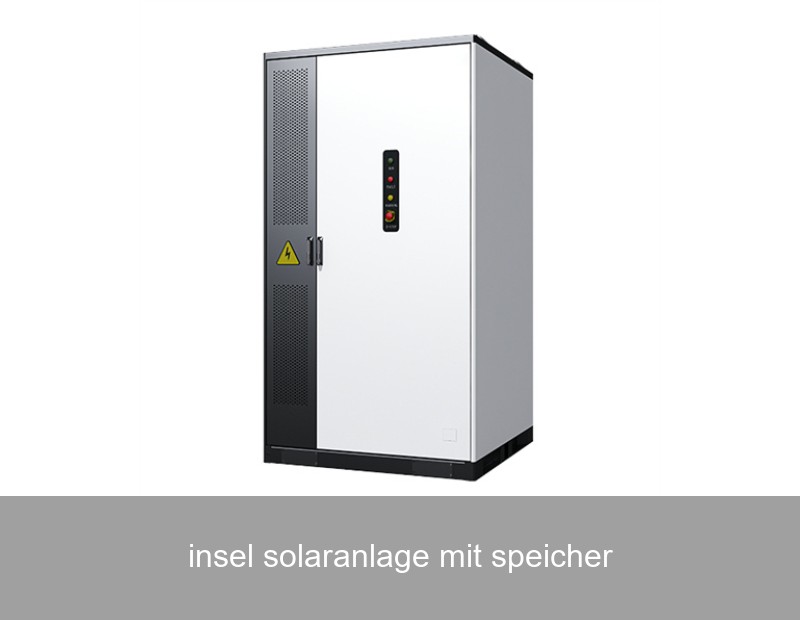
Imagine a home, cabin, or business that operates entirely on its own terms. No grid connection, no monthly utility bills, and no vulnerability to external power outages. This is the promise of an Insel Solaranlage mit Speicher—an off-grid solar system with storage. For property owners in remote European landscapes or expansive American rural areas, this isn't just a technical setup; it's a gateway to true energy autonomy. But moving away from the traditional grid is a significant step. It requires a system that isn't just a collection of panels and a battery, but a meticulously engineered, reliable, and intelligent power ecosystem. Let's explore how modern technology makes complete energy independence not just possible, but practical and efficient.
Why Consider an Off-Grid Solar System?
The decision to go off-grid is often driven by more than just a desire to be eco-friendly. It's a practical solution to real-world challenges. The primary driver is location. If you're more than 100 meters from the nearest grid connection, the cost of trenching and installing power lines can be prohibitively expensive, often ranging from $15,000 to $50,000 or more, depending on the terrain. An off-grid system becomes a cost-effective alternative from day one.
Beyond cost, there's the compelling factor of resilience. With increasing frequency of severe weather events—from winter storms in the Alps to wildfires in California—grid reliability can be a concern. An off-grid system with sufficient storage ensures that critical loads like lighting, refrigeration, and communication devices remain operational, regardless of what's happening on the main grid. It's the ultimate form of energy security.

Image: A remote property powered independently by solar energy. Source: Unsplash
Key Components of a Robust Off-Grid System
Building a reliable off-grid solar system with storage is like assembling a symphony orchestra. Each component must perform flawlessly and in harmony with the others.
- Solar Panels (PV Array): Your primary fuel source. Sizing is critical—it must generate enough energy not just for daily use, but also to replenish the battery bank on short winter days.
- Battery Energy Storage System (BESS): The heart of your off-grid system. It stores surplus solar energy for use at night and during periods of low sun. Capacity and depth of discharge are key metrics.
- Charge Controller: This crucial device regulates the voltage and current coming from the solar panels to the batteries, preventing overcharging and damage.
- Inverter/Charger: A multi-talented unit. It converts the DC electricity from the batteries into AC power for your appliances. A high-quality inverter-charger also includes a built-in battery charger that can use a backup generator (if present) to quickly recharge batteries during extended cloudy periods.
- Energy Management System (EMS): The brain of the operation. A smart EMS optimizes energy flow, prioritizes loads, and provides system monitoring and diagnostics.
| Appliance | Power (Watts) | Hours of Use | Daily Energy (Wh) |
|---|---|---|---|
| LED Lighting | 40 | 5 | 200 |
| Refrigerator (Efficient) | 100 | 8 (cyclic) | 800 |
| Water Pump | 800 | 0.5 | 400 |
| Laptop & Router | 100 | 6 | 600 |
| Total Daily Estimate | ~2000 Wh (2 kWh) | ||
Real-World Case Study: A Bavarian Mountain Hut
Let's look at a concrete example. A traditional Almhütte (mountain pasture hut) in the Bavarian Alps, at an altitude of 1,200 meters, needed a reliable power solution. The cost to connect to the grid was quoted at over €40,000. The owners opted for an Insel Solaranlage mit Speicher.
- System Size: 8 kWp solar array (facing south-east/south-west for morning and afternoon sun).
- Storage: 25 kWh lithium-ion battery bank.
- Challenge: Consistent power for a refrigerator, lighting, a small water heating system, and power tools, despite frequent fog and snow cover in winter.
- Solution & Outcome: The system was designed with a 30% energy generation buffer. Data from the first year of operation showed an average daily generation of 18 kWh in summer and 6 kWh in the deepest winter. The battery provided 3 full days of autonomy without sun. The total system cost was €28,000, resulting in immediate savings versus grid connection and eliminating all future energy bills. The system also includes a small backup propane generator, which has automatically activated only twice in two years during a prolonged snowstorm.
This case highlights that with proper sizing and quality components, off-grid living in challenging climates is entirely feasible. For more on energy storage trends, see this report from the International Energy Agency (IEA).
Choosing the Right Battery Technology
The battery is your energy insurance policy. While lead-acid batteries were once the standard, Lithium Iron Phosphate (LiFePO4) batteries are now the preferred choice for most new off-grid solar storage installations. Why? They offer a longer lifespan (often 6,000+ cycles), greater depth of discharge (up to 90% usable capacity), higher efficiency, and require no maintenance. The higher upfront cost is justified over the system's lifetime by superior performance and reliability.

Image: A modern lithium-ion battery storage system. Source: Unsplash
Highjoule's Intelligent Off-Grid Solutions
At Highjoule, with nearly two decades of experience since 2005, we understand that an off-grid system must be more than just hardware—it must be a resilient, self-managing energy partner. Our HPS-OffGrid Series is engineered specifically for the demands of complete energy independence.
Our integrated systems combine high-efficiency PV compatibility, our proprietary LiFePO4 H-Cell battery technology for maximum safety and cycle life, and a sophisticated hybrid inverter-charger. The true genius lies in the Highjoule Energy Operating System (EOS). This AI-driven platform continuously learns your energy consumption patterns, automatically manages loads (like deferring a water heater cycle until the battery is full), and provides remote monitoring and diagnostics via a user-friendly app. You're not just buying a battery; you're gaining a 24/7 energy manager that ensures every watt of your precious solar harvest is used optimally.
For larger applications like remote microgrids for small communities or industrial sites, our scalable Megapack BESS solutions can be configured to provide multi-megawatt-hour storage, ensuring reliable power for critical off-grid operations. Learn about battery safety from a trusted source like the U.S. Department of Energy's Solar Office.
Planning Your Off-Grid Energy Independence
Embarking on your off-grid journey starts with a meticulous energy audit (like the table example above). List every appliance, its wattage, and estimated usage. This determines your daily kWh consumption—the single most important number for system design. Next, consider your site's solar potential (tools like PVGIS from the European Commission are excellent). Finally, plan for worst-case weather scenarios; your battery "days of autonomy" is your safety net.
Partnering with an expert is crucial. A certified installer will not only handle the complex electrical work but will ensure the system is balanced—that the solar array, battery bank, and inverter are all perfectly matched for your needs and location.
Ready to Explore Your Energy Independence?
The path to a self-powered home or business is clearer and more reliable than ever. With the right technology and planning, an Insel Solaranlage mit Speicher can provide clean, quiet, and utterly dependable power for decades. What's the first load you'd want to secure with your own personal energy reserve?
 Inquiry
 Online Chat