


Why a Good Quality Energy Storage Cabinet is the Unsung Hero of Your Renewable Power System
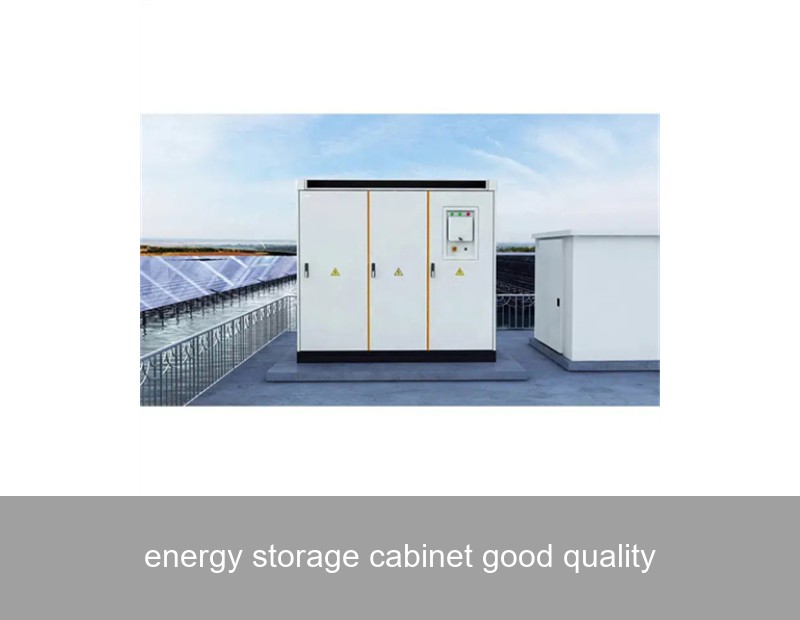
You've made the smart decision to invest in solar panels or wind turbines. The sun shines, the turbines spin, and you watch your meter run backwards, feeling a surge of energy independence. But what happens when the sun sets, or the wind dies down? This is where the critical, often overlooked component comes in: the energy storage cabinet. It's far more than just a metal box; it's the intelligent heart of your storage system. Choosing a good quality energy storage cabinet isn't just a detail—it's the single biggest factor determining the safety, longevity, and return on investment of your entire energy storage setup. Let's explore why its quality is non-negotiable.
Table of Contents
- The Phenomenon: From Power Generation to Power Management
- The Data: How Cabinet Quality Directly Impacts System Performance
- The Case Study: A European Logistics Center's Reliability Transformation
- The Insight: Key Features of a Truly Good Quality Energy Storage Cabinet
- The Highjoule Approach: Engineering Resilience from the Cabinet Up
- Looking Ahead: Is Your Storage System Built for Tomorrow's Grid?
The Phenomenon: From Power Generation to Power Management
For years, the renewable energy conversation was dominated by generation—more panels, larger turbines. Today, the narrative has decisively shifted to management. With volatile energy prices and increasing grid instability, the ability to store and dispatch electricity on demand is paramount. The energy storage cabinet houses the batteries, the battery management system (BMS), the power conversion system (PCS), and all the critical electronics that make this possible. A poor-quality cabinet is like putting a Formula 1 engine in a chassis made of cardboard; it might work initially, but it will fail catastrophically under stress, compromising everything inside.

A high-quality energy storage cabinet integrates seamlessly into commercial environments, prioritizing safety and accessibility. Credit: Highjoule installation portfolio.
The Data: How Cabinet Quality Directly Impacts System Performance
Let's talk numbers. Studies and real-world data show that thermal management—governed by the cabinet's design—can affect battery lifespan by up to 40%. According to a report by the National Renewable Energy Laboratory (NREL), maintaining an optimal, consistent temperature is one of the most significant factors in preserving lithium-ion battery health. A good quality energy storage cabinet employs advanced active cooling systems, proper venting, and thermal barrier materials to keep cells within a tight temperature band, directly translating to more cycles and a longer system life.
| Cabinet Quality Factor | Low-Quality Impact | High-Quality Benefit |
|---|---|---|
| Thermal Management | Hot spots, >5°C cell variance, accelerated degradation | Uniform temperature (±2°C), 20-40% longer battery life |
| Safety & Protection | Risk of fire spread, inadequate ingress protection (e.g., IP20) | Fire-retardant materials, isolated cells, IP54 or higher for dust/moisture |
| Structural Integrity | Vibration damage, door misalignment, corrosion in 5-7 years | Galvanized steel, 20+ year anti-corrosion warranty, seismic rating |
| System Uptime | Frequent faults due to connector/component failure | >99% availability, modular design for easy maintenance |
The Case Study: A European Logistics Center's Reliability Transformation
Consider the challenge faced by a major logistics hub in Rotterdam, Netherlands. Their existing storage system, using generic cabinets, suffered from constant overheating alarms during peak summer operations, forcing shutdowns. They faced a 15% loss in expected throughput and rising maintenance costs. Their goal was clear: ensure 24/7 cold-chain reliability for perishable goods and power critical sorting lines, regardless of grid fluctuations or weather.
The solution involved a complete retrofit with Highjoule's HyperCell Commercial Series cabinets. These units are engineered with a patented multi-zone cooling system that independently manages temperature for battery clusters and power electronics. The cabinets also feature a NEMA 4X (IP66 equivalent) rating, crucial for the humid, sometimes salty air near the port.
- 99.5% System Availability: Zero unplanned outages due to thermal issues.
- 12% Higher Energy Yield: Reduced thermal losses meant more stored energy was available for use.
- Projected ROI Improved by 2 Years: The extended battery lifespan and reduced downtime directly improved the financial model.
“The cabinet was the game-changer,” the facility's energy manager noted. “It turned our storage system from a temperamental cost center into a predictable, reliable asset. We now see it as critical infrastructure, not just an add-on.”
The Insight: Key Features of a Truly Good Quality Energy Storage Cabinet
So, beyond the brand name, what should you physically look for? Here is your checklist:
- Intelligent Thermal Management: Not just a fan. Look for liquid cooling or precision air conditioning with climate-adaptive logic that prevents condensation.
- Built-in Safety Architecture: This includes passive fire suppression (e.g., aerosol-based systems), arc-fault detection, and physically isolated battery modules to prevent thermal runaway propagation.
- Robust Connectivity & Monitoring: A quality cabinet offers integrated, industry-standard communication protocols (Modbus, CAN, etc.) for seamless integration with building management and grid services. Real-time monitoring of every cell, voltage, and temperature is a must.
- Modular & Service-Friendly Design: Can you replace a battery module without taking the entire system offline? Is there clear cable management and easy access for technicians? This drastically reduces maintenance time and cost.
- Certifications Matter: Look for independent certifications like UL 9540 (system level), IEC 62443 (cybersecurity for energy systems), and relevant regional grid codes. These are hard evidence of rigorous testing.

Modular design in a high-quality cabinet allows for safe, swift maintenance, maximizing system uptime. Credit: Highjoule.
The Highjoule Approach: Engineering Resilience from the Cabinet Up
At Highjoule, we believe the cabinet is the foundation. Our philosophy is that a superior energy storage cabinet must be a proactive guardian of the assets within. That's why our HyperCell series for commercial and industrial applications is designed as a holistic ecosystem.
Our cabinets start with marine-grade, powder-coated steel for corrosion resistance. Inside, our multi-layered safety system includes cell-level fusing, module-level disconnect, and cabinet-level suppression. The Highjoule Adaptive Thermal Core uses predictive algorithms to adjust cooling based on load forecast and ambient conditions, optimizing efficiency. Furthermore, our GridSync Intelligence platform, embedded within the cabinet's controls, allows our systems in Europe and North America to participate in frequency regulation and virtual power plants, turning your storage into a revenue-generating grid asset. We don't just sell a container; we provide a fully integrated, smart, and bankable energy storage solution.
Looking Ahead: Is Your Storage System Built for Tomorrow's Grid?
The energy landscape is evolving towards bidirectional, dynamic grids where every storage system may be called upon to support community resilience. A cabinet built only for today's basic charge/discharge cycles may become a liability. The question isn't just about storing energy for self-use anymore; it's about whether your physical system is robust and intelligent enough to interact with the grid of the future safely and profitably.
When you evaluate your next energy storage project, will you open the cabinet door and look inside? Will you ask about the details of thermal management, safety certifications, and cybersecurity protocols? The durability and intelligence of that enclosure could very well determine the success of your entire energy resilience strategy for the next two decades.
What is the one critical factor for your site's energy storage resilience that you feel is most often underestimated by providers today?
 Inquiry
 Online Chat