


Energy Storage Cabinet and Panneau Solaire: The Smart Power Pair for Modern Homes
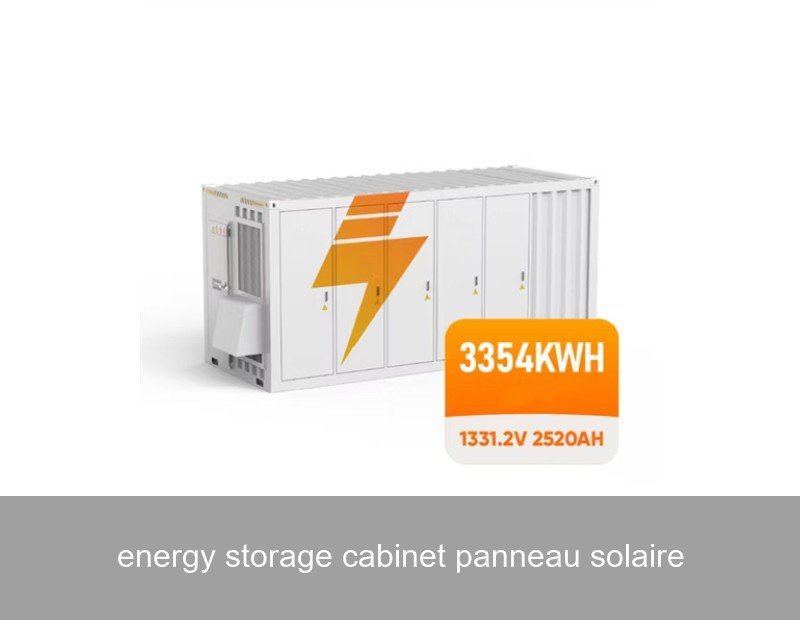
Table of Contents
- The Modern Panneau Solaire Dilemma: Sun Doesn't Shine 24/7
- The Energy Storage Cabinet: Your Personal Power Bank
- How the Pair Works: From Sunlight to Nightlight
- A Real-World Case: The Smith Family's Energy Independence
- Does This Pair Make Financial Sense? Breaking Down the Numbers
- Is Your Home Ready for the Future of Energy?
The Modern Panneau Solaire Dilemma: Sun Doesn't Shine 24/7
If you've invested in a panneau solaire (solar panel) system, you've taken a brilliant step towards energy independence and sustainability. You're generating clean power, reducing your carbon footprint, and likely saw a welcome dip in your electricity bills. But here's a question you might face at dusk: your panels have stopped producing, yet your home still needs power. Where does that energy come from? Traditionally, the grid—meaning you're buying back electricity at peak evening rates, often from non-renewable sources. This is the fundamental gap in a solar-only setup: generation and consumption are out of sync.
This mismatch isn't just a theoretical issue. In markets like California and parts of Europe with high solar penetration, grid operators face the "duck curve" challenge, where solar overproduction in midday plummets as the sun sets, requiring a rapid ramp-up of other power plants. For you, the homeowner, this often translates to lower compensation for the excess solar energy you export and higher costs for the energy you import at night.
The sunset marks the end of solar production, but not the end of your home's energy needs.
The Energy Storage Cabinet: Your Personal Power Bank
Enter the energy storage cabinet. Think of it as a sophisticated, high-capacity power bank for your entire house. Its primary role is to store the surplus electricity your panneau solaire system produces during the sunny hours. Instead of sending all excess energy back to the grid, you can divert it to charge this battery bank. Then, when your panels are idle—at night, during storms, or on cloudy days—you draw power directly from your storage cabinet.
This creates a self-contained, resilient energy ecosystem at your property. The pairing is so logical that in leading markets, the majority of new residential solar installations are now coupled with storage. It’s the upgrade that transforms your solar array from a partial solution into a comprehensive one.
How the Pair Works: From Sunlight to Nightlight
Let's break down the daily cycle of this intelligent partnership:
- Daytime (Generation & Storage): Your panneau solaire converts sunlight into DC electricity. An inverter changes it to AC power for your home's immediate use. Any surplus, rather than flowing to the grid, is directed to charge the batteries within your energy storage cabinet.
- Evening Peak (Discharge): As the sun sets and household demand spikes, the cabinet seamlessly takes over. It discharges stored energy to run your lights, appliances, and EV charger, shielding you from high time-of-use rates.
- Grid Outage (Backup): During a power cut, a system with an islanding inverter can automatically disconnect from the grid. Your energy storage cabinet becomes an immediate backup source, keeping critical loads powered, often without you even noticing the interruption.
- Optimization (Smart Management): Advanced systems use AI and weather forecasting to predict solar generation and household consumption, intelligently deciding when to store, use, or even sell energy for maximum economic benefit.
A Real-World Case: The Smith Family's Energy Independence
Let's look at a concrete example from Freiburg, Germany—a city at the heart of Europe's energy transition. The Smith family (name changed for privacy) installed a 9.8 kW panneau solaire system on their rooftop in 2020. While they were happy with their summer bills, winter months and cloudy periods still saw significant grid reliance.
In early 2023, they integrated a 13.5 kWh energy storage cabinet into their existing setup. The results after one year, monitored by their installer, were striking:
| Metric | Before Storage (2022) | After Storage (2023) | Change |
|---|---|---|---|
| Self-Consumption of Solar Power | 35% | 82% | +134% |
| Grid Electricity Purchased | 2,850 kWh/year | 610 kWh/year | -79% |
| Annual Electricity Cost | €1,140 (est.) | €244 (est.) | -79% |
| Grid Independence During Summer Months | ~50% of days | ~95% of days | Near-total independence |
"The system paid for itself faster than we anticipated, especially with rising energy prices," Mr. Smith reported. "The peace of mind during the winter storms, when we kept our heat and lights on while neighbors had outages, was invaluable." This case mirrors findings from the National Renewable Energy Laboratory (NREL), which highlights how storage increases solar self-consumption and grid resilience.
Does This Pair Make Financial Sense? Breaking Down the Numbers
Beyond resilience, the economics are compelling. The combination acts as a financial shield:
- Maximizing ROI on Solar: You use more of the cheap, clean power you produce, rather than selling it low and buying back high.
- Avoiding Peak Tariffs: In regions with time-of-use pricing, you avoid drawing from the grid during expensive peak periods.
- Incentives: Governments encourage this pairing. In the US, the federal Investment Tax Credit (ITC) applies to solar-plus-storage installations. Similarly, several European countries offer grants or tax benefits for integrated systems.
- Increased Property Value: Studies, including one from the U.S. Department of Energy's Lawrence Berkeley National Laboratory, suggest homes with solar plus storage sell at a premium compared to those with solar alone.

A modern energy storage cabinet, like Highjoule's ResiVerse series, integrates discreetly into a home.
How Highjoule Powers This Partnership
This seamless integration of panneau solaire and energy storage cabinet is where Highjoule's expertise comes to the fore. Since 2005, we've been engineering solutions that make this synergy not just possible, but optimal and reliable.
For residential applications like the Smith family's, our ResiVerse Home Energy System is a prime example. It's more than just a battery in a box. It's an all-in-one energy storage cabinet that includes a hybrid inverter, lithium-iron-phosphate (LiFePO4) batteries renowned for safety and longevity, and intelligent energy management software. The system is specifically designed for easy integration with new or existing panneau solaire arrays.
What sets a solution like ResiVerse apart?
- Adaptive Intelligence: Its software learns your consumption patterns and syncs with weather forecasts to optimize charge/discharge cycles for savings and longevity.
- Scalable Design: Start with a base capacity and easily expand your storage by adding more battery modules as your needs grow (e.g., after purchasing an electric vehicle).
- Grid Services Ready: In some markets, with homeowner consent, these systems can participate in virtual power plants (VPPs) to help stabilize the grid, potentially creating an additional revenue stream.
- Professional Integration: Highjoule works with a certified network of installers across Europe and North America to ensure your solar and storage are perfectly matched and installed to the highest safety standards.
For larger commercial and industrial applications, our CommVerse Cabinet Series provides scalable, containerized solutions that manage significant energy loads, reduce demand charges, and ensure business continuity.
Is Your Home Ready for the Future of Energy?
The journey from a simple panneau solaire installation to a fully integrated smart energy home is now well-traveled. The technology is proven, the economics are solidifying, and the benefits for both personal resilience and the broader grid are clear. The question is no longer if storage will become a standard part of a solar home, but when.
Does your current solar setup feel like it's missing its other half? What would achieving 80% or more energy self-sufficiency mean for your household budget and your peace of mind during the next major storm or grid event?
 Inquiry
 Online Chat