


Understanding Energy Storage Cabinet Price in Johannesburg: A Smart Investment Guide
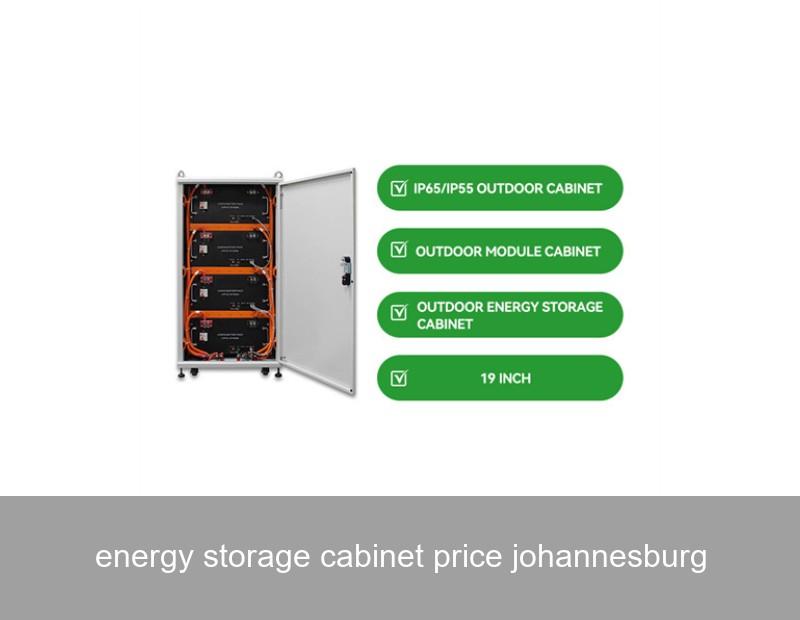
If you're a business owner, facility manager, or even a forward-thinking homeowner in Johannesburg, you've likely felt the pinch of load-shedding and watched energy costs climb. The search for reliable power isn't just about comfort; it's about economic survival and operational continuity. This is where the conversation around energy storage cabinet price in Johannesburg becomes critical. But focusing solely on the initial price tag is like buying a car based only on its sticker price—you miss the total cost of ownership and the value it delivers. A modern energy storage cabinet is the heart of a battery energy storage system (BESS), a sophisticated solution that stores electricity from the grid or renewable sources like solar PV to provide clean, quiet, and instantaneous backup power. Let's unpack what truly influences cost and how to make a savvy investment for Johannesburg's unique energy landscape.
Table of Contents
The Real Cost Drivers Behind Energy Storage Cabinets
When you request a quote for an energy storage cabinet price in Johannesburg, you're not just paying for a metal box. You're investing in a complex piece of power electronics engineered for safety, intelligence, and longevity. The final figure is a sum of several core components.
1. Battery Cells: The Chemical Heart
The type and quality of battery cells inside the cabinet are the single largest cost factor. Lithium-ion phosphate (LFP) is now the dominant technology for commercial and industrial storage due to its superior safety, longer cycle life (often 6,000+ cycles), and stability compared to older NMC chemistries. While LFP might have a slightly higher upfront cost per kWh, its longer lifespan makes it more cost-effective over time.
2. Power Conversion System (PCS): The Brain and Brawn
This is the inverter technology that converts stored DC battery power to usable AC power for your premises. Its power rating (kW) determines how much load you can run simultaneously, and its efficiency rating (e.g., 98%) dictates how much energy is lost in conversion. A higher-quality, bi-directional PCS enables advanced functions like peak shaving and grid services.
3. Thermal Management & Safety Systems
Johannesburg's climate, with its warm summers, makes thermal management non-negotiable. Passive cooling might be cheaper, but active liquid or refrigerant-based cooling systems maintain optimal battery temperature, ensuring performance, safety, and extended lifespan. Integrated fire suppression and gas detection systems are also critical value-adds that influence cost.

Image Source: Unsplash. A well-designed cabinet prioritizes safety and thermal management.
4. Energy Management Software (EMS)
Think of this as the operating system. A smart EMS allows you to control when and how the system discharges—scheduling it to avoid costly peak utility tariffs, integrating seamlessly with solar PV, or providing uninterrupted power during outages. The intelligence here is what transforms a capital expense into a revenue-saving asset.
| Component | Cost Influence | Key Consideration for Johannesburg |
|---|---|---|
| Battery Capacity (kWh) | High | Size based on critical load during 4-hour load-shedding slots. |
| Power Rating (kW) | High | Must cover simultaneous startup of essential machinery (e.g., refrigeration, IT servers). |
| Battery Chemistry | High | LFP is recommended for safety and cycle life in high-usage scenarios. |
| Cooling System | Medium | Active cooling is advised for consistent performance in summer heat. |
| Software & Grid Features | Medium | Peak shaving and solar self-consumption maximize ROI given Eskom's tariff structure. |
Johannesburg Case Study: From Load-Shedding Loss to Productivity Gain
Let's move from theory to a tangible example. A mid-sized food processing plant in the City Deep industrial area of Johannesburg faced severe operational and financial strain. With daily load-shedding, they risked spoilage of perishable goods, halted production lines, and faced overtime costs to meet orders.
- The Problem: 4-hour load-shedding slots were causing an estimated R 85,000 per month in lost production, spoiled inventory, and diesel costs for a noisy, polluting generator.
- The Solution: The plant installed a containerized, turnkey battery energy storage system with a capacity of 500 kWh and 250 kW power output. The system was integrated with their existing rooftop solar PV and configured for primary backup during outages and daily peak shaving.
- The Outcome: Within the first year, the plant eliminated production downtime due to grid outages. By shifting their load away from peak utility times (a feature managed automatically by the system's EMS), they achieved a 22% reduction in their monthly electricity bill from Eskom. The payback period, factoring in both operational savings and avoided losses, was calculated at under 5 years. (CSIR South Africa reports BESS can reduce grid dependence by over 80% for commercial users).
This case highlights that the energy storage cabinet price in Johannesburg is not an expense, but a strategic investment with a clear ROI when you factor in the cost of *not* having power.
Looking Beyond the Price Tag: Key Features for Johannesburg
So, when evaluating proposals, what should you look for beyond the rand figure?
- Local Support & Warranty: Does the provider have certified local technicians for installation and, crucially, 24/7 support? A 10-year performance warranty on the battery cabinet is now industry-standard for quality systems.
- Grid Compliance & Future-Proofing: The system should meet South African grid connection standards (NRS 097-2-1). With evolving energy regulations, a modular cabinet design that allows for capacity expansion is a wise choice.
- Total System Efficiency: Ask for the round-trip efficiency (RTE) of the entire system. A higher RTE (e.g., >92%) means more of the electricity you store is usable, directly impacting savings.
The Highjoule Approach: Engineering for Value and Reliability
At Highjoule, with nearly two decades of global experience, we understand that the right energy storage cabinet price in Johannesburg reflects a solution built for your specific challenges. Our products are engineered not just to meet a price point, but to deliver uncompromising value over a 20-year lifecycle.
Our H-CUBE Commercial Energy Storage Cabinet is a prime example. It's built around UL-certified LFP battery modules for maximum safety and features an integrated, high-efficiency PCS. Its advanced liquid cooling system ensures stable operation in Johannesburg's heat, while our proprietary Highjoule Neuron EMS provides intuitive control and optimizes for every rand saved—whether through solar self-consumption, peak shaving, or seamless backup transition. We offer scalable configurations from 100 kWh to multi-MWh, ensuring you pay for the capacity you need with the option to grow. Crucially, our partnership model includes in-region technical support and comprehensive training, ensuring your investment is protected and performs as promised for decades.

Image Source: Unsplash. Professional monitoring ensures long-term system health and ROI.
Making Your Investment Decision
The journey to energy independence in Johannesburg begins with asking the right questions. Instead of "What is the cheapest energy storage cabinet price in Johannesburg?", consider: "What is the total cost of ownership over 10 years?" and "What value does this system create in terms of avoided losses, operational savings, and business resilience?"
We invite you to reflect on this: If your operations were guaranteed uninterrupted, clean power for the next two decades, what new efficiencies, cost controls, or business opportunities could you pursue that are currently too risky? (IRENA highlights storage as a key enabler of the energy transition).
Are you ready to move beyond just comparing price tags and start a conversation about building a tailored, resilient power solution for your Johannesburg operation? Our experts are here to help you model your specific ROI and design a system that turns your energy challenges into a competitive advantage.
 Inquiry
 Online Chat