


Unlocking Resilience and Savings: Your Guide to the Modern Energy Storage Cabinet Set with Battery
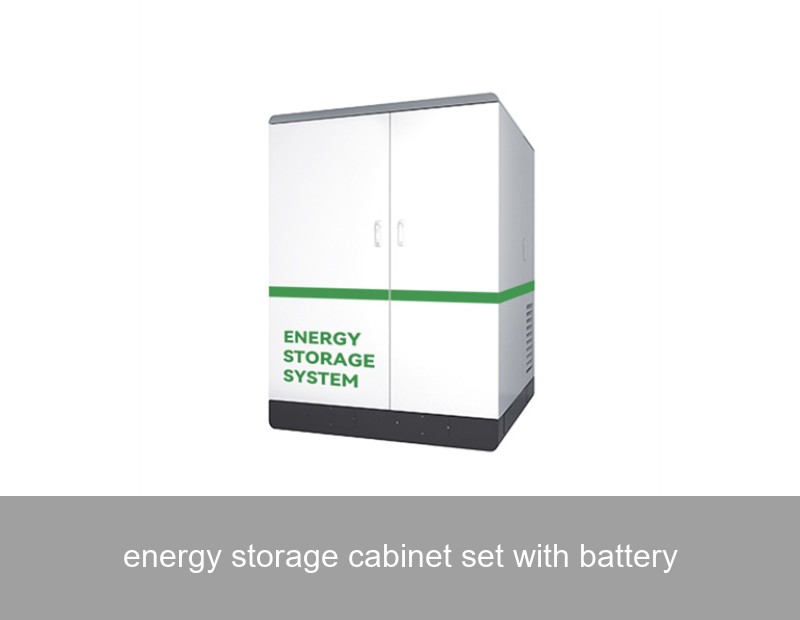
the sun is shining, your solar panels are humming, but the grid goes down. Or, you're a business owner watching energy prices spike during peak hours, eating into your profits. These aren't just hypotheticals—they're daily challenges for homes and businesses across Europe and the US. The solution? A modern energy storage cabinet set with battery. But this isn't just a big battery in a box. It's the intelligent heart of a new energy paradigm, designed to give you control, resilience, and significant cost savings. Let's demystify this critical technology.
Why Energy Storage is the Missing Piece for Modern Power
The energy landscape is shifting rapidly. We're generating more renewable power than ever, but the sun doesn't always shine, and the wind doesn't always blow. This intermittency creates a mismatch between supply and demand. According to the International Energy Agency (IEA), global energy storage capacity needs to expand dramatically to meet net-zero goals. This is where the energy storage cabinet set comes in. It acts as a buffer, storing excess energy when it's plentiful (and cheap) and releasing it when it's scarce (and expensive). For businesses, this means avoiding demand charges that can make up to 50% of a commercial electricity bill. For homeowners, it means backup power and maximizing self-consumption of solar energy.

Image Source: Unsplash - A modern energy storage installation.
Key Components of a High-Performance Storage Cabinet
So, what's inside this crucial cabinet? A top-tier system is an integrated ecosystem, not just a collection of parts.
- The Battery Pack: The core energy reservoir. Today, Lithium Iron Phosphate (LFP) chemistry is the leader for stationary storage due to its long life, safety, and stability. Capacity is measured in kilowatt-hours (kWh).
- The Battery Management System (BMS): The "brain" of the battery. It continuously monitors cell voltage, temperature, and state of charge to ensure safety, performance, and longevity.
- The Power Conversion System (PCS): Often an integrated inverter/charger. This is the "translator," converting DC electricity from the batteries to AC for your building, and vice-versa for charging.
- The Thermal Management System: Critical for safety and efficiency. This can be air or liquid-based and keeps the batteries within their ideal temperature range year-round.
- The Energy Management System (EMS): The system's strategic commander. Using software and often AI, it decides when to charge, when to discharge, and how to optimize for your specific goals (e.g., cost savings, backup, grid services).
| Component | Primary Function | Why It Matters |
|---|---|---|
| Battery (LFP) | Energy Storage | High safety, 6000+ cycle life, stable chemistry. |
| BMS & EMS | Control & Optimization | Ensures safety, maximizes ROI through intelligent dispatch. |
| Power Conversion System | Current Conversion | Enables compatibility with solar, grid, and building loads. |
Real-World Impact: A Case Study from California
Let's move from theory to practice. A mid-sized winery in Napa Valley, California, faced two major issues: frequent brief grid outages that risked spoiling sensitive fermentation processes, and extremely high time-of-use electricity rates. Their goal was to ensure uninterrupted production and cut energy costs.
The Solution: They installed a 250 kWh energy storage cabinet set with battery alongside their existing solar array. The system was configured for seamless backup power for critical loads and programmed to "peak shave"—discharging stored solar energy during the expensive 4-9 PM window.
The Data-Driven Results (First Year):
- Cost Savings: Reduced peak demand charges by 40%, saving over $18,000 annually.
- Resilience: Provided seamless backup through 8 grid outages, preventing tens of thousands in potential product loss.
- ROI: Achieved a simple payback period of under 5 years, factoring in available state incentives (California's SGIP).
Choosing the Right Energy Storage Solution for Your Needs
Not all storage solutions are created equal. When evaluating an energy storage cabinet set, ask these key questions:
- Is it truly integrated? Components from different manufacturers can lead to compatibility headaches and suboptimal performance.
- How intelligent is the software? Can it adapt to changing weather, tariffs, and your usage patterns?
- What is the total cost of ownership? Look beyond the upfront price to cycle life, warranty, and expected maintenance.
- Is it scalable? Can you easily add more cabinets as your needs grow?
The Highjoule Approach: Intelligence Beyond the Cabinet
At Highjoule, with nearly two decades of experience, we view the energy storage cabinet set with battery as the physical platform for our intelligent software. Our HPS Series Commercial & Industrial Storage Systems are engineered as turnkey solutions. We start with industry-leading LFP battery cells, housed in a UL-certified, IP54-rated cabinet with a state-of-the-art liquid cooling system for unmatched safety and efficiency across climates.
But the real differentiator is the Highjoule Neuron EMS Platform. This AI-driven brain doesn't just react; it forecasts. By integrating weather data, grid price signals, and your historical consumption, it autonomously optimizes the system's operation to meet your precise financial and resilience targets. For our residential partners, the HomePower Wall series brings this same philosophy of robust hardware paired with intuitive, goal-based software to the household level.

Image Source: Unsplash - Smart energy management system interface.
The Future of Energy Storage is Modular and Smart
The next frontier is the virtual power plant (VPP). Imagine thousands of distributed energy storage cabinet sets, like those from Highjoule, aggregated to form a vast, grid-stabilizing resource. Owners can earn revenue by allowing their systems to support the grid during times of extreme stress, a concept already active in markets like PJM Interconnection in the US and growing in Europe. This transforms a capital expense into a potential income-generating asset.
So, as you consider taking control of your energy future, we leave you with this question: What would reliable, low-cost power allow you to achieve or protect in your home or business that you can't confidently do today? The answer might just be the reason to explore what a modern energy storage solution can do for you.
 Inquiry
 Online Chat