


Maximizing Your Solar ROI: The Critical Role of the Energy Storage Cabinet
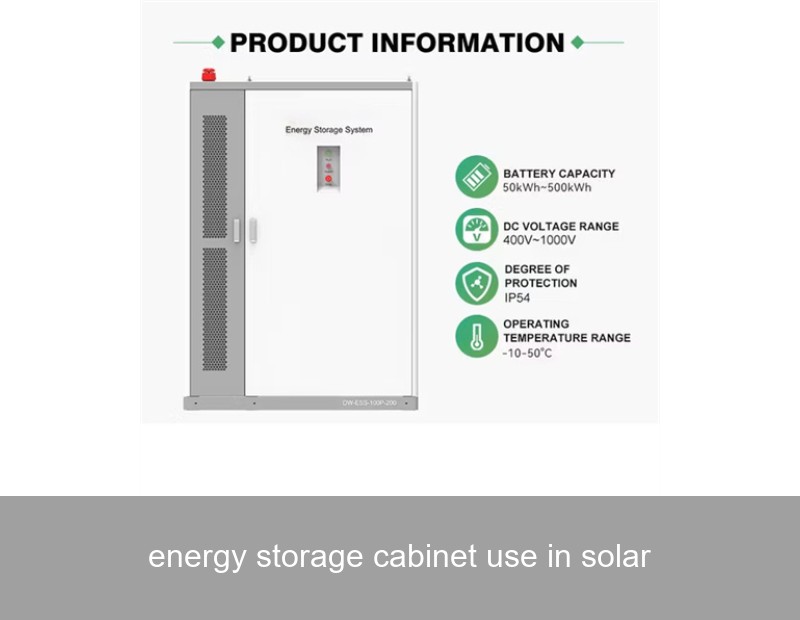
You've made the smart decision to go solar. Your panels are soaking up the sun, reducing your carbon footprint and your electricity bills. But have you ever watched your meter on a cloudy day, or wondered what happens to all that excess energy you produce on a brilliantly sunny afternoon? This is the inherent challenge of solar power: its glorious intermittency. The solution, and the key to truly unlocking the full potential of your photovoltaic (PV) system, lies in a sophisticated piece of technology: the energy storage cabinet for solar use.
The Solar Dilemma: Sun Doesn't Shine 24/7
Solar energy production is a bell curve that rarely matches your energy consumption curve. Homes and businesses typically use more power in the early morning and evening—precisely when solar output is low. Without storage, surplus solar energy generated at midday is often fed back to the grid for minimal feed-in tariffs, while you buy expensive power from the utility at night. This mismatch limits your savings, your energy independence, and the overall stability of the local grid. According to the U.S. Department of Energy, adding storage is fundamental to integrating high levels of solar energy into the electricity grid.

Image Source: Unsplash (Representative graph of energy curves)
What is an Energy Storage Cabinet (ESC)?
Think of an energy storage cabinet as the heart of your modern solar power system. It's a compact, self-contained unit that houses all the critical components needed to store and manage solar electricity. Unlike a simple battery, a complete ESC is an integrated system comprising:
- Battery Modules: Typically lithium-ion (like LiFePO4 for safety and longevity) that store the DC electricity.
- Battery Management System (BMS): The brain that monitors cell voltage, temperature, and health to ensure safety and maximize lifespan.
- Power Conversion System (PCS): Includes inverters and converters that change DC from the panels/batteries to AC for your home, and vice-versa.
- Thermal Management: A cooling/heating system to keep batteries at their optimal operating temperature.
- Safety Enclosure & Controls: A robust, often outdoor-rated cabinet with safety disconnects, fire suppression, and user interfaces.
This integrated approach is what companies like Highjoule have perfected since 2005, moving beyond piecemeal components to deliver a reliable, plug-and-play energy storage cabinet for solar applications.
Key Benefits for Your Solar Investment
Integrating an ESC transforms your solar array from a partial solution into a comprehensive energy asset. Here’s how:
| Benefit | Explanation | Impact |
|---|---|---|
| Energy Independence | Store daytime surplus for use at night or during outages. | Dramatically reduce reliance on the grid, insulating you from price volatility. |
| Maximized Self-Consumption | Use your own solar energy instead of selling it low and buying high. | Can increase the value derived from your solar panels by 50% or more. |
| Backup Power | Provides seamless power during grid outages. | Critical for home offices, medical devices, and business continuity. |
| Grid Support & Revenue | In some markets, systems can provide grid services (frequency regulation). | Potential for additional income streams. | Sustainability Boost | Enables a truly 24/7 renewable energy supply for your property. | Further reduces your carbon footprint by displacing fossil-fuel-based grid power. |
A Real-World Case: The German Bakery
Let's look at a concrete example from Bavaria, Germany. A family-run bakery with a 50 kW rooftop solar system faced a classic problem: peak production during midday lulls, while dough mixing and oven pre-heating in the early morning created a massive demand spike, drawing expensive grid power.
In 2022, they installed a 40 kWh energy storage cabinet for solar solution. The results, monitored over one year, were striking:
- Self-Consumption Rate: Increased from 35% to 82%.
- Grid Energy Cost Reduction: Saved approximately €6,800 annually on electricity bills.
- Peak Demand Shaving: Reduced their peak power draw from the grid by over 60%, avoiding costly demand charges.
- Backup Assurance: The system provided 8 hours of critical backup during a regional winter storm, preventing thousands of euros in spoiled inventory.
This case illustrates the tangible financial and operational resilience that a well-sized storage cabinet delivers. The bakery's ROI period is calculated at under 7 years, on a system with a 15-year design life.
Choosing the Right System: What to Look For
Not all storage cabinets are created equal. As you evaluate options, prioritize these factors:
- Safety First: Insist on certified systems (UL, IEC) with robust BMS and LiFePO4 chemistry, which is inherently more stable than other lithium-ion types.
- Depth of Discharge & Cycle Life: Can you safely use 90%+ of the stored energy? A system rated for 6,000+ cycles will last far longer than one rated for 3,000.
- Scalability & Power Rating: Can you easily add more battery modules later? Does the inverter have enough power to run your heavy loads simultaneously?
- Software & Monitoring: Intelligent software that learns your usage patterns and can optimize for time-of-use rates or grid signals is a game-changer.
- Warranty & Support: Look for a comprehensive warranty (e.g., 10 years) and a provider with a proven global service network.
The Highjoule Solution: Engineered for Reliability
At Highjoule, our two decades of experience in advanced energy storage have taught us that reliability is non-negotiable. Our HES-C Series Commercial Energy Storage Cabinet is designed specifically for the demands of solar integration in commercial, industrial, and large residential settings.
What sets our solution apart? It starts with our proprietary Adaptive Cell Balancing Technology within the BMS, which extends battery life by ensuring no single cell is overstressed. Our cabinets are built with a modular, stackable design, allowing capacity from 30 kWh to over 1 MWh. They feature integrated liquid cooling for consistent performance from -20°C to 50°C and come with our Highjoule Energy OS—a smart platform that not only monitors but actively optimizes your energy flow for maximum economic return.

Image Source: Unsplash (Representative image of a commercial energy storage unit)
For microgrid and utility-scale applications, our containerized solutions provide turnkey, grid-forming capabilities. We don't just sell hardware; we provide end-to-end intelligent, efficient, and sustainable power solutions, from initial consultancy and design to installation and lifetime performance management.
The Future Outlook: Smarter Grids and Prosumers
The evolution of the energy storage cabinet for solar is moving towards greater intelligence and grid interactivity. With the rise of virtual power plants (VPPs), as discussed by research from the International Energy Agency, your storage cabinet could soon autonomously trade energy with the grid, providing stability and earning you revenue. The future "prosumer" (producer + consumer) won't just consume or even just store energy—they will actively participate in the energy market.
So, the question for you is no longer just "should I get solar?" but rather, "how can I design my complete energy system today to be resilient, profitable, and future-ready for the next 20 years?" What would total energy independence mean for your home or business operations?
 Inquiry
 Online Chat