


Industrial Scale Energy Storage: The Unsung Hero of the Modern Grid
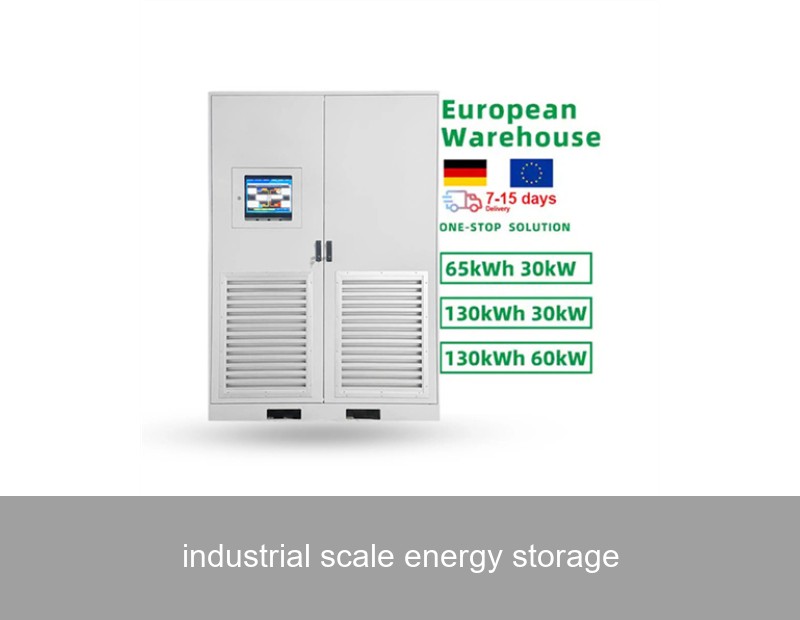
Imagine a power grid that's both resilient and sustainable, one that can seamlessly integrate vast amounts of renewable energy while keeping the lights on for factories, hospitals, and cities. This isn't a distant dream; it's the reality being built today, and at its heart lies a transformative technology: industrial scale energy storage. For businesses, utilities, and communities, these large-scale battery energy storage systems (BESS) are evolving from an experimental asset to a critical infrastructure component. This article explores why industrial energy storage is the key to unlocking a cleaner, more reliable, and economically sound energy future.
Table of Contents
- The Phenomenon: From Intermittency to Grid Stability
- The Data: Quantifying the Need for Massive Storage
- Key Applications of Industrial Scale BESS
- A Real-World Case Study: Grid Support in Germany
- The Highjoule Approach: Intelligent Storage for Demanding Applications
- The Future Landscape and Your Next Step
The Phenomenon: From Intermittency to Grid Stability
Here's a challenge we all recognize: the sun doesn't always shine, and the wind doesn't always blow. This intermittency of renewable sources like solar PV and wind creates a fundamental mismatch between when energy is generated and when it's needed most. For grid operators, this translates into volatility—sudden surges or drops in power that can threaten stability and lead to costly blackouts. Industrial-scale energy storage acts as a giant "shock absorber" for the grid. By storing excess renewable energy during periods of high generation and discharging it during peak demand or low generation, these systems smooth out the bumps, turning variable renewable power into a dependable, dispatchable resource.

Think of it this way: the grid is like a highway. Without storage, renewable energy is like rush-hour traffic—all arriving at once and causing congestion. Industrial BESS are like intelligent parking garages and on-ramps, managing the flow to ensure a smooth, continuous journey for every electron.
The Data: Quantifying the Need for Massive Storage
The numbers speak volumes about the accelerating shift. According to the International Energy Agency (IEA), the world is set to add as much renewable power in the next five years as it did in the past 20. To support this, global energy storage capacity needs to expand dramatically. In the United States alone, the Department of Energy's "Long-Duration Storage Shot" aims to reduce the cost of grid-scale storage by 90% within a decade, targeting systems that can store power for 10+ hours. Meanwhile, in Europe, ambitious targets like the EU's REPowerEU plan are driving massive investments in storage to enhance energy security and integrate renewables.
This isn't just about capacity; it's about value. A study by the U.S. National Renewable Energy Laboratory (NREL) found that pairing storage with solar PV can increase the value of solar by up to 40% by allowing delivery of power during more valuable evening hours. For industrial consumers facing time-of-use tariffs or demand charges, the economics of deploying storage become compellingly clear.
Key Applications of Industrial Scale BESS
So, what exactly can these massive battery systems do? Their versatility is a major part of their power.
- Renewables Integration & Time-Shifting: The core function. Store midday solar energy for use at night, or capture windy night-time power for the morning demand peak.
- Frequency Regulation: Grid frequency must stay within a tight band (e.g., 50 Hz in Europe, 60 Hz in the US). BESS can respond in milliseconds to inject or absorb power, correcting minute-to-second imbalances that traditional power plants are too slow to address.
- Peak Shaving & Demand Charge Management: For factories, data centers, and commercial campuses, a significant portion of the electricity bill comes from short periods of highest usage (demand charges). A BESS can discharge during these peaks, "shaving" them off and leading to substantial cost savings.
- Backup Power & Microgrids: Beyond short-term bridging to generators, industrial storage forms the backbone of resilient microgrids for campuses, islands, or critical infrastructure, allowing them to operate independently from the main grid.
- Transmission & Distribution Deferral: Instead of investing billions in new power lines and substations, utilities can strategically place storage to relieve congestion and defer costly infrastructure upgrades.
A Real-World Case Study: Grid Support in Germany
Let's look at a concrete example from Europe. Germany, with its aggressive Energiewende (energy transition), has been a pioneer in deploying industrial storage. One prominent project is the "Schwerin Battery Park" in northern Germany.
This facility, operated by the utility WEMAG, has a capacity of 15 MWh and an output of 5 MW. Its primary role is to provide primary frequency regulation (also called Frequency Containment Reserve - FCR) for the Continental European grid. Here's the impact:
| Metric | Data | Significance |
|---|---|---|
| Response Time | Under 1 second | Far faster than any fossil-fuel plant, ensuring grid stability. |
| Annual Cycles | Over 5,000 | Demonstrates the system's durability and constant activity. |
| Grid Service Revenue | Provides a stable revenue stream | Makes the business case for storage independent of subsidies. |
Projects like Schwerin prove that industrial battery storage is not a future concept but a present-day, grid-critical asset, providing essential services that keep the lights on as coal and nuclear plants are phased out.
The Highjoule Approach: Intelligent Storage for Demanding Applications
At Highjoule, we've been at the forefront of this transformation since 2005. We understand that an industrial-scale energy storage system is more than just a container of batteries; it's an intelligent, integrated power asset. Our solutions are engineered for the rigorous demands of utility, commercial, and industrial applications.
Our flagship product, the Highjoule H-Series BESS, is designed from the ground up for safety, longevity, and ease of integration. It features:
- Advanced Lithium-Ion or LFP Chemistry: We select cell technology based on the application's specific needs, prioritizing safety (LFP) or energy density.
- Proprietary Energy Management System (EMS): The true brain of the system. Our EMS doesn't just control charging and discharging; it optimizes for multiple value streams simultaneously—like performing peak shaving for a factory while also being ready to provide grid frequency response if contracted.
- Modular & Scalable Architecture: Start with a 500 kWh system and scale to multiple MWhs seamlessly. Our modular design minimizes installation time and future expansion costs.
- Comprehensive Services: From initial feasibility studies and financial modeling to turnkey EPC (Engineering, Procurement, and Construction) and 24/7 remote monitoring via our Highjoule NOC (Network Operations Center), we partner with clients for the entire lifecycle of the asset.

For a manufacturing plant in Texas looking to cut demand charges, a renewable developer in Spain needing to firm up their solar output, or a municipal utility in the Netherlands seeking to defer a substation upgrade, Highjoule provides the tailored, intelligent storage solution that delivers measurable ROI and operational resilience.
The Future Landscape and Your Next Step
The trajectory is clear: industrial-scale energy storage will become as fundamental to our energy infrastructure as power plants and transmission lines are today. As battery costs continue to decline and software intelligence grows, we will see these systems taking on even longer-duration storage roles and becoming the primary orchestrators of local and regional energy flows.
This evolution presents a pivotal question for every industrial energy consumer, renewable developer, and grid planner: Is your organization strategically positioned to harness the flexibility, resilience, and economic benefits that large-scale storage can provide today?
The conversation is no longer about "if" but "how" and "when." What is the first step your team could take to evaluate the potential of industrial energy storage for your operations or community?
 Inquiry
 Online Chat