


Your Ultimate Guide to the Solar Panel Space Calculator: Maximizing Your Roof's Potential
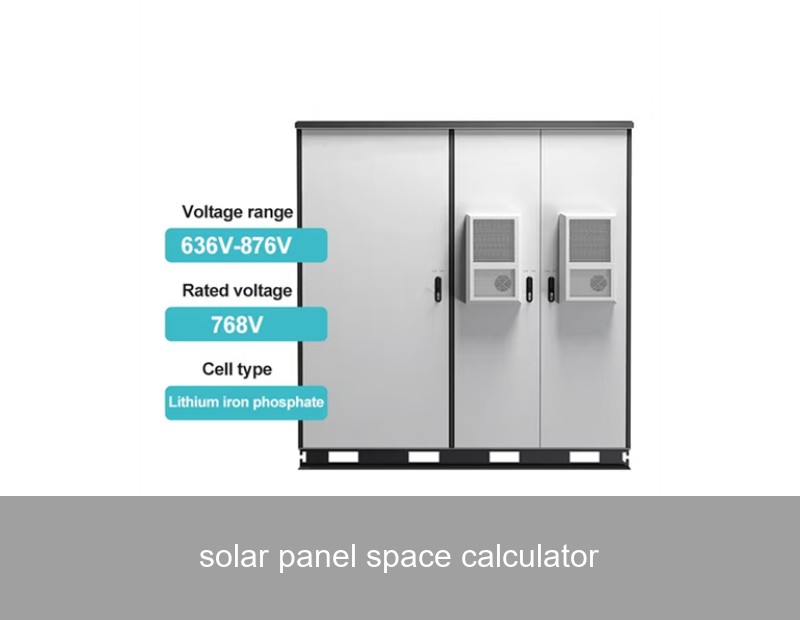
So, you're thinking about going solar. It's a fantastic decision for your wallet and the planet. But one of the very first, and most practical, questions that pops up is: "Do I even have enough roof space?" This is where the concept of a solar panel space calculator becomes your essential first tool. It's not just about counting tiles; it's about intelligently planning your journey to energy independence. In this guide, we'll demystify how these calculators work, why accurate space planning is critical, and how companies like Highjoule use this data to build not just solar systems, but comprehensive, intelligent energy solutions for homes and businesses across Europe and the US.
Table of Contents
- What is a Solar Panel Space Calculator?
- Why Roof Space is More Than Just Square Meters
- Key Factors a Good Calculator Considers
- From Calculator to Reality: A German Case Study
- Beyond the Calculator: The Highjoule Integrated Approach
- Your Next Step Towards Smart Solar
What is a Solar Panel Space Calculator?
At its core, a solar panel space calculator is a digital tool—often offered by installers or energy companies—that estimates the usable area on your roof for solar panels and models the potential energy output. Think of it as the architectural blueprint for your power plant. You typically input your address, and advanced tools use satellite imagery and databases to assess your roof's size, orientation, and even historical shading. The output gives you a ballpark figure: how many panels you might fit and how much electricity they could generate annually.

Image source: Unsplash - A visual representation of roof analysis for solar.
Why Accurate Roof Space Calculation is Everything
Let's talk about the "why." Underestimating space leaves clean energy and savings on the table. Overestimating leads to unrealistic expectations and poorly designed systems. The magic of solar happens when space calculation meets efficiency and future-proofing.
- The Efficiency Leap: Modern panels, like the high-efficiency monocrystalline modules specified in Highjoule systems, produce more power per square meter. A good calculator uses current efficiency ratings, meaning you might need less space than you thought for your energy goals.
- The Storage Factor: This is where planning gets smart. The goal isn't just to fill the roof, but to size a system that works in harmony with storage. An oversized system without a battery might export excess power to the grid at low rates. A solar panel space calculator that integrates with storage sizing ensures you generate enough to cover daytime use and charge your battery for the night.
Key Factors a Professional Calculator (and Installer) Considers
Not all calculators are created equal. A sophisticated assessment goes beyond basic dimensions. Here’s what truly matters:
| Factor | Why It Matters | Impact on Space |
|---|---|---|
| Roof Pitch & Orientation | A south-facing roof (in the Northern Hemisphere) at an optimal angle captures maximum sunlight. | East/West roofs may require more panels to achieve the same output as a south-facing one. |
| Shading | Chimneys, trees, or adjacent buildings can drastically reduce output. Tools use PV performance modeling data to account for this. | Shaded areas may be deemed unusable, effectively reducing available space. |
| Local Climate & Insolation | Average sun hours per day vary by location (e.g., Arizona vs. Scotland). | Less sunny locations require more panel area to generate the same kWh. |
| Panel Wattage & Technology | Higher wattage panels (e.g., 450W vs. 350W) produce more power in the same footprint. | Using premium high-efficiency panels can reduce the total number needed, fitting better on constrained roofs. |
| Obstacles & Setbacks | Local fire codes often require clear pathways ("setbacks") along roof edges and ridges. | Can reduce usable space by 10-20%, a critical detail often missed in basic calculators. |
Case Study: Maximizing a Limited Roof in Hamburg, Germany
Let's look at a real-world example from our operations in Europe. A client in Hamburg approached Highjoule with a classic challenge: a moderate energy consumption of 4,500 kWh/year but a complex roof with multiple dormers and partial shading from a beautiful old linden tree.
- The Challenge: Basic online calculators suggested only 8 panels would fit, estimating ~2,800 kWh/year—far short of their needs.
- The Highjoule Solution: Our engineers used advanced lidar-based scanning and the NREL's PVWatts® model for precise simulation. By strategically placing higher-efficiency 420W panels in the unshaded zones and designing a system with two independent inverters (to mitigate shading loss on one string), we fit 12 panels.
- The Integrated Twist: We paired this 5 kW system with a Highjoule HES-G2 10 kWh battery. The system was sized not to cover 100% of annual consumption directly from the panels, but to ensure 90% self-consumption. The battery stores excess midday production for use in the evening, drastically reducing grid reliance.
- The Result: The system now meets over 80% of their total annual electricity needs, reducing their grid dependence and energy bills from day one. This case shows how moving beyond a simple solar panel space calculator to a holistic energy audit unlocks potential invisible to basic tools.

Image source: Unsplash - A modern home battery storage unit, a key component after space calculation.
Beyond the Calculator: The Highjoule Integrated Energy System
For Highjoule, the solar panel space calculator is just the starting point of a conversation. Founded in 2005, we've evolved from a component provider to a full-stack energy solutions architect. Our process involves:
- 1. AI-Powered Site Design: We use proprietary software that integrates satellite data, drone imagery, and local weather patterns to create a hyper-accurate system layout, maximizing every available square centimeter.
- 2. System Sizing with Storage at Heart: We don't just sell solar arrays; we design Highjoule Intelligent Energy Systems. This means the inverter, solar panels, and battery are engineered to communicate seamlessly, optimizing energy flow in real-time.
- 3. Future-Proofing with Software: Our platform allows for smart load management (like scheduling EV charging during peak solar production) and can integrate with future technologies, protecting your investment.
For commercial and microgrid applications, this integrated approach is even more critical. It's about balancing space constraints, load profiles, and financial models to deliver a resilient and sustainable power solution.
What About Ground-Mount or Carport Solutions?
If your roof isn't suitable, the conversation doesn't end. A true energy partner like Highjoule explores alternatives. Ground-mount systems or solar carports can be excellent solutions, turning unused land or parking areas into power generators. The same principles of precise space and yield calculation apply, often with more flexibility in panel orientation.
Your Next Step Towards Smart Solar
The journey to clean energy begins with a simple question about space, but it unfolds into a strategic plan for resilience and savings. While online solar panel space calculators are great for a preliminary glimpse, they are the tip of the iceberg.
So, we leave you with this: What does true energy independence look like for your home or business—is it merely covering your electric bill, or is it about creating a resilient, intelligent system that powers your life, no matter what the grid or the weather does?
Ready to move beyond the basic calculator and see a precise, integrated design for your property? Highjoule's energy experts are here to turn your roof's potential into your personal power plant.
 Inquiry
 Online Chat