


Unlocking the Future: How Advanced Energy Storage Compounds Are Revolutionizing Power
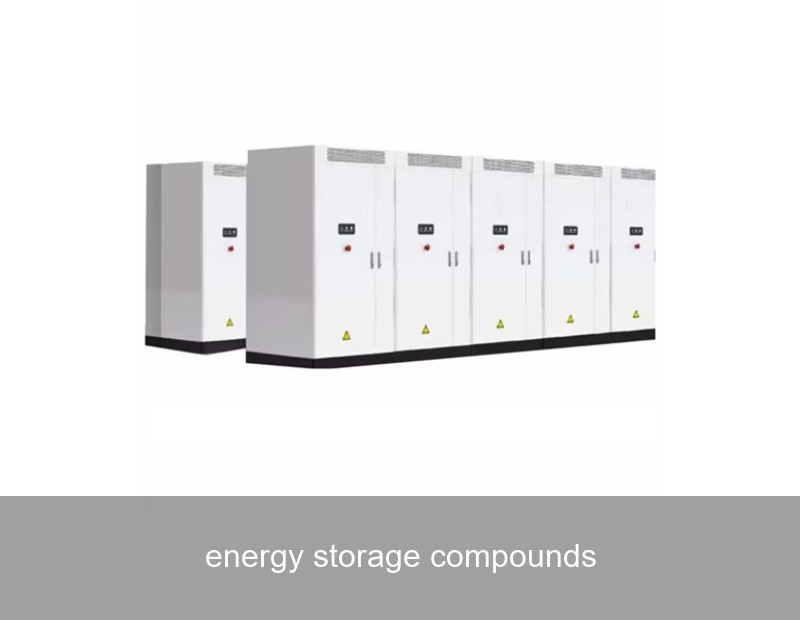
Imagine a world where solar power lights your home long after sunset, where wind energy is available even on calm days, and where the entire grid is more resilient and affordable. This isn't science fiction; it's the direct result of breakthroughs in energy storage compounds. These are the specialized chemical formulations at the very heart of modern batteries, determining everything from how much energy they can hold to how long they last. For homeowners, businesses, and grid operators across Europe and the U.S., understanding these compounds is key to making informed decisions about a sustainable energy future. At Highjoule, with nearly two decades of experience since our founding in 2005, we've seen this evolution firsthand, engineering our smart storage systems around the most promising and reliable compounds to deliver intelligent, efficient, and sustainable power solutions.
Table of Contents
- The Challenge: Renewable Energy's Intermittency Problem
- What Are Energy Storage Compounds? The Building Blocks of Power
- The Evolution of Key Compounds: A Timeline of Innovation
- Real-World Impact: A Case Study from California
- The Highjoule Approach: Integrating Compound Science into Smart Systems
- Future Horizons: What's Next for Storage Chemistry?
The Challenge: Renewable Energy's Intermittency Problem
Let's face it: the sun doesn't always shine, and the wind doesn't always blow. This fundamental truth has been the single biggest hurdle for renewable energy adoption. You generate a surplus at noon, but face a deficit by evening. This creates a volatile grid, potential blackouts, and a reliance on fossil-fuel "peaker" plants that are expensive and polluting. The data is clear: according to the U.S. Energy Information Administration, the variability of solar and wind can lead to significant curtailment (wasting excess energy) without adequate storage. The solution? A robust buffer. That's where advanced battery energy storage systems (BESS) come in, and their performance lives or dies by the energy storage compounds inside them.

Credit: ThisisEngineering RAEng / Unsplash. The heart of any modern battery is its chemical composition.
What Are Energy Storage Compounds? The Building Blocks of Power
Think of an energy storage compound as the "personality" of a battery. It's the specific blend of chemicals in the cathode, anode, and electrolyte that defines its capabilities. Not all compounds are created equal, and the choice involves a constant trade-off between energy density, power output, cycle life, safety, and cost.
- Cathode Compounds: Often the most critical component. Common ones include Lithium Iron Phosphate (LFP), Lithium Nickel Manganese Cobalt Oxide (NMC), and Lithium Nickel Cobalt Aluminum Oxide (NCA). LFP, for instance, is renowned for its safety and long life, while NMC offers higher energy density.
- Anode Compounds: Traditionally graphite, but research is booming into silicon-based compounds which can store up to ten times more lithium ions, promising massive leaps in capacity.
- Electrolyte Compounds: These can be liquid, gel, or solid. The move towards solid-state electrolytes is a major frontier, potentially enabling batteries that are safer, denser, and faster-charging.
Choosing the right compound isn't just a lab decision; it's an engineering one that directly impacts your return on investment and energy security.
The Evolution of Key Compounds: A Timeline of Innovation
| Era | Dominant Compound | Key Characteristics | Typical Application |
|---|---|---|---|
| 1990s-2000s | Lead-Acid | Low cost, mature tech, but low energy density & short lifespan. | Automotive starting, basic backup power. |
| 2010s-Present | Lithium-Ion (NMC, LFP) | High energy density, good cycle life. LFP gains traction for safety. | EVs, consumer electronics, residential & commercial storage. |
| Emerging (Now) | Solid-State, Sodium-Ion | Potential for greater safety & energy density (solid-state). Abundant materials (sodium). | Next-gen EVs, grid-scale storage, specialized applications. |
Real-World Impact: A Case Study from California
Theory is great, but what does this look like on the ground? Let's look at a real example from the U.S. market. California, with its aggressive renewable goals and frequent grid stress, has become a living laboratory for storage. A notable project is the Monterey Bay Battery Energy Storage System.
The Phenomenon: The region faced "duck curve" challenges—a rapid evening ramp-up in demand as solar generation plummeted, straining natural gas plants.
The Data & Solution: A 40 MWh grid-scale battery system was deployed, utilizing lithium-ion technology with advanced NMC compound chemistry. This specific compound was chosen for its optimal balance of energy density and power output, allowing it to inject large amounts of electricity into the grid almost instantaneously.
The Result: According to operator reports, the system successfully provided critical peak shaving and frequency regulation services. In its first year, it helped offset the need for several natural gas peaker plant activations, contributing to grid stability and reducing carbon emissions. This case underscores how the choice of energy storage compound directly translates to real-world grid reliability and decarbonization.
The Highjoule Approach: Integrating Compound Science into Smart Systems
At Highjoule, we don't just use batteries; we engineer integrated storage solutions where the chemistry is perfectly matched to the application. Our expertise lies in selecting the optimal energy storage compounds for your specific needs and wrapping them in intelligent management software.
- For Residential Users (H-Joule HomePower): Safety and longevity are paramount. That's why our HomePower series predominantly features high-quality LFP (Lithium Iron Phosphate) cells. This compound provides exceptional thermal stability, a long cycle life of over 6000 cycles, and maintains performance even after years of daily solar charging and discharging. Paired with our AI-driven energy management platform, it ensures you maximize self-consumption of your solar energy.
- For Commercial & Industrial Clients (H-Joule GridMax): Here, the demands shift towards high power, rapid response, and managing demand charges. Our GridMax systems may utilize NMC variants or advanced LFP, configured for high-power performance. Our system's intelligence actively manages the battery's state of charge and discharge cycles based on compound-specific profiles, optimizing for both performance and battery health.
- For Microgrids & Utility-Scale Projects: We design modular, containerized solutions that can be tailored with a mix of compound technologies. Our focus is on total system lifecycle cost, safety, and seamless integration with renewable generation assets.
Our mission is to remove the complexity for you. You get a reliable, high-performing storage system, and we handle the intricate science of compounds, thermal management, and predictive analytics to ensure it delivers for decades.

Credit: American Public Power Association / Unsplash. Utility-scale storage is key to stabilizing grids powered by renewables.
Future Horizons: What's Next for Storage Chemistry?
The innovation in energy storage compounds is accelerating. Researchers are exploring beyond lithium, looking at abundant elements like sodium and zinc. Solid-state batteries, which replace flammable liquid electrolytes with solid compounds, promise a quantum leap in safety and energy density. The U.S. Department of Energy's Battery500 Consortium aims to develop next-generation cells, highlighting the strategic importance of this field. For end-users, this means future systems will be even safer, more compact, longer-lasting, and potentially cheaper.
At Highjoule, our R&D team actively monitors these trends, partnering with leading cell manufacturers to qualify and integrate the most promising new chemistries into our platforms once they meet our rigorous standards for safety, durability, and commercial viability.
Your Role in the Energy Transition
The shift to a resilient, renewable-powered grid is a collective effort. Whether you're a homeowner considering solar-plus-storage, a factory manager looking to cut energy costs and carbon footprint, or a community planner designing a microgrid, the underlying technology of energy storage compounds matters. It's the foundation upon which reliable, clean energy is built.
What specific energy challenge—be it unpredictable bills, backup power concerns, or a sustainability goal—could you solve by understanding the power within the battery itself?
 Inquiry
 Online Chat