


Energy Storage Devices Examples: Powering a Sustainable Future
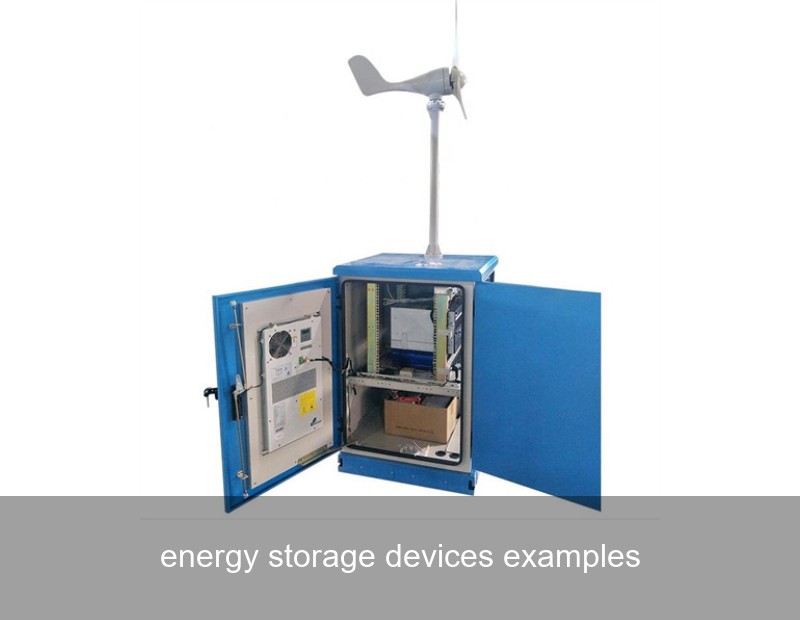
Have you ever wondered how we can keep the lights on when the sun isn't shining or the wind isn't blowing? The answer lies in a diverse family of technologies known as energy storage devices. From the battery in your smartphone to massive systems stabilizing national grids, energy storage is the unsung hero of our modern, electrified world. As we transition to renewable energy sources like solar and wind, which are inherently intermittent, the role of storage becomes not just beneficial but critical. This article will explore compelling energy storage devices examples, showcasing how they work in real-world applications and how companies like Highjoule are pioneering intelligent solutions to make clean, reliable power a reality for homes, businesses, and communities.
Table of Contents
- The Phenomenon: Why We Can't Just Rely on Sunshine and Breeze
- The Data: The Soaring Market for Storage Solutions
- Common Energy Storage Devices Examples and How They Work
- A Real-World Case Study: Stabilizing a German Microgrid
- Highjoule's Role: Intelligent Systems for Complex Needs
- The Future Horizon: What's Next for Storage?
The Phenomenon: Why We Can't Just Rely on Sunshine and Breeze
The shift to renewables is undeniable and essential. However, it introduces a fundamental challenge: generation mismatch. Solar panels peak at midday, while demand often spikes in the early evening. Wind farms might be idle on a calm day. This creates a gap—a literal power gap—between when energy is produced and when it's needed. Without a way to bridge this gap, grid instability, blackouts, and reliance on fossil-fuel "peaker" plants remain. This is precisely where energy storage systems (ESS) step in, acting as a buffer, a reservoir for electrons, ensuring a smooth, consistent, and clean power supply.
The Data: The Soaring Market for Storage Solutions
The numbers tell a powerful story. According to the International Energy Agency (IEA), global energy storage capacity is set to multiply dramatically, with grid-scale storage leading the charge. In the U.S. alone, the Energy Information Administration projects battery storage capacity to grow by nearly 100% in just two years. Europe, driven by ambitious climate targets and energy security concerns, is seeing unprecedented investment in storage projects. This isn't just about capacity; it's about value. Storage provides frequency regulation, defers costly grid upgrades, and enables higher penetration of cheap renewable energy, creating a compelling economic case alongside the environmental one.
Common Energy Storage Devices Examples and How They Work
Let's demystify the key technologies. Energy storage isn't a one-size-fits-all solution; different devices serve different purposes based on the required power (kW), energy capacity (kWh), and discharge duration.
1. Electrochemical Storage (Batteries)
This is the category most people think of first. Batteries store energy in chemical form and convert it to electricity on demand.
- Lithium-Ion Batteries: The current mainstream champion for many applications. They offer high energy density, good efficiency, and rapidly declining costs. Examples range from residential Powerwall-style units to massive containerized systems for grid support. Highjoule's H-Series commercial battery systems utilize advanced lithium iron phosphate (LFP) chemistry, prioritizing safety, longevity (over 10,000 cycles), and stable performance for daily cycling in commercial and industrial settings.
- Flow Batteries: Imagine a rechargeable fuel cell. Energy is stored in liquid electrolytes housed in external tanks. They excel in long-duration storage (4+ hours), have a very long lifespan, and don't degrade with cycling. They are ideal for smoothing out daily or even weekly renewable generation patterns.

Image Source: Unsplash - A technician performing maintenance on a grid-scale battery storage installation.
2. Mechanical Storage
These systems convert electrical energy into kinetic or potential energy, and back again.
- Pumped Hydro Storage (PHS): The "grandfather" of grid storage, accounting for over 90% of global storage capacity. It uses surplus electricity to pump water to an upper reservoir, then releases it through turbines to generate power during peak demand. It's highly efficient and perfect for large-scale, long-duration storage but is geographically limited.
- Flywheel Energy Storage: A rotor spins at very high speeds in a vacuum, storing energy as rotational kinetic energy. It can deliver very high power for short durations (seconds/minutes) and is excellent for frequency regulation and maintaining power quality in sensitive facilities like data centers.
3. Thermal Energy Storage
This often-overlooked category stores energy as heat or cold.
- Molten Salt Storage: Used in concentrated solar power (CSP) plants. Excess solar heat is used to melt salt, which retains heat for hours. This heat is then used to create steam and generate electricity after sunset. It effectively turns a solar plant into a dispatchable power source.
- Ice Storage: A commercial building can run its chillers at night (when electricity is cheap and grid demand is low) to freeze water into ice. During the hot afternoon, the ice is used for cooling, avoiding expensive peak-time electricity consumption for air conditioning. Highjoule's integrated energy management systems can seamlessly coordinate with such thermal storage assets to optimize a site's overall energy cost and carbon footprint.
| Technology | Primary Use Case | Discharge Duration | Key Advantages |
|---|---|---|---|
| Lithium-Ion Battery | Daily cycling, frequency regulation, residential backup | 1-4 hours | High efficiency, fast response, modular |
| Flow Battery | Long-duration renewable shifting | 4+ hours | Long lifespan, independent power/energy scaling |
| Pumped Hydro | Bulk energy storage, seasonal balancing | 6-20+ hours | Very large scale, low cost per kWh at scale |
| Flywheel | Frequency regulation, power quality | Seconds to minutes | Very high power, millions of cycles, instant response |
A Real-World Case Study: Stabilizing a German Microgrid
Let's look at a concrete example from Bavaria, Germany. A medium-sized industrial park decided to become energy-independent, installing a 2 MW solar PV array. However, the local distribution grid was weak, and the surge of midday solar production threatened to cause voltage fluctuations that could damage sensitive manufacturing equipment. Simply exporting all solar power was not a grid-friendly option.
The Solution: The park integrated a 1 MW / 2.3 MWh Highjoule H-Series battery storage system with advanced grid-forming inverters. This system wasn't just a battery; it was an intelligent grid asset.
The Results (Data from 2023 operation):
- 98% Self-Consumption of Solar Energy: The battery stored excess noon-time production for use in the evening, drastically reducing grid import.
- Grid Voltage Stabilized within ±0.5%: The system's inverters actively regulated voltage at the point of connection, eliminating the need for a costly grid upgrade.
- €145,000 Annual Savings: Achieved through optimized time-of-use arbitrage (buying cheap night power, storing solar) and participation in the German primary control reserve market—a service the battery provided automatically. This case, documented in a Fraunhofer ISE study on business storage, exemplifies how modern storage devices solve multiple problems simultaneously: economic, technical, and environmental.
Highjoule's Role: Intelligent Systems for Complex Needs
As seen in the case study, the true value of modern storage isn't just in the battery cells or the flywheel rotor; it's in the intelligence that surrounds it. Founded in 2005, Highjoule has evolved from a component provider to a global leader in advanced, integrated storage solutions. Our expertise lies in understanding that every site—be it a factory in Ohio, a supermarket chain in the UK, or an island microgrid in the Mediterranean—has a unique energy profile and set of goals.
Our product suites, like the H-Series for C&I applications and the ResiCore for homes, are built on a common platform of smart software. This AI-driven energy management system (EMS) can:
- Forecast local generation and consumption using weather data and historical patterns.
- Optimize charge/discharge cycles across multiple value streams (self-consumption, demand charge reduction, grid services).
- Seamlessly integrate with existing solar PV, wind, or backup generators.
For larger, more complex projects like microgrids, Highjoule provides full turnkey solutions—from design and engineering to commissioning and long-term performance monitoring. We don't just sell energy storage devices examples; we sell resilience, savings, and sustainability, wrapped in a guaranteed performance package.

Image Source: Unsplash - A clean, integrated home energy system with solar and storage.
The Future Horizon: What's Next for Storage?
The innovation pipeline is bursting. Solid-state batteries promise even higher density and safety. Green hydrogen, produced from excess renewables and stored long-term, is gaining traction for seasonal storage and decarbonizing heavy industry. Compressed air energy storage (CAES) is being revived with advanced adiabatic designs. The future is likely a heterogeneous mix of technologies, each playing to its strength, all orchestrated by digital platforms.
This brings us to a pivotal question for any business leader, homeowner, or community planner: With your unique energy challenges and sustainability goals, which combination of these storage technologies could unlock the greatest value for you, and how can you start planning for it today?
 Inquiry
 Online Chat