


Why Energy Storage Investment is the Smartest Financial and Environmental Decision Today
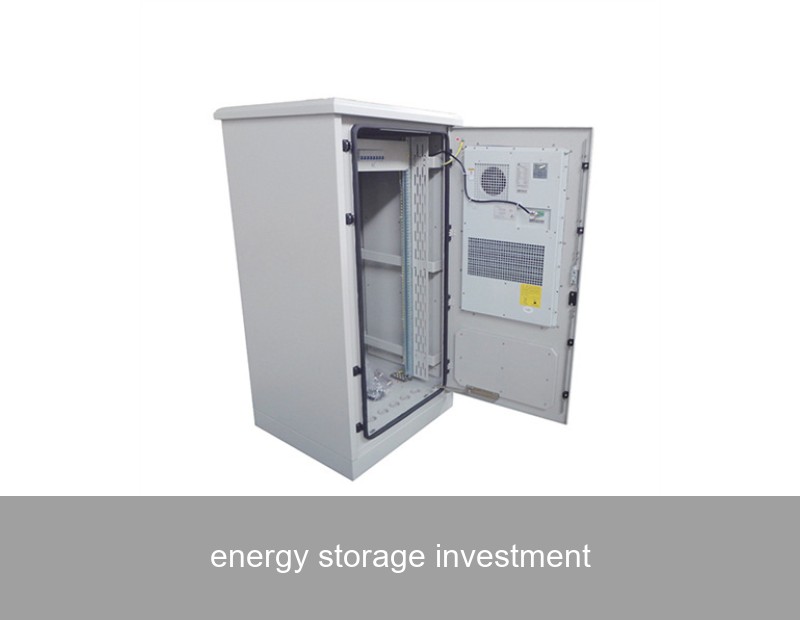
Let's talk about a quiet revolution happening in boardrooms, on factory floors, and in our communities. It's not just about generating clean energy anymore; it's about mastering its energy storage investment. For businesses, municipalities, and homeowners across Europe and the US, the question has shifted from "Should we go renewable?" to "How do we make our renewable power reliable, resilient, and remarkably cost-effective?" The answer, increasingly, lies in strategically investing in advanced battery energy storage systems (BESS). This isn't a niche tech trend; it's the cornerstone of a modern, secure, and profitable energy strategy. And for nearly two decades, companies like Highjoule have been at the forefront, turning this potential into tangible performance.
Table of Contents
The Phenomenon: From Intermittency to Independence
a manufacturing plant in Germany has invested heavily in rooftop solar. On a bright summer afternoon, the panels produce more power than the facility can use. Traditionally, this excess is fed back to the grid for a modest feed-in tariff. But what happens when clouds roll in, or at night when energy prices spike? The plant is suddenly buying expensive grid power again, eroding its savings. This is the "intermittency challenge" of renewables—a seesaw of overproduction and underproduction that creates financial and operational uncertainty.
This phenomenon isn't limited to sunny days. In Texas or California, grid instability can lead to preventive blackouts during heatwaves. For a data center, a hospital, or a cold storage facility, even a momentary outage can be catastrophic. The modern energy dilemma is clear: we have abundant clean energy, but we lack control over when we can use it. This lack of control is what makes a strategic energy storage investment not just an option, but a necessity for energy-intensive operations and forward-thinking homeowners alike.

Image: Utility-scale battery storage is key to grid stability and maximizing renewable use. Credit: American Public Power Association / Unsplash.
The Data: The Compelling Case for Storage ROI
Let's move from the problem to the numbers, because a smart energy storage investment is fundamentally a financial one. The return on investment (ROI) stems from multiple, often simultaneous, revenue streams and cost savings:
- Arbitrage: Buy and store electricity when prices are low (often at night or during peak renewable output), and use or sell it when prices are high. In markets like the UK or PJM in the US, these price differentials can be significant.
- Peak Shaving: Avoid costly "demand charges" from utilities—fees based on your highest 15-minute power draw in a billing cycle. A BESS discharges during these peak periods, slashing these charges, sometimes by 30% or more.
- Backup Power: Provide seamless, instantaneous power during outages. The cost of downtime for a commercial business can exceed $10,000 per minute, according to industry estimates (source: Vertiv).
- Grid Services: In many regions, storage systems can be compensated for providing frequency regulation or voltage support to the grid, creating a direct revenue stream.
According to a report by BloombergNEF, the global energy storage market is set to attract over $1 trillion in energy storage investment by 2050. Why? Because the levelized cost of storage (LCOS) has fallen dramatically, by over 70% in the last decade, making projects economically viable without subsidies in many cases (source: BloombergNEF).
| Value Stream | Primary Benefit | Typical Payback Contributor |
|---|---|---|
| Demand Charge Reduction | Lower monthly utility bills | High (20-40% of savings) |
| Energy Arbitrage | Buy low, consume/sell high | Medium-High (Market dependent) |
| Backup Power Resilience | Avoided downtime & losses | Priceless (Risk mitigation) |
| Renewable Integration | Increase self-consumption of solar/wind | Medium (Increased asset utilization) |
The Case Study: A European Industrial Success Story
Let's make this concrete. Consider a mid-sized automotive parts supplier in Bavaria, Germany. Facing rising energy costs and ambitious corporate sustainability targets, they partnered with Highjoule in 2022. Their goal was twofold: stabilize energy costs and ensure uninterrupted production.
The Challenge: High peak demand charges, vulnerability to grid fluctuations, and a desire to maximize their existing 500 kW solar PV system.
The Highjoule Solution: A tailored 750 kWh Highjoule H-Series battery storage system, integrated with their solar array and managed by our Aurora AI Energy Management Platform. This platform doesn't just react; it forecasts weather, energy prices, and production schedules to optimize every kilowatt-hour.
The Results (18-month operational data):
- Demand Charges Reduced by 28%: The system automatically shaved peak loads, saving an average of €4,200 per month.
- Solar Self-Consumption Increased from 45% to 89%: Excess solar energy was stored for use in the evening and morning, drastically reducing grid purchases.
- Full Backup for Critical Loads: The facility's assembly line and IT servers now have 6+ hours of backup power, preventing potential six-figure losses from outages.
- Projected ROI: The complete system is on track for a payback period of under 5 years, with decades of operational life remaining.
This isn't magic; it's the result of intelligent hardware and software working in concert. As the plant manager noted, "The Highjoule system transformed our solar panels from a cost-saving measure into a strategic energy asset. We now have predictability in an unpredictable energy market."
The Highjoule Solution: Intelligent Storage Built for Your Needs
So, what separates a good energy storage investment from a great one? It's the depth of the solution. At Highjoule, founded in 2005, we believe storage is more than just a battery in a box. It's an integrated energy ecosystem.
Our approach starts with understanding your unique energy profile, financial goals, and physical site. We then design systems using our modular, scalable H-Series (Commercial & Industrial) and Nexus Home (Residential) battery platforms. These systems are built with industry-leading lithium-iron-phosphate (LFP) battery chemistry, prized for its safety, longevity, and thermal stability.

Image: Residential energy storage, like Highjoule's Nexus Home, empowers homeowners. Credit: Andreas Gücklhorn / Unsplash.
The true brain of the operation is our Aurora AI Platform. This cloud-based system continuously learns and adapts, making real-time decisions to:
- Maximize your financial return through market-aware arbitrage.
- Seamlessly blend solar, storage, grid, and generator power.
- Provide remote monitoring, diagnostics, and proactive maintenance—ensuring your investment performs optimally for its entire lifespan.
For microgrids and larger utility-scale projects, our solutions provide grid-forming capabilities, allowing communities or industrial campuses to operate independently from the main grid if needed. From a family home in California seeking energy independence to a factory in Poland aiming for carbon neutrality, Highjoule provides the cornerstone technology to make it happen reliably.
Beyond the Battery: Services That Secure Your Investment
We know that a major capital investment requires confidence. That's why our offering includes comprehensive Energy Storage as a Service (ESaaS) options, long-term performance guarantees, and expert commissioning and maintenance. We handle the complexity, you reap the benefits of predictable energy costs and unwavering resilience.
The Future: What Does Your Energy Resilience Look Like?
The energy landscape will only become more dynamic. Prices will fluctuate, climate events will test grid reliability, and sustainability mandates will tighten. In this environment, passive energy consumption is a financial risk. Proactive energy management, with storage at its core, is the strategy of choice for leaders.
Your energy storage investment is more than a line item on a balance sheet. It's a declaration of operational independence, a hedge against volatility, and a concrete step toward sustainability goals. The technology is proven, the economics are clear, and the need is present.
Is your organization or home simply reacting to the monthly utility bill, or are you ready to take control and transform your energy footprint into a strategic asset? What would you do with the savings and security that a tailored energy storage system could unlock?
 Inquiry
 Online Chat