


Energy Storage in North America: How San Diego is Leading the Charge
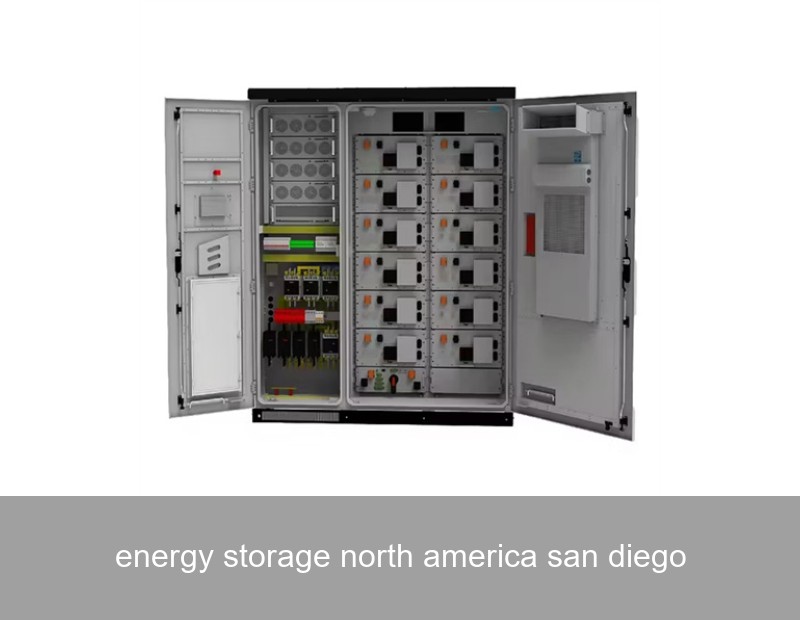
If you're following the energy landscape in North America, you've likely noticed a powerful trend: the rapid rise of energy storage. Nowhere is this more evident than in sunny San Diego, California. This city, blessed with abundant solar resources but also facing grid constraints and climate-driven challenges, has become a living laboratory for how advanced energy storage systems can transform a region's power resilience, sustainability, and economics. From large-scale grid projects to commercial hubs and residential homes, the integration of batteries is solving real-world problems. As a global leader in this space, Highjoule has been at the forefront, providing the intelligent, efficient systems that make this transition possible. Let's explore why San Diego's story is a critical blueprint for the future of energy in North America.
Table of Contents
- The San Diego Phenomenon: More Than Just Sunshine
- Data Driving the Storage Boom
- Case Study: Microgrid Resilience at a San Diego Tech Campus
- Beyond the Battery: Key Considerations for a Storage System
- Highjoule's Role: From Intelligent Batteries to Complete Solutions
- What Does the Future Hold for Your Energy Independence?
The San Diego Phenomenon: More Than Just Sunshine
San Diego's journey with energy storage isn't just a happy accident of good weather. It's a direct response to a perfect storm of factors. The city has one of the highest rooftop solar adoption rates in the United States. This creates a unique challenge: what happens when the sun goes down, but demand for electricity remains high? Traditionally, natural gas "peaker" plants, which are expensive and polluting, would fire up to meet this need. Furthermore, California's increasing wildfire risk has led to Public Safety Power Shutoffs (PSPS), leaving communities in the dark for days. This vulnerability created an urgent need for local, resilient power. Energy storage emerged as the elegant solution, allowing excess solar energy generated during the day to be stored and dispatched precisely when it's needed most—during the evening peak or a grid outage.

Image Source: Unsplash - Representative photo of San Diego solar adoption.
Data Driving the Storage Boom
The numbers tell a compelling story. According to the California Public Utilities Commission (CPUC), the state has a mandate to deploy 11.5 GW of energy storage by 2030. San Diego Gas & Electric (SDG&E), the local utility, is a major contributor to this goal. As of 2023, SDG&E had interconnected over 47,000 customer-sited storage systems, a figure that grows daily. On the grid side, projects like the 250 MW / 250 MWh San Diego Energy Storage Project help stabilize the regional grid. The economic driver is equally powerful. With time-of-use (TOU) rates where electricity costs can spike to over $0.50 per kWh in the evening, a well-sized storage system can deliver significant bill savings for businesses and homeowners by avoiding grid purchase during these expensive windows.
| Metric | Value | Impact |
|---|---|---|
| Customer-Sited Storage Systems | >47,000 | Enhanced resilience & bill management |
| Peak TOU Rate (Summer Evening) | >$0.50/kWh | Major savings opportunity with storage |
| State Storage Mandate (2030) | 11,500 MW | Sustained market growth & innovation |
| Typical Residential System Size | 10-15 kWh | Can power essential loads for 12-24+ hours |
Case Study: Microgrid Resilience at a San Diego Tech Campus
Let's make this concrete with a real-world example. A leading biotechnology research campus in the Sorrento Valley area of San Diego faced a critical business continuity risk. Their sensitive research required uninterrupted power, and PSPS events or even brief grid fluctuations could result in millions of dollars in lost experiments and data. They needed a solution that went beyond a simple backup generator.
The implemented project involved a sophisticated microgrid centered on a 2 MWh Highjoule CubeStack BESS (Battery Energy Storage System), integrated with their existing 1.2 MW of rooftop solar. The Highjoule system's intelligent energy management software was key. It doesn't just react to outages; it proactively manages energy flow every day. The system performs daily "energy arbitrage," storing solar excess and discharging during peak rates, saving the campus over $180,000 annually on electricity costs. More importantly, during a planned PSPS event in late 2022, the microgrid seamlessly islanded from the main grid. The Highjoule BESS, in concert with solar, provided 100% of the campus's critical load for 14 hours, with no interruption to ongoing research. This case exemplifies the dual value proposition of modern storage: immediate financial payback and priceless operational resilience.
Beyond the Battery: Key Considerations for a Storage System
Choosing an energy storage system is about more than just picking a battery brand. It's about selecting an integrated, intelligent power solution. Here are the critical factors any business or homeowner in North America should evaluate:
- Intelligence & Software: The brain of the system is what separates a basic battery from a grid asset. Look for systems with advanced software that can optimize for savings, resilience, and even grid services.
- Safety & Chemistry: Lithium iron phosphate (LFP) chemistry, used in Highjoule's commercial and residential systems, is widely regarded as a safer, more stable, and longer-lasting option than other lithium-ion variants.
- Scalability & Design: Your needs will evolve. A modular design like Highjoule's CubeStack allows you to start with what you need and expand capacity seamlessly as your energy demands grow.
- Integration Expertise: The system must work harmoniously with solar inverters, existing electrical panels, and grid interfaces. Professional design and installation are non-negotiable.
Highjoule's Role: From Intelligent Batteries to Complete Solutions
Since 2005, Highjoule has been engineering solutions for these exact challenges. We understand that a successful deployment in San Diego or anywhere in North America requires a holistic approach. Our product suite is designed to meet diverse needs:
- For Homes (Highjoule H-Series): Our residential storage systems provide peace of mind and energy independence. Integrated with solar, they shield homeowners from blackouts and soaring TOU rates, all managed through a simple, intuitive app.
- For Business & Industry (CubeStack Commercial): This modular, containerized solution is the workhorse for commercial facilities, manufacturing plants, and office parks. It delivers demand charge reduction, backup power, and sustainable energy management at scale.
- For Utilities & Microgrids (GridMax): Our utility-scale solutions provide grid stability, renewable firming, and deferral of costly infrastructure upgrades. They are the backbone of the resilient, flexible grid of the future.
What ties all Highjoule systems together is our Neuron Energy Management Platform. This AI-driven software is the central nervous system, continuously learning energy patterns, predicting weather and grid events, and optimizing every kilowatt-hour for maximum economic and operational value.

Image Source: Unsplash - Representative photo of industrial energy storage system control.
What Does the Future Hold for Your Energy Independence?
San Diego's story is a preview of a broader North American energy transformation. The convergence of climate policy, economic incentives, and technological maturity has made energy storage not just a "nice-to-have" but a foundational component of a modern energy strategy. The question is no longer if storage will play a major role, but how and when you will integrate it into your home, business, or community.
Are you ready to assess how an intelligent energy storage system could reduce your operational costs, secure your power supply, and contribute to a more sustainable grid? What would absolute power resilience mean for your business or family?
 Inquiry
 Online Chat