


Unlocking Energy Independence: The Essential Guide to High Capacity Batteries for Inverters
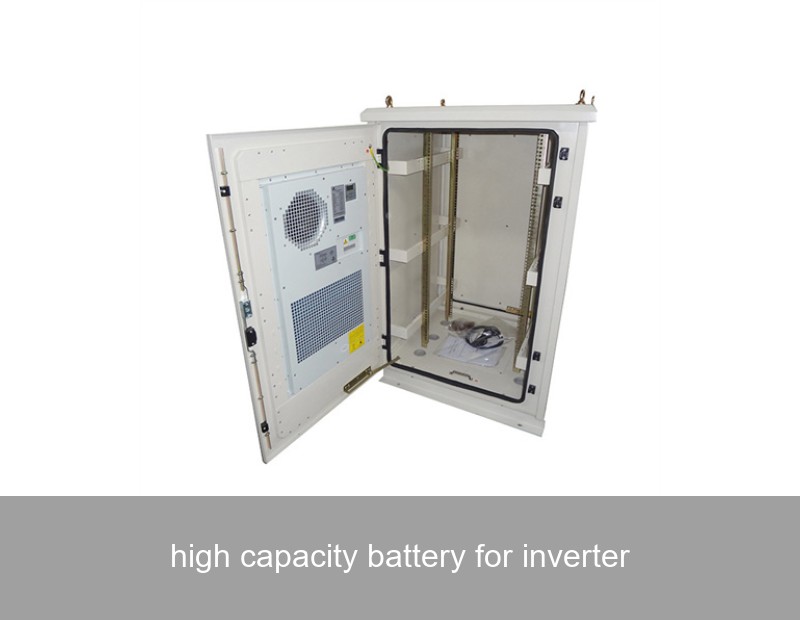
Have you ever watched your solar panels working hard on a bright day, only to realize that excess energy is slipping back to the grid because your battery is full? Or perhaps you've experienced the frustration of a power outage that drains your home backup system far too quickly. This common dilemma points to a single, powerful solution: integrating a high capacity battery for inverter systems. This isn't just about adding more kilowatt-hours; it's about fundamentally transforming how you capture, store, and use renewable energy. For homeowners and businesses across Europe and the U.S., moving beyond basic storage to high-capacity solutions is the key to achieving true energy resilience and maximizing the return on investment in solar technology. Let's explore why this upgrade is becoming not just desirable, but essential.
Table of Contents
- The Phenomenon: Why Basic Storage is No Longer Enough
- The Data: Quantifying the Need for High Capacity
- Case Study: A German Dairy Farm's Journey to Resilience
- The Highjoule Solution: Intelligent High-Capacity Architecture
- Key Considerations When Choosing Your System
- The Future is Modular and Scalable
The Phenomenon: Why Basic Storage is No Longer Enough
The initial wave of residential and commercial energy storage focused on basic backup—keeping the lights on for a few hours. However, energy needs are evolving. We're now seeing a surge in electricity consumption from electric vehicles (EVs), heat pumps, and an increasingly digital lifestyle. Simultaneously, grid instability and extreme weather events are becoming more frequent, making prolonged backup power a critical concern. A standard battery paired with your inverter might handle a short evening peak, but it can't manage a multi-day grid outage or shift enough solar energy to cover overnight EV charging. The mismatch between generation, consumption patterns, and storage capacity is the new energy challenge.

Image Source: Unsplash - A modern energy-independent home requires storage that matches its solar generation and consumption from EVs and appliances.
The Data: Quantifying the Need for High Capacity
The numbers paint a clear picture. According to the U.S. Department of Energy's Solar Futures Study, achieving decarbonization goals will require a massive increase in energy storage deployment, with much of it being daily, multi-hour storage. For a typical American home adding an EV and a heat pump, daily energy needs can easily exceed 40-50 kWh. A standard 10 kWh battery would be depleted in just a few hours of combined heating and charging.
Let's break this down further with a simple comparison table:
| Scenario | Typical Daily Load (kWh) | Adequate Battery Capacity (kWh) | Backup Duration (at 5kW draw) |
|---|---|---|---|
| Basic Home (lights, fridge, essentials) | 15-20 | 10-15 | 2-3 hours |
| Home with 1 EV & Heat Pump | 40-60 | 25-40+ | 5-8 hours |
| Small Commercial Business | 80-200 | 50-150+ | Varies by load |
As you can see, stepping up to a high capacity battery for inverter systems is what bridges the gap from short-term backup to genuine energy autonomy.
Case Study: A German Dairy Farm's Journey to Resilience
Consider the real-world example of a dairy farm in Bavaria, Germany. Their challenges were multifaceted: high refrigeration loads, volatile energy costs, and a need for unwavering power reliability for milking systems. Their existing 15 kWh battery and solar inverter setup couldn't cover nighttime operations or periods of low sun.
Their solution was an upgrade to a scalable, high-capacity battery system. They installed a modular 48 kWh lithium iron phosphate (LFP) battery bank, directly compatible with their inverter. The results, monitored over one year, were compelling:
- Self-Consumption Rate Increase: Rose from 65% to 92%, capturing nearly all solar production.
- Grid Energy Cost Reduction: Cut grid electricity purchases by 78%, despite adding new equipment.
- Critical Backup: Provided seamless backup power for over 14 hours during a regional winter grid failure, ensuring animal welfare and operational continuity.
This case underscores that a high capacity battery for inverter setups isn't a luxury; for many businesses, it's a core component of operational risk management and financial planning.
The Highjoule Solution: Intelligent High-Capacity Architecture
At Highjoule, we've been engineering advanced energy storage solutions since 2005, precisely for scenarios like the ones described. We understand that a high capacity battery for inverter integration is more than just a bigger box—it's an intelligent system.
Our flagship product line, the Highjoule H-Series Modular Battery System, is designed from the ground up for seamless scalability and robust performance. Here’s how we approach high-capacity storage differently:
- True Modular Design: Start with a base unit (e.g., 10 kWh) and stack additional modules as your needs grow. This future-proofs your investment and simplifies installation.
- Advanced LFP Chemistry: We utilize Lithium Iron Phosphate cells for their renowned safety, longevity (over 6,000 cycles), and stable performance across a wide temperature range.
- Universal Inverter Compatibility: Our systems are engineered to communicate seamlessly with leading hybrid and off-grid inverters in the European and North American markets, ensuring a plug-and-play experience.
- Smart Energy Management: The built-in Highjoule Energy Hub OS goes beyond simple charging. It uses weather forecasting, load profiling, and time-of-use rate data (where applicable) to autonomously optimize when to store, use, or even sell back energy.
For commercial and industrial clients, our Highjoule C.I. Stack offers containerized solutions from 100 kWh to multiple megawatt-hours, providing grid-scale storage capabilities for microgrids and large facilities.

Image Source: Unsplash - Modular battery systems allow for clean, scalable, and serviceable high-capacity installations.
Key Considerations When Choosing Your System
Selecting the right high capacity battery for inverter setup requires careful thought. Here are the critical factors we guide our customers through:
- Usable Capacity vs. Total Capacity: Always look at the usable kWh. Some batteries hold back a reserve, reducing what you can actually access.
- Depth of Discharge (DoD): A quality LFP battery like Highjoule's can regularly be discharged to 90-95% DoD without degrading lifespan, meaning you get the full value of the capacity you paid for.
- Power Rating (kW): Capacity (kWh) is your energy "tank size," but power (kW) is how fast you can empty or fill it. Ensure your battery's continuous and peak power output matches your inverter's capabilities and your largest potential loads.
- Scalability Path: Ask, "How do I add more capacity in 2 or 5 years?" A modular system is the most cost-effective answer.
The Future is Modular and Scalable
The trend is unmistakable. As noted by research from sources like the International Energy Agency (IEA), the future of energy storage is flexible, software-driven, and scalable. The goal is no longer just backup, but creating adaptive home and business energy ecosystems that interact intelligently with the grid.
Highjoule is at the forefront of this shift. Our systems are designed not just for today's needs, but as a platform for tomorrow's energy applications—from integrating with vehicle-to-grid (V2G) technology to participating in virtual power plants (VPPs).
So, as you evaluate your next step towards energy independence, ask yourself this: Is your current storage system a limiting factor in your renewable energy journey, and what new possibilities would open up if your capacity constraints simply disappeared?
 Inquiry
 Online Chat