


Mastering the Energy Storage Presentation: A Guide to Powering Your Pitch
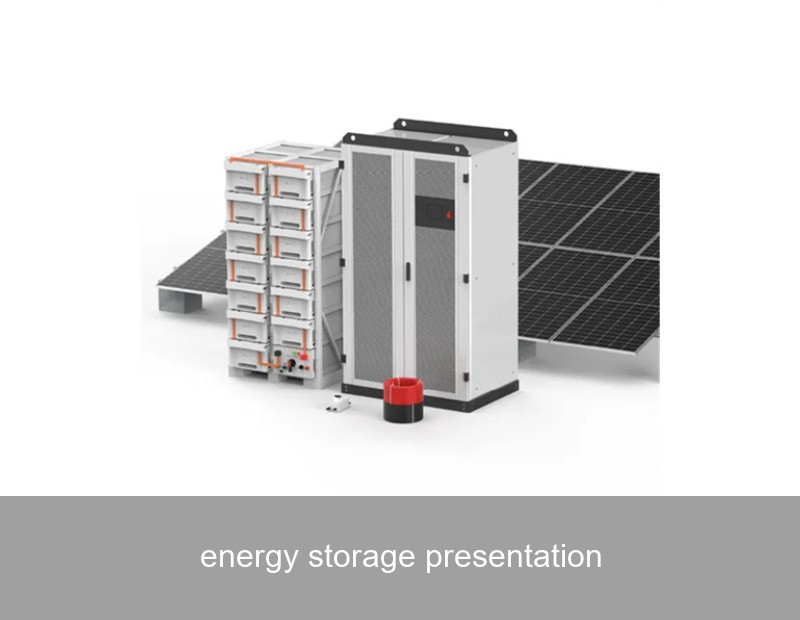
You've been tasked with giving an energy storage presentation. Whether you're a project developer seeking funding, a sustainability manager advocating for a corporate upgrade, or a homeowner explaining the benefits to your community board, the challenge is universal: how do you transform complex technology into a compelling, persuasive story? A successful presentation doesn't just share data; it builds understanding, trust, and a vision for a resilient, efficient energy future. This guide will walk you through the key strategies, from structuring your narrative to highlighting the real-world impact that solutions like those from Highjoule can deliver.
Table of Contents
- The Presentation Phenomenon: Why It Matters More Than Ever
- From Data to Story: The PAS Framework in Action
- A Case Study in Clarity: The German Industrial Microgrid
- Demystifying the Tech: Simplifying BESS for Any Audience
- Highjoule's Role: Your Partner in Tangible Solutions
- Visuals and Delivery: Making Complexity Accessible
The Presentation Phenomenon: Why It Matters More Than Ever
Think about the last great presentation you saw. What made it stick? It likely solved a clear problem. In the realm of energy, the problem is multifaceted: volatile energy prices, grid instability, and urgent decarbonization goals. Your energy storage presentation sits at the intersection of these pressures. For businesses in Europe and the US, electricity is no longer just a utility cost; it's a strategic operational risk. A well-crafted presentation articulates how battery energy storage systems (BESS) transition from a capital expense to a strategic asset enabling energy independence, cost predictability, and sustainability leadership.
From Data to Story: The PAS Framework in Action
To captivate your audience, structure is key. The Problem-Agitate-Solution (PAS) framework is incredibly effective.
Problem: The Hidden Cost of Grid Reliance
Start by naming the pain points your audience feels. "Our facility's operational budget is at the mercy of peak demand charges, which can constitute up to 70% of our electricity bill." Or, "Our renewable solar array shuts off during grid outages, leaving us in the dark despite having sunshine." Use relatable scenarios.
Agitate: Amplify the Consequences
Then, gently agitate. "This isn't just about cost; it's about operational resilience. A single grid disturbance can halt production, leading to thousands in lost revenue. Furthermore, without storage, a significant portion of your self-generated solar power is exported at low rates, missing the opportunity for maximum self-consumption and ROI."
Solution: Presenting the Storage Bridge
This is where you introduce energy storage as the logical, empowering solution. Frame it as the intelligent buffer that unlocks control. "A battery storage system acts as a shock absorber. It charges during low-cost, high-renewable periods and discharges during expensive peak times, flattening your energy cost curve. It ensures critical loads remain powered during outages, turning your solar investment into a true backup power source."

Image Source: Unsplash - A visual representation of commercial solar plus storage integration.
A Case Study in Clarity: The German Industrial Microgrid
Nothing builds credibility like real-world proof. Let's look at a project in Germany that mirrors challenges faced across Europe and North America.
The Client: A mid-sized automotive parts manufacturer in Bavaria.
The Problem: High Börsenstrompreis (spot market electricity prices), stringent carbon reduction targets, and a need for ultra-reliable power for precision machinery.
The Solution: The company deployed a 1.2 MWh/600 kW battery energy storage system, integrated with their existing 800 kW rooftop solar PV. The system was designed for peak shaving, solar self-consumption optimization, and providing backup power to critical assembly lines.
The Data-Driven Results (Presented 12 months post-installation):
| Metric | Result | Impact |
|---|---|---|
| Peak Demand Charge Reduction | 40% | Direct, recurring cost savings |
| Solar Self-Consumption Increase | From 35% to over 80% | Maximized ROI on solar assets |
| Grid Independence During Outages | Critical load backup for 4+ hours | Zero production stoppage in 3 minor grid events |
| CO2e Footprint Reduction | Approx. 720 tonnes annually | Significant progress toward sustainability goals |
In your presentation, a slide with a simple table like this translates abstract benefits into hard, justifiable numbers. It answers the fundamental question: "What do I get?"
Demystifying the Tech: Simplifying BESS for Any Audience
Avoid jargon. Use analogies. Think of the complete system in three simple parts:
- The Battery Racks (The Fuel Tank): These are the units that store energy. Their capacity (kWh) is how much "fuel" you can hold.
- The Inverter/Converter (The Engine): This is the smart component that manages the flow of energy—converting DC from the batteries or solar to AC for your building, and vice versa. It's the decision-maker.
- The Energy Management System (EMS) (The Brain & Conductor): This is the software that orchestrates everything. It analyzes energy prices, consumption patterns, and weather forecasts to decide when to charge, discharge, or hold, optimizing for your specific financial and operational goals.
For instance, at Highjoule, our H-Series Commercial BESS is designed with this integrated intelligence. We often explain that our proprietary EMS isn't just software; it's an automated energy economist, continuously working to deliver the highest possible return on your storage investment.
Highjoule's Role: Your Partner in Tangible Solutions
When you present a solution, grounding it in a credible provider adds immense weight. Since 2005, Highjoule has been at the forefront of making advanced storage practical and profitable. For your presentation, mentioning a partner with global experience assures your audience this isn't experimental technology.
Our offerings directly address the pain points you'll highlight:
- For Commercial & Industrial (C&I) Clients: Our modular, scalable systems allow businesses to start with a focused project (like peak shaving) and expand to full microgrid capabilities. Our systems integrate seamlessly with existing solar, wind, or CHP plants.
- For Residential Communities & Microgrids: We provide aggregated storage solutions that can create virtual power plants, enhancing community resilience and enabling participants to benefit from grid services revenue.
- Comprehensive Service: From initial feasibility analysis and financial modeling to long-term performance monitoring and maintenance, we provide the full lifecycle support that de-risks the investment for your stakeholders.
Including a specific product, like our Highjoule H-Stack with its industry-leading cycle life and safety features, shows you've done your homework on robust, bankable technology. You can confidently state that partnering with an established provider mitigates technology risk and ensures long-term system health.

Image Source: Unsplash - Technician overseeing advanced energy storage system controls.
Visuals and Delivery: Making Complexity Accessible
Your slides are your allies. Use them wisely.
- Show, Don't Just Tell: Use a simple before-and-after load profile graph. A "before" chart with sharp, high peaks, and an "after" chart with a flattened, smoothed curve visually demonstrates peak shaving better than any bullet point.
- Incorporate Authority: Reference trusted sources to underscore the market trend. For example, you might cite the International Energy Agency's reports on storage growth or data from Wood Mackenzie on market forecasts. Use these as nofollow links in your digital presentation deck.
- Be Conversational: Ask rhetorical questions. "What if your biggest energy expense became a controllable line item?" Speak to the CFO about ROI, to the Operations Manager about uptime, and to the Sustainability Officer about carbon metrics.
The Final Slide: Your Launchpad
Conclude not with a summary, but with a forward-looking call to action. Your final slide shouldn't say "Thank You." It should say, "What's the first step?" or "Let's model your savings." Pose an open question that transitions from presentation to conversation: "Given your facility's specific load profile, which application—peak shaving, backup power, or renewable optimization—do you think would deliver the quickest win, and shall we explore that data together?"
Mastering the energy storage presentation is about bridging the gap between technical potential and human decision-making. By telling a clear, data-backed story centered on solving real problems, you move from simply presenting information to championing a smarter, more resilient energy future. So, what will the opening line of your next presentation be?
 Inquiry
 Online Chat