


Off-Grid Hybrid System Cost: How Much Should You Really Budget?
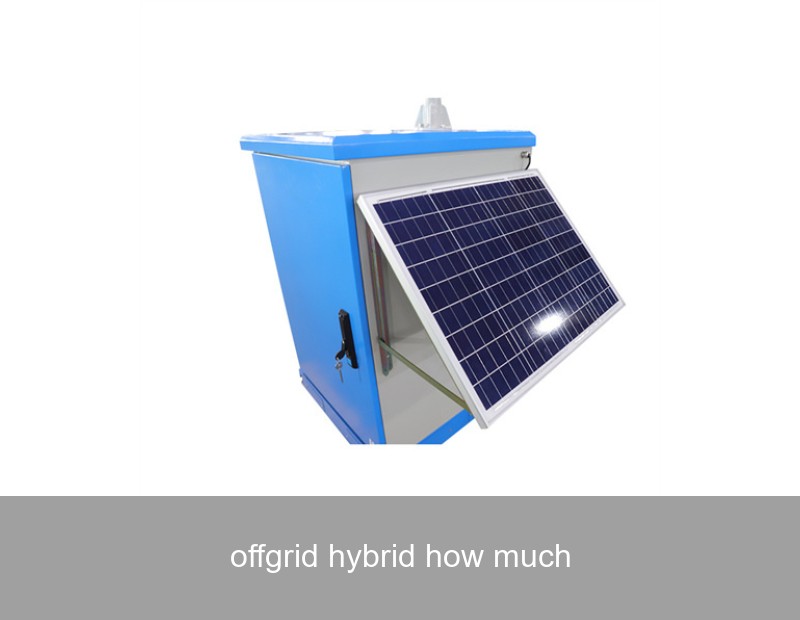
So, you're considering cutting the cord with the traditional grid and embracing true energy independence. The idea of an off-grid hybrid system is exciting—powering your home, cabin, or business with the sun and storing it for a rainy (or snowy) day. But then the big, practical question hits: "How much does it actually cost?" The answer, as you might suspect, isn't a simple number on a price tag. It's a journey from a common frustration to a tailored power solution. Let's demystify the real investment behind a reliable off-grid hybrid energy system.
Table of Contents
- The Phenomenon: The Rising Demand for True Energy Freedom
- Breaking Down the Costs: It's More Than Just Panels and Batteries
- A Real-World Case Study: The Swedish Mountain Retreat
- The Highjoule Solution: Smart Engineering for Predictable Budgets
- Key Considerations Before You Invest
- Your Next Step Towards Energy Independence
The Phenomenon: The Rising Demand for True Energy Freedom
Across Europe and North America, a quiet revolution is underway. Homeowners in rural Tuscany, ranch operators in Texas, and alpine lodge owners in Switzerland are moving beyond simple grid-tied solar. They seek resilience against increasing power outages, rising electricity rates, and the desire to build in locations where the grid is non-existent or prohibitively expensive to connect to. This isn't just about being "green"; it's about being self-reliant. An off-grid hybrid system, which combines solar generation, battery storage, and often a backup generator, is the key to unlocking this freedom. But the path is paved with technical questions, and the central one is cost.
Breaking Down the Costs: It's More Than Just Panels and Batteries
Asking "how much for an off-grid system?" is like asking "how much for a house?" Location, size, and quality are everything. Let's break down the core components that shape your investment.
1. Energy Audit & System Design (The Foundation)
This is the most critical step often overlooked. A system sized for a energy-efficient German Passivhaus will be vastly different from one for a large American workshop with power tools. Professionals assess your daily and seasonal kWh consumption, peak power demands, and site-specific solar potential. Skipping this leads to an underpowered, frustrating system or a massive overspend.
2. Core Hardware Components
| Component | Function | Cost Influence |
|---|---|---|
| Solar Panels (PV Array) | Primary energy generator | Scaled by total kW needed; efficiency and durability affect price. |
| Battery Energy Storage System (BESS) | Stores solar energy for use at night/cloudy days | The largest cost variable. Depends on usable kWh capacity (depth of discharge), battery chemistry (LiFePO4 is now standard for its longevity), and cycle life. |
| Hybrid Inverter/Charger | Brain of the system. Manages solar input, battery charging/discharging, and backup generator integration. | Power rating (kW) and sophistication (e.g., modular design, grid-forming capability) set the price. |
| Backup Generator | Provides power during extended low-solar periods | Fuel type (diesel, propane) and automatic start functionality add to cost. |
| Balance of System (BOS) | Mounting, wiring, switchgear, safety disconnects, monitoring | Often 20-30% of total hardware cost; quality here ensures safety and reliability. |
3. "Soft Costs": Installation, Permits, and Maintenance
In the EU and US, these can equal or exceed hardware costs. They include:
- Professional Installation: Certified electricians and solar installers ensure code compliance and safety.
- Permits & Inspections: Local building and electrical permits are mandatory and vary by region.
- Long-Term Maintenance: While minimal, budgeting for potential battery replacement after 10-15 years and periodic system checks is prudent.

Image Source: Unsplash - Professional installation is key to system performance and safety.
A Real-World Case Study: The Swedish Mountain Retreat
Let's ground this in reality. A family in northern Sweden built a 120 sqm year-round cabin, far from grid connection. Their goal: 100% energy independence despite harsh winters with only 4 hours of daylight.
- Challenge: High heating demand (heat pumps), standard appliances, and a critical need for reliability.
- Solution: A meticulously designed 15 kW solar array, a 40 kWh LiFePO4 battery bank, a 10kW hybrid inverter, and a propane backup generator with auto-start.
- Total System Cost (2023): Approximately €68,000 (including VAT, full design, installation, and permits).
- Outcome: The system covers 92% of annual energy needs directly from solar, with the generator auto-starting only during the darkest winter weeks. They have eliminated a projected €15,000 grid connection fee and all monthly bills. (U.S. Department of Energy - Planning for Solar).
This case shows the investment is significant but transforms an ongoing operational expense (grid connection, fuel deliveries) into a capitalized, predictable asset.
The Highjoule Solution: Smart Engineering for Predictable Budgets
At Highjoule, with nearly two decades of experience, we've learned that controlling off-grid hybrid system costs isn't about cutting corners—it's about smart, integrated design and superior components that maximize value over the system's 25+ year life.
Our approach focuses on right-sizing and intelligence. For instance, our HPS Series Hybrid Power Systems are pre-engineered units that combine a high-efficiency inverter, MPPT solar charger, and advanced battery management into a single, compact unit. This reduces design complexity, installation time, and points of failure. Paired with our Enduro-LFP battery cabinets, which offer exceptional cycle life and stable performance in a wide temperature range, we create systems that deliver reliable power from the Scottish Highlands to the Californian desert.
For larger commercial or microgrid applications, our GridMasterTM controllers add a layer of intelligent energy management, dynamically prioritizing solar consumption, battery storage, and generator use to minimize fuel consumption and wear-and-tear. This level of control directly translates to lower long-term operating costs, making the upfront investment more economical over time. (NREL Report on Renewable Hybrid Systems).
Image Source: Unsplash - A modern, integrated battery and inverter system like Highjoule's HPS Series.
Key Considerations Before You Invest
To move from a vague "how much?" to a concrete quote, ask yourself and your provider these questions:
- What is my worst-case seasonal energy usage (in kWh)? Size for winter, not summer.
- How many days of "autonomy" do I need? (i.e., how many cloudy days in a row should my batteries cover before the generator kicks in?). This dramatically impacts battery cost.
- Is the system using modular, upgradeable components? Can you add more batteries later if needed?
- What does the warranty cover, and for how long? Look for 10+ years on batteries and inverters.
- Does the provider offer remote monitoring and support? This is crucial for troubleshooting and peace of mind in remote locations.
Your Next Step Towards Energy Independence
The journey to off-grid power is an investment in resilience, sustainability, and ultimate control. While the initial price tag requires careful planning, the long-term payoff—freedom from utility rates, outages, and connection fees—is invaluable. The most successful projects start with a partnership with an expert who listens to your specific needs and designs a system not just for today, but for decades of reliable service.
What's the one critical load in your home or business that makes achieving energy independence non-negotiable for you? Share your starting point, and let's explore what a tailored off-grid hybrid solution could look like.
 Inquiry
 Online Chat