


Understanding Energy Storage System Cost: A Breakdown for 2024 and Beyond
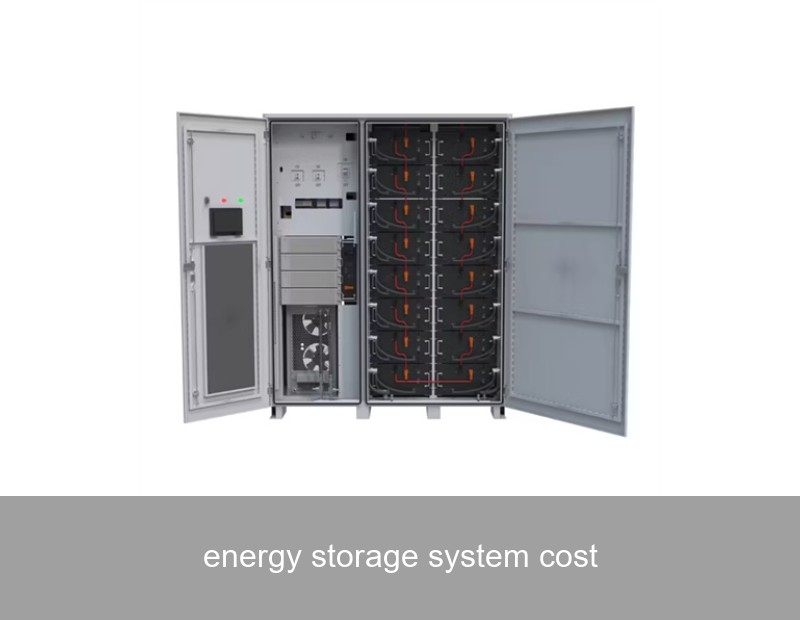
If you're considering an energy storage system (ESS) for your home, business, or community project, the first question is often, "What will it cost?" It's a great question, but the answer is evolving faster than ever. The conversation around energy storage system cost has shifted from a simple upfront figure to a more nuanced discussion about long-term value, energy independence, and total cost of ownership. While prices for components like lithium-ion batteries have fallen dramatically, the true "cost" is now measured against rising grid electricity prices, the need for resilience, and sustainability goals. Let's unpack the factors that determine the price tag today and how leading providers like Highjoule are engineering solutions that deliver compelling economics.
Table of Contents
The Real Components of Energy Storage System Cost
When we talk about energy storage system cost, it's crucial to look beyond the battery pack itself. A complete, functional system comprises several key investments:
- Battery Cells & Modules: The core energy reservoir. Chemistry (like LFP - Lithium Iron Phosphate), brand, capacity (kWh), and cycle life are primary cost drivers.
- Power Conversion System (PCS): The brain and muscle, including inverters and converters that manage AC/DC power flow. Its efficiency and power rating (kW) critically impact performance.
- Battery Management System (BMS): The guardian, ensuring safety, longevity, and optimal performance of the battery.
- Thermal Management System: Crucial for safety and efficiency, especially in extreme climates.
- System Integration, Software & Controls: The "intelligence" that allows the system to automate energy decisions, participate in grid services, and provide user insights.
- Installation & Balance of System (BoS): Wiring, enclosures, mounting, labor, and permitting.
At Highjoule, we've learned that skimping on integration and software leads to higher lifetime costs. Our H-Series commercial and industrial systems are built as cohesive units, not a bundle of parts. This integrated design, featuring our proprietary Adaptive BMS and GridSync™ Inverter Technology, reduces installation complexity and ensures all components communicate flawlessly for maximum efficiency and lifespan from day one.
By the Numbers: Key Cost Trends and Data
The global trend is encouraging. According to BloombergNEF, the volume-weighted average price for a battery pack fell by 14% in 2023, continuing a decade-long decline. However, this story has two sides. While battery cell costs (per kWh) drop, other factors are shaping the total project economics:
| Cost Factor | Trend | Impact on Total Project Cost |
|---|---|---|
| Lithium-Ion Battery Pack (per kWh) | Steady decrease | Lowers core material cost, but a smaller portion of total system cost over time. |
| Inverter & Power Electronics | Stable, with premium for advanced features | High-efficiency, bi-directional models command a premium but offer greater ROI. |
| Installation & Soft Costs (Permits, Grid Connection) | Regionally variable, often increasing | Can be 20-40% of total cost. Standardized, pre-assembled systems help control this. |
| Software & Intelligence | Increasing value & cost share | Critical for unlocking revenue streams (e.g., grid services) and optimizing self-consumption. |
Furthermore, policy plays a huge role. In the U.S., the Inflation Reduction Act (IRA) offers direct investment tax credits (ITC) for standalone storage, dramatically improving project economics. In Europe, various national subsidies and favorable regulations for self-consumption are accelerating adoption. The true net cost is increasingly defined by these incentives and the value streams the system can access.

Image Source: Unsplash - A containerized ESS, similar to Highjoule's utility-scale solutions, enables significant cost savings through peak shaving and grid services.
Case Study: Reducing Peak Demand Charges for a German Manufacturing Plant
Let's move from theory to a real-world example that highlights the financial logic behind an ESS investment. A mid-sized automotive parts manufacturer in Bavaria, Germany, faced a classic industrial energy challenge: high peak demand charges. These charges, based on the highest 15-minute power draw each month, constituted nearly 40% of their total electricity bill.
The Phenomenon: Their energy usage was spiky due to simultaneous operation of heavy machinery.
The Data: Monthly peak demand: 1.2 MW. Average demand charge: €25/kW/month. Annual cost from demand charges: ~€360,000.
The Highjoule Solution: The company installed a 500 kW / 1 MWh Highjoule H-Series ESS. Our Energy Predictor™ AI software analyzes the plant's load patterns and weather forecasts to intelligently dispatch the battery.
The Outcome: The system "shaves" peaks by discharging battery power during short periods of highest grid draw. In the first year of operation:
- Peak demand reduced by an average of 400 kW.
- Annual savings on demand charges: €120,000 (400 kW * €25 * 12 months).
- Additional savings by increasing on-site solar consumption by 18%.
- Projected simple payback period: Under 5 years, enhanced by a German federal subsidy for commercial storage (BAFA).
This case isn't just about storing energy; it's about storing money. The energy storage system cost was justified not by the price of avoided kWh, but by the avoidance of much more expensive kW of peak demand.
Looking Beyond the Battery: The Highjoule Integrated Approach
As the case study shows, the hardware is just the beginning. The real magic—and the key to a faster return on investment—lies in the software and system intelligence. This is where Highjoule's decade-plus of experience fundamentally changes the cost-value equation.
Our Highjoule Energy Operating System (EOS) is a cloud-based platform that turns a static battery into a dynamic financial asset. For our residential EchoHome systems in the U.S. market, EOS can automatically optimize for time-of-use rate arbitrage, backup readiness, and even participate in select Virtual Power Plant (VPP) programs, generating credits for the homeowner. For our commercial and microgrid clients, EOS enables sophisticated strategies like demand response participation, frequency regulation, and seamless integration of multiple generation sources (solar, wind, gensets).
Think of it this way: two systems might have similar upfront energy storage system costs. But if one can only perform basic charge/discharge cycles while the other can autonomously chase 5 different value streams based on real-time market and weather data, their lifetime economics will be worlds apart. We engineer for the latter.

Image Source: Unsplash - A modern home energy ecosystem, managed by intelligent software like Highjoule's EOS, maximizes the value of every component.
The Future Outlook for ESS Economics
Where are costs headed? Industry analysts like those at Wood Mackenzie predict continued but slowing declines in battery cell prices, with supply chain diversification and new chemistries (like sodium-ion) playing a role. The more significant evolution will be in standardization and software. Pre-assembled, modular "storage-in-a-box" solutions reduce installation time and cost. Meanwhile, AI-driven optimization software will become the default, squeezing more value from every cycle and extending system life.
At Highjoule, we are investing heavily in both fronts. Our new Modular Power Pack (MPP) architecture for utility-scale projects allows for rapid, phased deployment, reducing initial capital outlay. Furthermore, we are pioneering the use of digital twin technology to predict maintenance needs and optimize performance, effectively lowering the long-term operational costs for our clients.
So, when you evaluate energy storage system cost, ask yourself and potential providers: Is this quote just for hardware, or does it include the intelligence to make that hardware pay for itself? Are we discussing only upfront price, or the total cost of ownership over 15-20 years?
What specific energy cost challenge—peak demand, volatile time-of-use rates, or backup power needs—is most critical for your operation, and how could a smart storage system transform that challenge into a controlled, predictable expense?
 Inquiry
 Online Chat