


Li-Ion Battery Cost: How Much Should You *Really* Expect to Pay for Reliable Energy Storage?
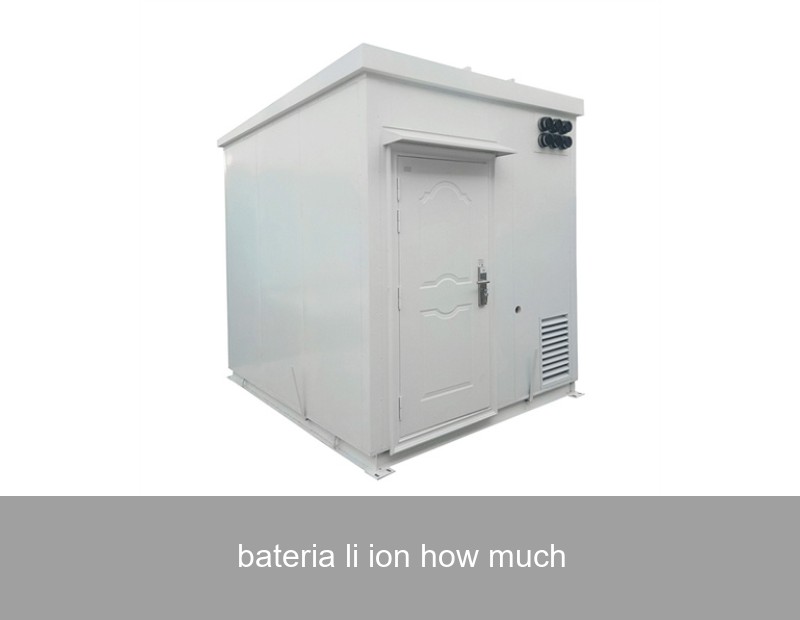
If you're searching for "bateria li ion how much?", you're likely encountering a dizzying array of prices online. You might see a small 5kWh residential unit advertised for a few thousand dollars and a large commercial system quoted at hundreds of thousands. This wide range can be confusing. The truth is, asking "how much for a lithium-ion battery?" is like asking "how much for a house?"—the answer depends on capacity, quality, application, and the long-term value it delivers. At Highjoule, with nearly two decades of experience powering homes and businesses across Europe and the US, we believe the conversation should shift from mere upfront price to total cost of ownership and return on investment.
Breaking Down Li-Ion Battery Costs: A Layered View
The sticker price of the battery pack itself, often quoted in dollars per kilowatt-hour ($/kWh), is just the starting point. To understand the true investment, we need to peel back the layers.
The Core Components of Cost
Think of a battery storage system as a team, not a single player. The cost encompasses:
- Battery Cells & Modules: The core chemical energy storage units. Prices have fallen dramatically, from over $1,200/kWh in 2010 to around $139/kWh in 2023 for pack-level prices, according to U.S. Department of Energy data. However, premium cells with higher cycle life and safety ratings command a higher price.
- Battery Management System (BMS): The "brain" that ensures safety, performance, and longevity. A sophisticated BMS is non-negotiable for system health.
- Power Conversion System (PCS): The inverter/charger that converts DC battery power to AC for your home or business. Its efficiency rating directly impacts your energy savings.
- Thermal Management System: Crucial for safety and lifespan. Passive cooling is cheaper; active liquid cooling (used in Highjoule's H-Series Industrial systems) is more effective in demanding applications.
- Installation, Permitting, & Grid Interconnection: Labor, engineering, and administrative costs vary significantly by region and project complexity.
| Application | Typical Capacity Range | Key Cost Drivers | Approx. Total Installed Cost Range* |
|---|---|---|---|
| Residential (e.g., with solar) | 5 - 20 kWh | Brand, inverter integration, local labor rates | $7,000 - $20,000+ |
| Commercial & Industrial | 50 kWh - 2 MWh+ | Scale, electrical infrastructure, thermal management, software intelligence | $250,000 - $2M+ |
| Microgrid/Utility-Scale | 2 MWh+ | Project scale, grid services capability, long-duration storage needs | Multi-million dollar projects |
*Ranges are indicative and vary widely by location, specifications, and market conditions.
Case Study: A Berlin Bakery's Recipe for Savings with Highjoule
Let's move from theory to practice. A family-run bakery in Berlin faced two problems: crippling peak-demand charges from their utility and vulnerability to short grid outages that could spoil inventory. They needed a solution that paid for itself.
The Challenge: Reduce a monthly peak demand charge of over €1,800 and provide backup power for critical refrigeration.
The Highjoule Solution: We installed a tailored 120 kWh Highjoule C-Series Commercial battery system, integrated with their existing solar PV. Our Intelligent Energy Platform (IEP) software was configured for peak shaving, automatically discharging the battery during the bakery's high-power periods (early morning ovens, midday HVAC).
The Data-Driven Result (First 12 Months):
- Peak Demand Reduction: 42%, slashing demand charges by an average of €850/month.
- Increased Solar Self-Consumption: From 35% to 78%, saving an additional €180/month on energy bills.
- Reliability: Seamless backup through three brief grid interruptions, protecting thousands of euros in perishables.
Image Source: Unsplash (Representative image of a commercial bakery)

The ROI: The total system cost was approximately €85,000. With combined monthly savings of €1,030, the simple payback period is under 7 years—well within the system's 10+ year warranty period. After that, it's nearly pure savings and added resilience. For this bakery, the question wasn't just "how much is the battery?" but "how much can the battery system save us?"
The Highjoule Value Proposition: Intelligent Storage, Maximized Value
At Highjoule, we engineer systems that optimize every dollar/euro of your investment. Our cost is an investment in precision engineering and intelligent software that delivers a lower total cost of ownership.
Our Technology Makes the Difference
- Adaptive Cell Chemistry Management: Our proprietary BMS doesn't just monitor; it adapts charging patterns based on usage and temperature, extending cycle life beyond standard expectations. This directly reduces your cost per cycle.
- IEP Software Suite: This is where value is captured. For our H-Series for Industrial clients, the IEP can automatically participate in demand response programs (where available), generating revenue by selling stored power back to the grid during high-price events. Suddenly, the battery becomes an income-generating asset.
- Modular & Scalable Design: Start with what you need. Our R-Series for Residential and C-Series allow for cost-effective expansion as your energy needs grow, protecting your initial investment.
Choosing a cheaper, less intelligent system might save 15-20% upfront but could miss 30-40% of the potential savings over its life, making it the more expensive option in the long run.
Future Cost Trends: What to Expect
While battery cell prices are expected to continue a gradual decline, the focus of innovation is shifting. According to a IEA report, improvements are increasingly coming from pack design, manufacturing efficiency, and new chemistries like LFP (Lithium Iron Phosphate), which Highjoule utilizes for its superior safety and longevity in stationary storage. The future cost benefits will come more from increased lifespan, higher round-trip efficiency, and smarter grid integration capabilities rather than just a drop in the $/kWh cell price.
Image Source: Unsplash (Representative image of battery technology research)

Finding Your Number: The Right Questions to Ask
So, how much will your li-ion battery system cost? Start by asking these questions:
- What is my primary goal? (Bill savings, backup power, sustainability, grid services revenue?)
- What is my specific energy consumption profile? (Peak demand, nightly load, solar production?)
- What is the total installed cost, including all hardware, software, and "soft costs"?
- What is the warranted cycle life and degradation profile? (A cheaper battery that loses 30% capacity in 5 years is a poor value.)
- How intelligent is the system's software? Can it adapt to changing tariffs and maximize my financial return automatically?
At Highjoule, our consultation process is designed to answer these questions with clarity. We model your energy data, provide transparent scenarios, and show you the projected financial and operational outcomes—because the right cost is the one that delivers a compelling return for your specific needs.
What energy challenge is driving your search for a battery solution today, and what would a compelling return on that investment look like for you?
 Inquiry
 Online Chat