


Energy Storing Batteries: The Unsung Heroes of Our Clean Energy Future
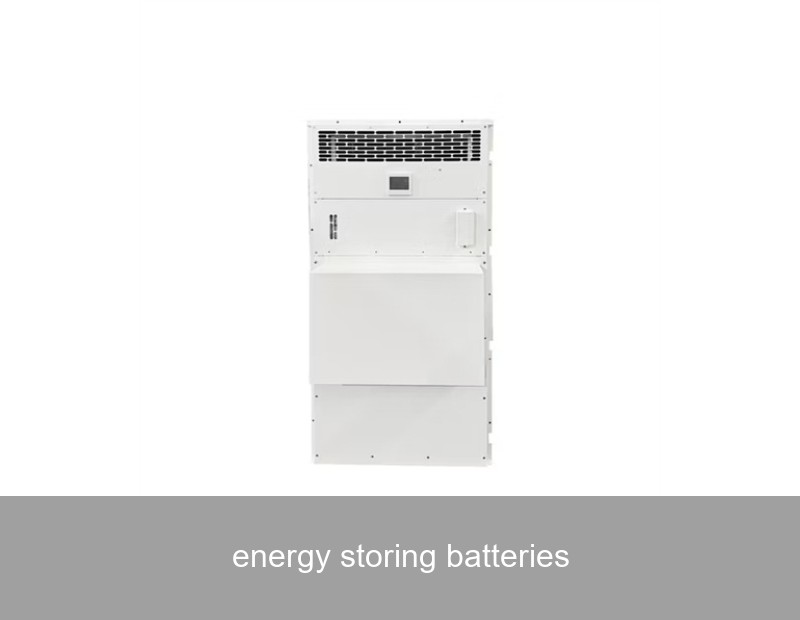
Have you ever wondered what happens when the sun sets on a solar-powered home, or the wind stops blowing on a gusty hill? This is the fundamental challenge of the renewable revolution: the mismatch between when energy is produced and when we need it. The answer, increasingly, lies in sophisticated energy storing batteries. These aren't the batteries in your remote control; they are intelligent, grid-scale systems that are quietly reshaping how we generate, manage, and consume electricity. For businesses, communities, and homeowners, they are transforming renewable energy from an intermittent source into a reliable, round-the-clock power solution.
Table of Contents
- The Challenge: Why We Can't Just Rely on Sunshine and Wind
- How Modern Energy Storing Batteries Actually Work
- Beyond Backup: The Multifaceted Benefits of Battery Storage
- A Real-World Case Study: Stabilizing the Grid in California
- Choosing the Right System: What to Look For
- Highjoule's Role in Powering a Resilient Future
The Challenge: Why We Can't Just Rely on Sunshine and Wind
The phenomenon is clear: solar panels produce a bell curve of power peaking at midday, while our energy demand often spikes in the early morning and evening. Wind energy is even less predictable. This creates a dual problem: curtailment (wasting excess clean energy) and reliance on fossil-fuel "peaker" plants to fill gaps. The data is compelling. According to the International Energy Agency (IEA), global grid-scale battery storage capacity needs to expand significantly to meet net-zero goals, with annual additions growing exponentially. Without large-scale energy storing batteries, the full potential of renewables remains locked away.

Image: A solar farm integrated with battery storage units. Source: Unsplash (Photographer: American Public Power Association)
How Modern Energy Storing Batteries Actually Work
Think of a battery energy storage system (BESS) as a sophisticated bank for electricity. It charges (deposits energy) during periods of low demand or high generation, and discharges (withdraws energy) when needed. But the magic isn't just in the battery cells—it's in the intelligence that governs them.
- The Battery Pack: Typically using Lithium-Ion (like NMC or LFP) chemistry for its high energy density and efficiency. LFP (Lithium Iron Phosphate) is gaining massive traction for its superior safety and longer cycle life.
- The Battery Management System (BMS): The "brain" of the operation. It monitors cell voltage, temperature, and state of charge to ensure safety, performance, and longevity.
- The Power Conversion System (PCS): Acts as the translator, converting the battery's direct current (DC) into the alternating current (AC) used by the grid and our appliances, and vice versa.
- The Energy Management System (EMS): The high-level strategist. It uses software and often weather data or grid signals to decide when to charge and discharge, optimizing for self-consumption, cost savings, or grid services.
Beyond Backup: The Multifaceted Benefits of Battery Storage
The value of energy storing batteries extends far beyond simply keeping the lights on. They provide a suite of services that benefit the end-user and the grid as a whole.
| Benefit | For Homeowners | For Businesses & Utilities |
|---|---|---|
| Energy Independence | Reduce reliance on the grid, especially during peak tariff periods. | Ensure critical operations continue during outages (e.g., data centers, manufacturing). |
| Cost Savings | Store cheap solar energy for use at night, avoiding high retail rates. | Participate in demand charge reduction and wholesale energy arbitrage. |
| Grid Support | Less direct, but aggregated home systems can provide community resilience. | Provide frequency regulation, voltage support, and defer costly grid upgrades. |
| Sustainability | Maximize the use of your self-generated solar power, reducing carbon footprint. | Integrate higher percentages of renewable energy into microgrids or facilities. |
A Real-World Case Study: Stabilizing the Grid in California
Let's look at a concrete example. In 2020, a utility-scale battery storage project in Monterey County, California, came online with a capacity of 300 MW / 1,200 MWh. During a major heatwave in September 2022, when grid demand soared and the risk of blackouts was high, this facility and others like it discharged stored energy during critical evening hours. Data from the California Independent System Operator (CAISO) shows that batteries provided over 3,300 MW of power to the grid at peak demand—equivalent to several large gas-fired power plants. This intervention was crucial in preventing rolling blackouts and demonstrated how energy storing batteries have moved from niche players to essential grid infrastructure.

Image: Technician monitoring a utility-scale battery storage system. Source: Unsplash (Photographer: Kindel Media)
Choosing the Right System: What to Look For
Not all battery systems are created equal. Whether for your home or business, key considerations include:
- Chemistry & Safety: LFP chemistry is often the preferred choice for its thermal stability and long life.
- Depth of Discharge (DoD): A higher usable DoD means you can access more of your battery's capacity without harming it.
- Round-Trip Efficiency: How much energy you get out versus what you put in. Look for systems with 90%+ efficiency.
- Scalability & Integration: Can the system be easily expanded and seamlessly integrated with existing solar or building management systems?
- Software Intelligence: The EMS software is what unlocks true value, enabling smart, automated control based on your goals.
Highjoule's Role in Powering a Resilient Future
This is where expertise and proven technology matter. At Highjoule, with nearly two decades of experience since 2005, we design and deploy intelligent storage solutions that embody these principles. Our systems are built with safety and longevity as the foundation, utilizing best-in-class LFP battery cells.
For residential customers, our Home Energy Hub is more than just a battery; it's an integrated energy manager that optimizes solar self-consumption, provides backup power during outages, and can even be configured to respond to grid signals where available. For commercial and industrial clients, our C&I PowerStack series offers modular, scalable storage that slashes demand charges, provides uninterrupted power for critical processes, and opens revenue streams through grid service programs. Our Microgrid Controller technology can tie solar, storage, and backup generation into a single, resilient island of power for communities or remote facilities.
The insight here is simple: an energy storing battery is a long-term investment. Partnering with a provider that offers robust hardware, intelligent software, and deep system integration expertise ensures you capture the full value for years to come.
So, What's Your Energy Resilience Goal?
Is it to achieve near-total energy independence at home, to harden your business against volatile energy prices, or to develop a community microgrid that can withstand extreme weather events? The technology is here, and it's more capable and affordable than ever. What step will you take to understand how modern battery storage can fit into your energy equation?
 Inquiry
 Online Chat