


Energy Vault Energy Storage: Beyond the Battery Paradigm
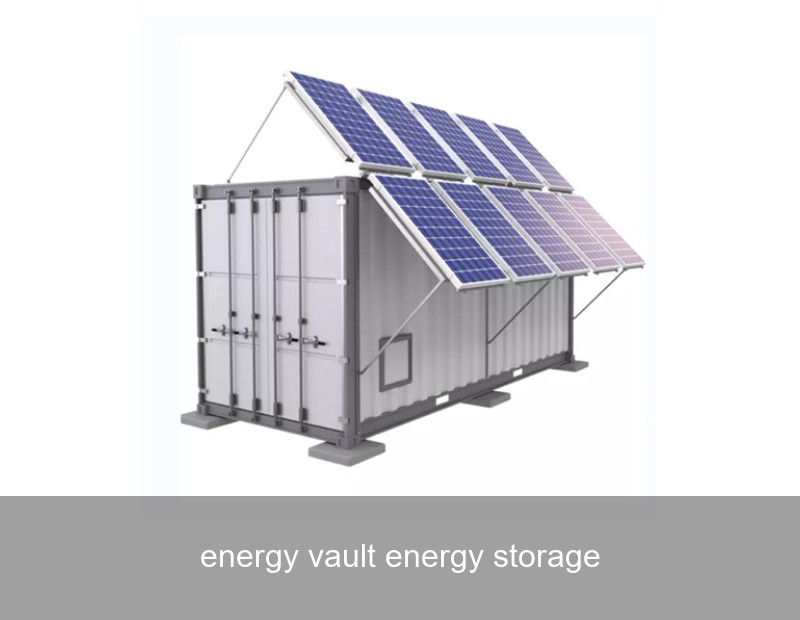
Imagine a world where the energy from a sunny afternoon in July can power a cold, still night in December. This isn't science fiction; it's the ultimate promise of long-duration energy storage (LDES). As our grids become saturated with intermittent renewables, a critical question emerges: how do we store massive amounts of energy for weeks or months, not just hours? While lithium-ion batteries dominate headlines, a fascinating and diverse field of solutions is rising to meet this challenge. This is the world of energy vault energy storage—a concept that cleverly uses gravity and potential energy to create a giant, eco-friendly "battery" for the grid.
Table of Contents
- The Grid's New Challenge: From Hours to Seasons
- How Do Energy Vaults Actually Work? The Physics of Gravity
- The LDES Landscape: More Than Just One Solution
- Case Study: Storing Alpine Sun for European Winters
- Highjoule's Role in a Multi-Technology Storage Ecosystem
- The Future Outlook and Your Next Step
The Grid's New Challenge: From Hours to Seasons
Let's set the scene. Solar and wind power are now often the cheapest sources of new electricity. In 2023, renewables provided over 30% of global electricity for the first time. That's phenomenal progress. But here's the phenomenon turning into a pressing problem: the sun sets, and the wind calms, often for prolonged periods. Our existing lithium-ion battery systems are fantastic for short-duration needs—smoothing out fluctuations, providing backup for a few hours, or shifting solar power to the evening peak. However, their economics and material footprint become challenging when we need to store hundreds of gigawatt-hours for days on end, a concept known as "seasonal storage."
This mismatch creates a "dunkelflaute" dilemma—a German term describing a prolonged period with little sun and wind. To decarbonize entire grids, we need a solution that acts less like a smartphone battery and more like a strategic fuel reserve. Enter the principle of the energy vault.

Image: A conceptual gravity energy storage "vault." Source: Wikimedia Commons (CC)
How Do Energy Vaults Actually Work? The Physics of Gravity
At its core, an energy vault is a gravity storage system. It's a modern, high-tech reimagining of pumped hydro storage—where water is pumped uphill to store energy and released downhill to generate it—but without the geographical constraints. The basic principle is beautifully simple:
- Charging (Storing Energy): When there is excess renewable energy on the grid (e.g., on a windy night), the system uses that cheap electricity to power motors that lift massive weights—think custom-made composite blocks or containers of earth—stacking them high into a tower or moving them to an elevated position.
- Discharging (Releasing Energy): When the grid needs power, the weights are lowered in a controlled descent. This descent drives generators, converting the potential energy back into electricity, exactly when it's needed most.
Think of it as charging a battery by lifting bricks and then getting the power back as they slowly fall. The "energy density" is in the mass of the blocks and the height they can be lifted. These systems aim for an 80-85% round-trip efficiency and a lifespan of 30-40 years with minimal degradation, addressing two key limitations of electrochemical batteries.
The LDES Landscape: More Than Just One Solution
While gravity-based vaults capture the imagination, the LDES universe is broad. It's crucial to understand that no single technology will be a silver bullet. The future grid will rely on a portfolio, with each technology serving different durations and applications:
| Technology | Mechanism | Typical Duration | Key Advantage |
|---|---|---|---|
| Gravity Storage (Energy Vault) | Lifting/Lowering Mass | 4-24+ hours | Long lifespan, low degradation, uses local materials |
| Compressed Air (CAES) | Compressing air in underground caverns | 8-24+ hours | Very large scale, proven geology-dependent technology |
| Flow Batteries (e.g., Vanadium) | Liquid electrolyte chemical reaction | 4-12 hours | Decoupled power & energy, safe, long cycle life |
| Thermal Energy Storage | Heating/cooling materials like molten salt | 6-15+ hours | High efficiency for industrial heat, integrates with solar thermal |
This diversity is a strength. A grid operator might use lithium-ion for frequency regulation (seconds), flow batteries for daily solar shifting (hours), and a gravity-based energy vault or CAES for multi-day grid resilience.
Case Study: Storing Alpine Sun for European Winters
Let's look at a real-world project bringing this concept to life. In the Swiss canton of Ticino, a company is developing a gravity storage system using a mountain slope. Here's how it works and the data behind it:
- Location: Decommissioned quarry in Ticino, Switzerland.
- Mechanism: A 70-ton crane system lifts and lowers 35-ton concrete blocks on the steep quarry wall.
- Scale: 20 MWh storage capacity, with 5 MW power output.
- Data & Impact: This single system is designed to provide enough storage to power approximately 2,000 Swiss households for a full day. Its 35-year design life means it will operate with consistent performance long after electrochemical systems would need full replacement. The concrete blocks can even be made from local soil or recycled materials, minimizing embodied carbon.
This project, highlighted in reports by the Institution of Civil Engineers, exemplifies the potential of terrain-based gravity storage in mountainous regions across Europe and North America, turning geographical features into strategic energy assets.
Highjoule's Role in a Multi-Technology Storage Ecosystem
At Highjoule, we view these innovative long-duration technologies as complementary to our core mission. Since 2005, we have specialized in intelligent, software-driven battery energy storage systems (BESS) for commercial, industrial, and microgrid applications. Our expertise lies in integrating the right storage technology for the specific need.
While a gravity energy vault might be ideal for a utility-scale, week-long storage project, a manufacturing plant needs reliable, instant power for daily peak shaving and backup. That's where Highjoule excels. Our H-Series BESS platforms provide ultra-fast response, high cycle efficiency, and are managed by our GridSynergy AI software, which optimizes every kilowatt-hour for economic return and grid support.
Imagine a future hybrid system: a Highjoule BESS handles the plant's daily load shifting and voltage support, while a community-scale energy vault, charged by a nearby wind farm, provides the multi-day resilience during a severe weather event. We are already working on such integrated control systems, acting as the central "brain" that orchestrates a diverse fleet of storage assets—from lithium-ion to flow batteries to future gravity-based systems—ensuring the most efficient, reliable, and sustainable outcome for our clients.

Image: A modern BESS control room, similar to Highjoule's monitoring centers. Source: Unsplash
The Future Outlook and Your Next Step
The journey to a 100% renewable grid is an engineering puzzle of epic proportions. Gravity-based energy vault energy storage represents a powerful and elegant piece of that puzzle, offering a path to long-duration storage with minimal environmental impact. Its success, alongside compressed air, flow batteries, and others, will be critical for achieving true energy independence and climate goals.
But this transition isn't just about megaprojects. It's about building a smarter, more resilient energy system at every level. Whether it's a factory seeking to lock in energy costs, a hospital requiring unwavering backup power, or a community microgrid aiming for self-sufficiency, the principles of intelligent storage apply.
So, we leave you with this question: As your energy costs and reliability concerns continue to evolve, have you assessed what mix of storage technologies—from fast-responding BESS to potential long-duration solutions—could future-proof your operations and contribute to a more stable grid for everyone?
 Inquiry
 Online Chat