


Crusoe Energy Systems LLC: Turning Wasted Gas into Digital Power
Imagine a roaring flame, day and night, burning off a valuable resource into thin air. This isn't a scene from an industrial dystopia; it's a common practice in the oil and gas industry called "flaring." Every year, billions of cubic meters of natural gas are flared at production sites globally, wasting energy and releasing millions of tons of CO2. But what if that wasted energy could be captured and put to productive use? That's precisely the question Crusoe Energy Systems LLC set out to answer. This pioneering company has developed a clever bridge between two seemingly disparate worlds: hydrocarbon energy and the digital economy, offering a transitional solution to a persistent environmental issue.
What is Flaring and Why is it a Problem?
Flaring is the controlled burning of natural gas that surfaces during oil extraction. Operators flare gas for safety, logistical, or economic reasons—often because building pipelines from remote wells is not financially viable. While safer than direct venting (releasing methane, a potent greenhouse gas), flaring is incredibly wasteful.
- Economic Waste: The World Bank estimates that in 2023, over 140 billion cubic meters of gas was flared globally—equivalent to the total annual gas consumption of Sub-Saharan Africa.
- Environmental Impact: Flaring converts methane (CH4) into carbon dioxide (CO2), which is less potent but still a major greenhouse gas. It also produces black carbon (soot), contributing to air pollution and Arctic ice melt.
For years, this was accepted as an unavoidable cost of doing business. But companies like Crusoe Energy Systems LLC saw not just a problem, but an untapped opportunity.
Crusoe Energy Systems LLC: An Innovative Solution
So, how does Crusoe's system work? In simple terms, they capture stranded or flared gas at the wellsite and use it to generate electricity on-site. But instead of feeding this power into a distant grid, they use it to fuel modular, containerized data centers. These data centers perform energy-intensive computing, primarily for cryptocurrency mining and, increasingly, for high-performance computing (HPC) applications like artificial intelligence model training and scientific rendering.
Think of it as creating a "digital pipeline." Where a physical pipeline is impractical, Crusoe installs its proprietary "Digital Flare Mitigation®" systems:
- Capture & Generate: Gas is diverted from the flare stack to power generators.
- Compute: The generated electricity powers high-density computing servers housed in shipping containers.
- Mitigate & Monetize: Flaring is significantly reduced, CO2 emissions are lowered (compared to flaring), and the otherwise wasted gas creates economic value through computing services.

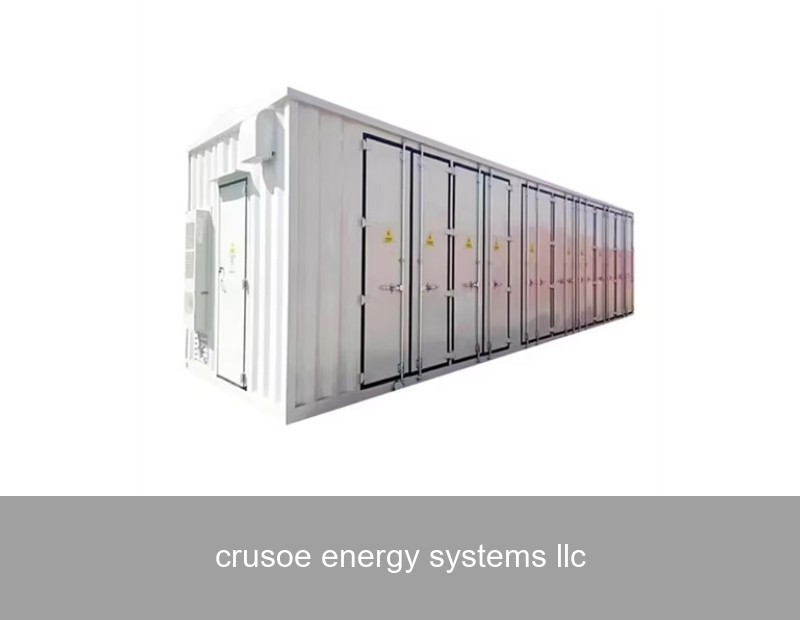
Image: Modular data centers, similar in concept to Crusoe's setup, enable efficient on-site power utilization. (Image Source: Unsplash)
The Data Behind the Impact
The impact of this model isn't just theoretical. Let's look at the numbers. According to Crusoe's own reporting and third-party analyses, the benefits are substantial:
| Metric | Impact | Comparison Equivalent |
|---|---|---|
| CO2e Emissions Reduction | ~63% reduction vs. flaring* | Taking ~X,000 cars off the road annually per system |
| Methane Destruction | ~99.9% efficiency | Prevents potent methane from escaping |
| Gas Utilization | Uses otherwise stranded energy | Powers thousands of high-performance servers |
*This reduction is achieved by converting methane to CO2 via combustion in a generator with higher efficiency and control than a flare, and by offsetting grid power that may be carbon-intensive. Source: World Bank - Zero Routine Flaring by 2030 initiative.
A Real-World Case Study: The Bakken Basin
North Dakota's Bakken shale formation has historically had some of the highest flaring rates in the United States. In this challenging environment, Crusoe Energy Systems LLC deployed its technology with a major oil and gas producer.
- Location: Bakken Shale, North Dakota, USA.
- Scale: Installation of multiple Digital Flare Mitigation® systems across several well pads.
- Result: One documented project achieved a 99% reduction in flaring volumes at the equipped sites. Over a year, this single project mitigated an estimated 500,000 metric tons of CO2e emissions.
- Broader Effect: Technologies like Crusoe's have contributed to North Dakota's overall reduction in flaring, which dropped from ~30% of produced gas in 2014 to under 5% in recent years, even as production increased.
This case shows the tangible, scalable impact of turning waste into a resource. It's a compelling example of innovation driving environmental and operational improvements in a traditional industry.
The Broader Energy Landscape: From Mitigation to Transformation
The work of Crusoe Energy Systems LLC represents a critical piece of a much larger puzzle: the global transition to a sustainable, resilient, and efficient energy system. Flare mitigation is a vital transitional step. However, the ultimate goal is a grid powered by renewable sources, supported by intelligent storage to ensure reliability.
This is where the mission of companies like Highjoule comes into full focus. While Crusoe tackles the upstream waste problem, Highjoule addresses the downstream challenge of integrating clean energy into our daily lives and operations.
Highjoule's Role: Building on the Foundation for a Sustainable Grid
At Highjoule, we see innovators like Crusoe as part of the essential ecosystem cleaning up energy production. Our expertise lies in the next step: advanced energy storage and management. As more renewable energy from solar and wind comes online, the grid faces new challenges—intermittency. The sun doesn't always shine, and the wind doesn't always blow. This is where battery energy storage systems (BESS) become the cornerstone of a stable, modern grid.
Highjoule provides intelligent, modular storage solutions for commercial, industrial, and utility-scale applications. Our systems do more than just store energy; they manage it intelligently:
- Maximizing Self-Consumption: For a factory with solar panels, our BESS stores excess midday solar energy for use in the evening, dramatically reducing reliance on the grid and energy costs.
- Providing Grid Services: Large-scale Highjoule installations can provide frequency regulation, peak shaving, and backup power, helping to balance the grid and prevent blackouts.
- Enabling Microgrids: In remote areas or critical facilities, our systems form the heart of independent microgrids that can combine solar, wind, generators, and storage for 24/7 resilient power.

Image: Utility-scale battery storage systems, like those from Highjoule, are key to grid stability and renewable integration. (Image Source: Unsplash)
Imagine a future where gas flaring is eliminated, and the entire grid is fed by renewables. The role of advanced storage, as provided by Highjoule, is what makes that vision technically and economically feasible. We are building the infrastructure that turns clean but intermittent power into a reliable, on-demand resource for businesses and communities.
What Does the Future Hold for Energy Innovation?
The journey of Crusoe Energy Systems LLC highlights a powerful truth: the path to sustainability is paved with innovation, pragmatism, and a willingness to connect dots across different sectors. It's about finding value where others see waste and building bridges between today's infrastructure and tomorrow's clean energy goals.
But the conversation doesn't end with flare mitigation or even with storage. The energy transition is a complex, multi-faceted challenge. How can industries further collaborate to create circular energy systems? What new technologies will emerge to decarbonize the hardest-to-abate sectors? And most importantly, how can your business or community not just adapt to this changing landscape, but actively participate in and benefit from it?
We invite you to explore how intelligent energy storage can be the key to your own sustainability and resilience goals. What's the first step you could take to better manage your energy use and contribute to a cleaner grid?
 Inquiry
 Online Chat