


Industrial Energy Monitoring: The Unseen Power Behind Profitable and Sustainable Operations
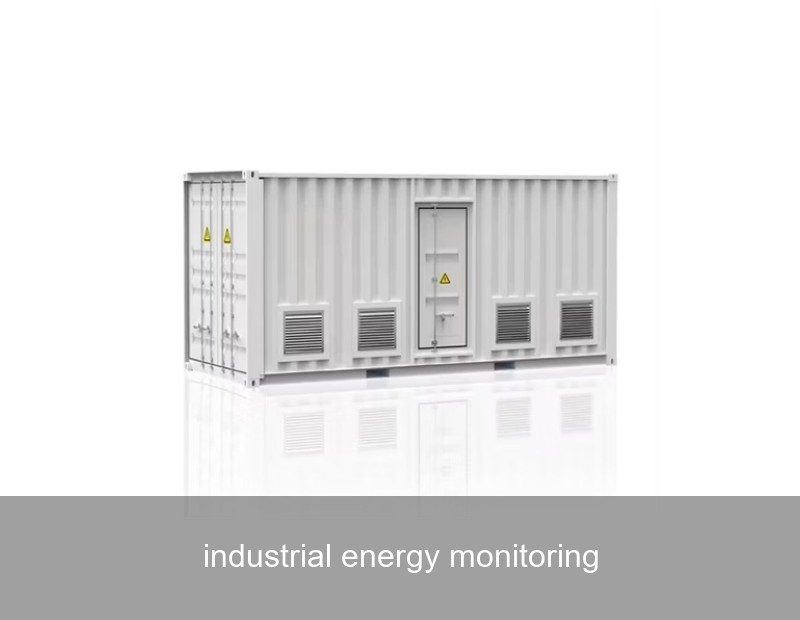
Let's talk about a silent revolution happening on factory floors and within commercial complexes across Europe and the U.S. It's not about new machinery or automation robots—though those are vital. It's about industrial energy monitoring. For decades, energy was simply a fixed, opaque cost of doing business. Today, forward-thinking facility managers and plant operators are leveraging advanced monitoring to transform that cost center into a source of resilience, savings, and strategic advantage. This isn't just about reading a meter; it's about gaining a real-time, granular understanding of how every kilowatt-hour flows through your operation, empowering you to make intelligent decisions that impact the bottom line and the planet.
Table of Contents
- The Costly Blind Spot in Industrial Operations
- From Guesswork to Granular Data: What Modern Monitoring Reveals
- Case Study: Taming Peak Demand in a German Manufacturing Plant
- Beyond the Meter: Integrating Monitoring with Intelligent Storage
- The Highjoule Approach: Holistic Visibility and Control
- How to Start Your Energy Intelligence Journey
The Costly Blind Spot in Industrial Operations
a mid-sized automotive parts supplier receives its monthly electricity bill. It's 15% higher than forecasted, putting pressure on quarterly margins. The facility manager is asked, "Why?" and "Which production line or shift caused this?" The honest answer, more often than not, is a shrug. Without industrial energy monitoring, you're flying blind. The problem is multifaceted: volatile energy prices, especially in European markets; stringent carbon reporting requirements; and the sheer complexity of modern industrial loads, from HVAC and compressed air to process heating and precision machinery. The phenomenon is clear: uncontrolled energy consumption is a direct drain on profitability and competitiveness.
Consider this data point: The U.S. Department of Energy states that manufacturers can typically reduce energy costs by 10-30% through systematic energy management practices, with monitoring being the foundational first step (source: energy.gov). That's not a marginal improvement; for a facility with a $1 million annual energy spend, it represents up to $300,000 in potential savings directly flowing to the bottom line.
From Guesswork to Granular Data: What Modern Monitoring Reveals
So, what does true industrial energy monitoring look like? It moves far beyond a single utility meter at the main entrance. It involves a network of submeters, IoT sensors, and power quality analyzers installed at critical points:
- Circuit-Level Monitoring: Tracking individual feeders to specific departments, production lines, or high-load equipment.
- Real-Time Power Quality Analysis: Detecting voltage sags, harmonics, and transients that waste energy and damage sensitive equipment.
- Demand (kW) Tracking: Watching the instantaneous power draw, which directly determines peak demand charges—often 30-50% of a commercial bill.
- Energy (kWh) Profiling: Understanding consumption patterns over time, identifying baseload waste, and correlating energy use with production output.
This data is collected on a centralized, cloud-based platform that provides dashboards, alerts, and detailed reports. Suddenly, you can answer those tough questions: Which machine is an energy vampire during idle periods? Did the new, "efficient" compressor actually lower our load profile? How does our energy intensity (kWh per unit produced) compare across shifts?
Case Study: Taming Peak Demand in a German Manufacturing Plant
Let's look at a real-world application. A Highjoule client, a specialty chemical processor in Bavaria, Germany, was facing crippling peak demand charges and needed to reduce its carbon footprint to meet corporate sustainability targets. Their energy profile was spiky, with large mixers and heating elements cycling on simultaneously.
The Challenge: Unpredictable demand peaks leading to high grid charges and limited visibility into process-specific consumption.
The Highjoule Solution: We deployed a comprehensive industrial energy monitoring system across their main distribution panels and key process lines. This was integrated with a Highjoule H-Series Battery Energy Storage System (BESS) and our GridSynergy AI software platform.
The Data-Driven Outcome: The monitoring system identified the exact timing and source of demand peaks. The AI software then orchestrated the BESS to discharge strategically during these short peak periods, smoothing the facility's load curve. The results within the first year were compelling:
| Metric | Before Implementation | After Implementation | Improvement |
|---|---|---|---|
| Peak Demand from Grid | 1.8 MW | 1.4 MW | 22% Reduction |
| Annual Demand Charge Cost | €85,000 | €62,000 | €23,000 Saved |
| Carbon Footprint (Scope 2) | Baseline | Reduced by 45 tons CO2e | Measurable Impact |
The monitoring dashboard became the nerve center for their energy team, allowing them to verify savings in real-time and plan further efficiency projects with confidence.
Beyond the Meter: Integrating Monitoring with Intelligent Storage
The true power of industrial energy monitoring is unlocked when it becomes the brain for an intelligent energy ecosystem. Data alone is informative, but data that triggers automated action is transformative. This is where integrated solutions like those from Highjoule create exponential value.
Imagine your monitoring system detects the start of a demand peak. Instead of just sending an alert, it can automatically dispatch power from an on-site battery storage system to "shave" that peak. Or, it can schedule non-critical loads (like warehouse ventilation or pre-heating) to run when electricity prices are low, based on real-time market data. This is not future-tech; it's what our GridSynergy Platform does today. By coupling deep monitoring with our H-Series BESS for commercial and industrial applications, we turn passive observation into active financial and operational management.

The Highjoule Approach: Holistic Visibility and Control
At Highjoule, we believe effective industrial energy monitoring is the critical first layer of any smart energy strategy. Since 2005, we've evolved from a storage provider to a full-spectrum solutions partner. Our offering is built on three pillars:
- 1. High-Fidelity Monitoring & Analytics: We provide hardware-agnostic monitoring solutions that can integrate with existing meters or new submetering networks. Our platform delivers clear, actionable insights, not just data overload.
- 2. Advanced Storage Systems: Our H-Series BESS is engineered for high-cycle, demanding C&I applications. It's the physical asset that stores energy when it's cheap/clean and delivers it when it's expensive/critical.
- 3. Intelligent Integration Software: The GridSynergy Platform is the orchestrator. It uses monitoring data, weather forecasts, and tariff structures to autonomously optimize energy flow—maximizing savings, ensuring resilience, and even enabling participation in grid service programs where available.
This integrated approach allows businesses to not only understand their energy profile but to actively shape it for economic and environmental benefit. For example, a food processing plant in California can use our system to monitor refrigeration load, store solar energy generated at midday, and use it to power chilling during the expensive evening peak, all while ensuring product safety.
How to Start Your Energy Intelligence Journey
Beginning might seem daunting, but it can be phased. A great first step is a preliminary assessment. Often, installing temporary loggers on main feeders for 2-4 weeks can reveal surprising patterns and quick-win opportunities. The International Energy Agency highlights monitoring and targeting as the cornerstone of industrial energy management systems (source: IEA).
Ask yourself: Can I pinpoint my facility's energy consumption for the last hour? Do I know what causes my highest 15-minute demand peak each month? If the answer is no, you have an opportunity waiting to be captured.
 Inquiry
 Online Chat