


Engineered Energy Solutions: The Blueprint for a Resilient and Sustainable Power Grid
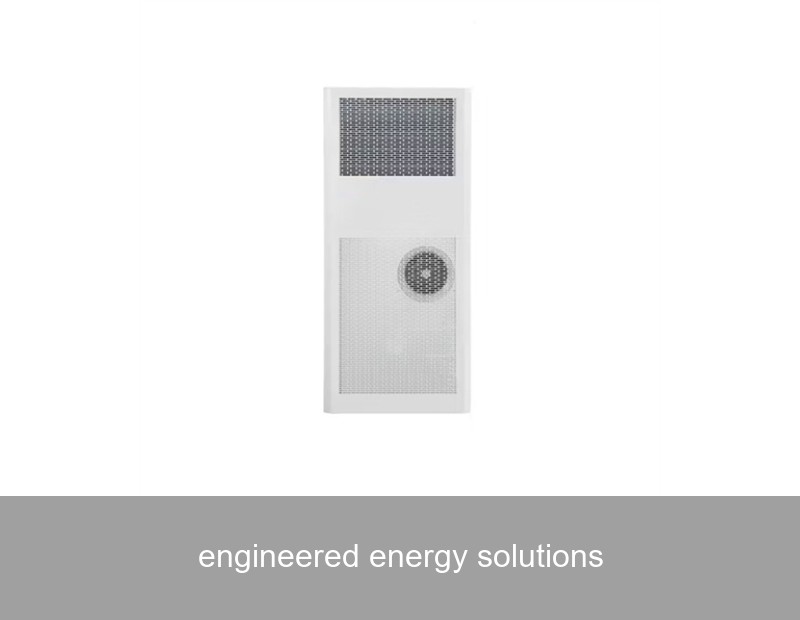
As our world becomes increasingly electrified, a simple truth emerges: not all power is created equal, and not all energy challenges have one-size-fits-all answers. This is where the concept of engineered energy solutions becomes critical. Moving beyond generic products, these are meticulously designed systems that integrate generation, storage, and intelligent management to solve specific power reliability, cost, and sustainability problems. For businesses, communities, and grid operators, particularly in markets like Europe and the U.S. facing grid modernization and volatile energy prices, a custom-engineered approach is no longer a luxury—it's a strategic necessity.
Table of Contents
- The Phenomenon: From Intermittency to Intelligence
- The Data: Quantifying the Need for Precision Engineering
- The Case Study: A German Manufacturing Plant's Transformation
- The Architecture of an Engineered Solution
- Highjoule's Role: Your Partner in Precision Energy Engineering
- The Future: Engineered Grids and Energy Independence
The Phenomenon: From Intermittency to Intelligence
Think about the modern energy landscape. A factory in Texas faces peak demand charges that erode profitability. A hospital in California needs absolute power reliability amidst public safety power shutoffs. A community in Spain wants to maximize its solar investment but struggles with evening consumption peaks. These aren't simple "buy a battery" problems. They are complex puzzles involving load profiles, tariff structures, renewable generation curves, and physical space constraints.
The old paradigm involved bolting on separate components—solar panels here, a battery there, a generic inverter somewhere else. The new paradigm of engineered energy solutions views the site as an integrated ecosystem. It asks: "What is the precise outcome we need?" Is it levelized cost of energy (LCOE) reduction, carbon footprint minimization, or uptime assurance? The engineering begins with this question, not with a product catalog.

Image Source: Unsplash - Representative image of energy system planning and engineering
The Data: Quantifying the Need for Precision Engineering
Let's talk numbers. According to the International Energy Agency (IEA), global grid-scale battery storage capacity needs to expand over 40-fold by 2030 to meet climate targets. But capacity alone isn't the full story. A study by the National Renewable Energy Laboratory (NREL) highlights that the value of storage is highly dependent on its application and local grid conditions; a poorly sized or integrated system can capture less than 50% of its potential financial value.
Consider demand charges for commercial users in the U.S., which can constitute 30-70% of a total electricity bill. An off-the-shelf battery might shave some peaks, but an engineered solution with advanced forecasting and cycle optimization can target those specific, costly peak moments with surgical precision, delivering a much faster return on investment. The data clearly shows that optimization through engineering is where the real value is unlocked.
The Case Study: A German Manufacturing Plant's Transformation
Let's make this concrete with a real-world example from our work at Highjoule. A mid-sized automotive parts manufacturer near Stuttgart, Germany, faced a triple challenge: rising electricity costs, a corporate mandate to reduce carbon emissions by 25% in five years, and a need for unwavering power quality for sensitive robotic welding lines.
The generic proposal was a standard 500 kW solar array and a 500 kWh battery. Our engineered approach started with a deep audit. We analyzed 15-minute interval load data for a full year, modeled local solar irradiance, and simulated against Germany's complex EEG (Renewable Energy Act) tariff and market rules.
The Engineered Solution Delivered:
- Hybrid Inverter System: Instead of separate components, we deployed an integrated Highjoule H-PowerCube system, combining PV inversion, battery storage, and grid management in one thermally managed unit, reducing footprint and conversion losses.
- Asymmetric Storage Sizing: We recommended a 600 kWh battery capacity, not 500 kWh. Why? Our modeling showed the extra 100 kWh was critical to cover extended cloudy periods and capture lucrative spot market arbitrage opportunities in the EPEX market, adding a new revenue stream.
- Predictive Energy Management Software (EMS): Our Neuron EMS platform uses AI to forecast production schedules and weather, pre-charging the battery from solar or the grid when prices are low to avoid the most expensive power draws.
| Metric | Result | Impact |
|---|---|---|
| Energy Costs | Reduced by 34% | Exceeded ROI target by 18 months |
| Demand Charges | Reduced by 68% | Smoothed operational cash flow |
| Carbon Footprint | Reduced by 41% | Surpassed 5-year target in Year 1 |
| Power Quality Issues | Eliminated (0 events) | Zero production stoppages |
This case exemplifies true engineered energy solutions: a outcome-focused design where components serve a master strategy.
The Architecture of an Engineered Solution
So, what are the pillars of such a system? It's a layered architecture.
1. The Hardware Layer: More Than the Sum of Its Parts
This isn't just about picking cells and panels. It's about:
- Cell Chemistry Selection: Is long-duration, frequent cycling needed? Or high power for short bursts? Lithium Iron Phosphate (LFP) for safety and cycle life, or a different chemistry for specific power density?
- Thermal & Safety Engineering: How is thermal runaway prevented? How does the system perform in a Bavarian winter or an Arizona summer? This requires rigorous environmental modeling.
- Grid Interface: The inverter must provide grid-forming capabilities for microgrids, reactive power support, and comply with local grid codes (like UL 9540 in the U.S., VDE-AR-N 4110 in Germany).
2. The Intelligence Layer: The "Brain" of the Operation
Hardware is inert without smart software. The intelligence layer involves:
- Forecasting Engines: Predicting solar/wind generation and site consumption.
- Optimization Algorithms: Continuously solving for the lowest cost or lowest carbon, based on real-time electricity prices, weather, and equipment state.
- Open Protocol Integration: Seamlessly communicating with building management systems (BMS), SCADA, and other site assets.

Image Source: Unsplash - Representative image of data analytics and energy management
3. The Service Layer: Ongoing Performance Assurance
An engineered solution includes its future. This means:
- Remote Monitoring & Diagnostics: 24/7 system health checks and proactive alerts.
- Performance Guarantees: Backing up the engineered projections with service level agreements (SLAs) on availability and degradation.
- Iterative Re-optimization: As electricity tariffs or site operations change, the system's operational parameters are re-tuned to maintain peak value.
Highjoule's Role: Your Partner in Precision Energy Engineering
At Highjoule, founded in 2005, we don't just sell储能 systems; we deliver certainty through engineered energy solutions. Our process embodies this philosophy:
- Discovery & Modeling: We begin with your goals and data. Our engineers build a digital twin of your energy profile to simulate thousands of scenarios.
- Integrated System Design: We specify from our modular product lines—like the H-PowerCube for commercial/industrial sites or the HomeGuard series for residential resilience—ensuring perfect harmony between components.
- Deployment with Digital Thread: Every installation is linked to its digital twin, ensuring the built system matches the engineered design.
- Lifetime Optimization via Neuron Platform: Our proprietary Neuron EMS platform becomes the ongoing brain of your system, ensuring it adapts and delivers value for its entire 15-20 year lifespan.
Whether for a commercial facility seeking to lock in energy costs, an industrial plant needing power quality, or a microgrid project requiring islanding capability, Highjoule provides the end-to-end expertise to make it a success.
The Future: Engineered Grids and Energy Independence
The frontier of engineered energy solutions is expanding to virtual power plants (VPPs) and community-scale microgrids. Imagine thousands of precisely engineered Highjoule systems across a city, aggregated to form a decentralized "power plant" that can support the main grid during heatwaves or emergencies. This isn't science fiction; it's happening now in pilot projects across California and the EU.
The ultimate goal is a self-optimizing, resilient energy ecosystem. It requires a shift in thinking—from purchasing kilowatt-hours to investing in a customized energy outcome.

Image Source: Unsplash - Representative image of a modern sustainable home with integrated energy systems
Is your organization ready to move from passive energy consumption to actively engineered energy resilience? What specific energy challenge—be it cost, carbon, or reliability—could we help you model and solve today?
 Inquiry
 Online Chat