


How Much Does It Cost to Empower Your Company with Energy Independence?
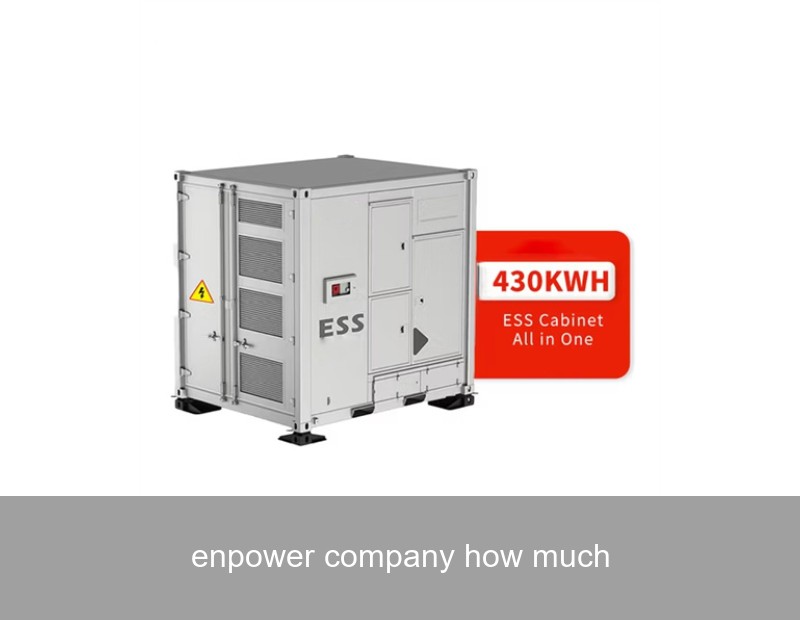
If you're a business leader in Europe or the US, you've felt the pinch. The question isn't just about electricity prices anymore; it's about stability, sustainability, and control. You're likely asking, "How much does it truly cost to empower my company?" This goes beyond a simple price tag for solar panels or batteries. It's an investment in operational resilience, financial predictability, and environmental stewardship. Let's demystify the costs and reveal the long-term value of taking charge of your energy future.
The Rising Energy Bill: A Universal Headache
Volatility is the new constant. In 2023, commercial electricity prices in parts of Europe remained over 40% higher than pre-energy crisis levels, while in the US, regions like California and Texas see frequent price spikes during peak demand or grid stress. This isn't just a line-item expense; it's a direct threat to your bottom line and operational continuity. Power outages, even brief ones, can halt production, corrupt data, and damage sensitive equipment. The phenomenon is clear: relying solely on the traditional grid is becoming a significant financial and strategic risk.
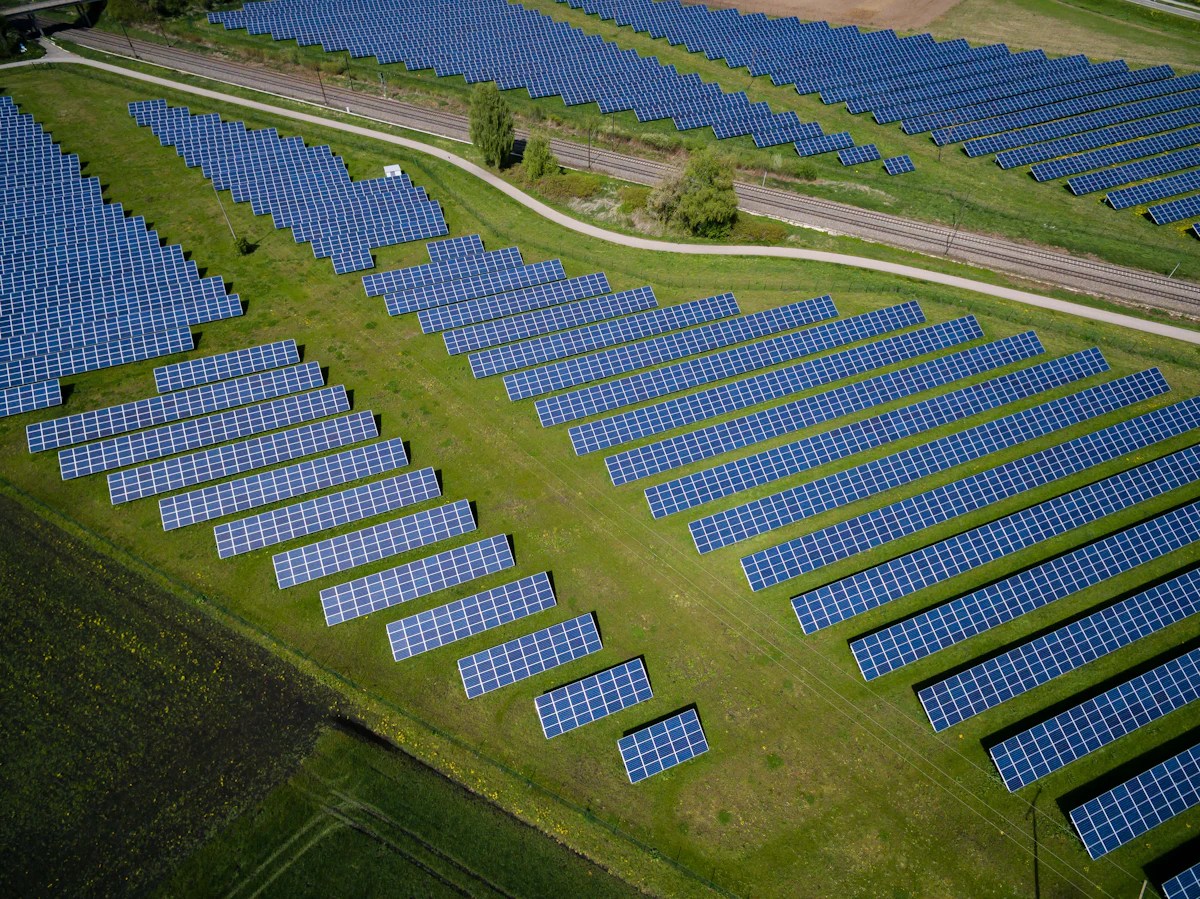
Image Source: Unsplash - Illustrative chart showing energy price volatility.
What Does "Empower Your Company" Really Mean?
Empowerment in this context means transitioning from a passive ratepayer to an active energy manager. It's about generating, storing, and intelligently using your own electricity. The core components are:
- On-Site Generation: Typically solar photovoltaic (PV) systems that convert sunlight into free, clean electricity.
- Battery Energy Storage Systems (BESS): The heart of empowerment. These high-capacity batteries store excess solar energy or cheap off-peak grid power for use when you need it most.
- Energy Management Software (EMS): The brain. This intelligent software controls the flow of energy, optimizing for cost savings, backup power, or grid services.
Together, this trio forms a microgrid—a self-sufficient energy ecosystem that can operate independently from or in harmony with the main grid. This is the foundation of true energy independence for businesses.
Breaking Down the Cost: It's More Than Just Hardware
So, how much does it cost? A meaningful commercial or industrial system can range from $150,000 to well over $1 million. The final number is highly personalized. Let's examine the key factors in a simple table:
| Cost Factor | Description | Impact on Price |
|---|---|---|
| Energy Consumption & Goals | Your average monthly kWh usage and whether you aim for 50%, 100%, or 200% offset. | Primary driver. A 500kW system costs significantly more than a 100kW system. |
| Storage Capacity & Power | Battery size (kWh for energy) and output (kW for power). How long do you need to backup critical loads? | Batteries are a major component cost. Longer backup requires more kWh. |
| Site-Specifics | Roof condition, electrical panel upgrades, permitting, and interconnection fees. | Can add 10-25% to project costs. Older facilities may need more preparatory work. |
| Technology Choice | Lithium-ion chemistry (e.g., LFP), battery lifespan, and inverter efficiency. | Premium, safety-focused tech like Lithium Iron Phosphate (LFP) may have a higher upfront but lower lifetime cost. |
| Incentives & Financing | The US Investment Tax Credit (ITC) or European grants and soft loans. | Can reduce net cost by 30-50%. Financing turns a capex project into an opex-positive one. |
This is where partnering with an experienced provider like Highjoule becomes critical. Since 2005, we've specialized in cutting through this complexity. Our process begins with a detailed Energy Assessment, not just a sales quote. We analyze your load profiles, site conditions, and local utility rates to design a system that delivers the maximum financial return, not just the most hardware.
The ROI Equation: From Cost Center to Revenue Protector
Viewing this as a pure expense misses the point. It's a capital investment with a measurable return. The payback period for well-designed systems in high-rate areas can often be between 5-8 years, with the system operating for 20+ years. The return comes from multiple streams:
- Bill Reduction: Using solar first, then stored energy during peak price periods (4-8 pm).
- Demand Charge Management: Batteries can discharge to "shave" peak power draws, slashing a major portion of commercial bills.
- Grid Services & Revenue: In some markets, you can be paid for providing grid stability services (frequency regulation, virtual power plant participation).
- Uptime Assurance: The value of avoiding a single outage can outweigh years of energy savings for a manufacturer or data center.
A Real-World Case: The California Winery Story
Let's move from theory to data and case study. A mid-sized winery in Napa Valley, California, faced crippling "Public Safety Power Shutoffs" (wildfire prevention) and time-of-use rates exceeding $0.50/kWh. A single outage during fermentation could ruin an entire batch, costing hundreds of thousands.
The Solution & Data: Highjoule deployed a integrated 450kW solar canopy and a 750kWh/350kW H-Joule Cell Matrix battery storage system. Our GridSynergy EMS was programmed for maximum resilience.
- Financial Result: Annual energy bill reduced by 92%.
- Resilience Result: The system provides 8+ hours of full facility backup, ensuring continuous refrigeration and process control.
- ROI: Combined with the 30% Federal ITC and California's SGIP incentive, the projected payback period is under 6 years.
This winery is now empowered. Their energy is predictable, their operations are secure, and they've enhanced their brand as a sustainable business. California Energy Commission reports highlight the critical role of storage in such resilience scenarios.

Image Source: Unsplash - Example of commercial solar installation at an agricultural business.
Highjoule's Tailored Approach: Solutions, Not Just Products
At Highjoule, we believe empowerment requires a partner, not just a supplier. Our product suite is engineered for the demands of commercial and industrial applications:
- H-Joule Cell Matrix: Our modular, containerized or skid-mounted BESS. Built with UL9540-certified, long-life LFP cells, it's designed for safety, scalability, and easy integration.
- GridSynergy Energy Management System: The intelligent platform that makes the decisions. It can be configured to prioritize cost savings, carbon reduction, or resilience based on your goals.
- Highjoule 360 Service: From initial consultancy and financial modeling to installation, long-term maintenance, and performance monitoring, we ensure your system delivers value for decades.
Whether it's a German manufacturing plant seeking to cap its energy costs under an EU Green Deal framework, or a Texas data center needing flawless uptime, we tailor the solution. The question isn't just "how much for a battery?" It's "what is the value of energy certainty for my specific business?"
Your Next Step: Asking the Right Questions
The journey to empowerment starts with a shift in perspective. Instead of just asking for a price, begin by exploring these questions with your team and a qualified expert:
- What are our three highest energy cost drivers (peak demand, time-of-use rates, pure consumption)?
- What is the financial impact of a 2-hour, 8-hour, or 24-hour power outage on our operations?
- Do we have sustainability or carbon neutrality goals that an on-site clean energy system could advance?
By framing the challenge around value and risk mitigation, the conversation changes. So, what is the one critical process in your company that an unreliable power supply puts at the greatest risk?
 Inquiry
 Online Chat