


EP900 Energy Storage System: A Comprehensive Guide for Modern Energy Independence
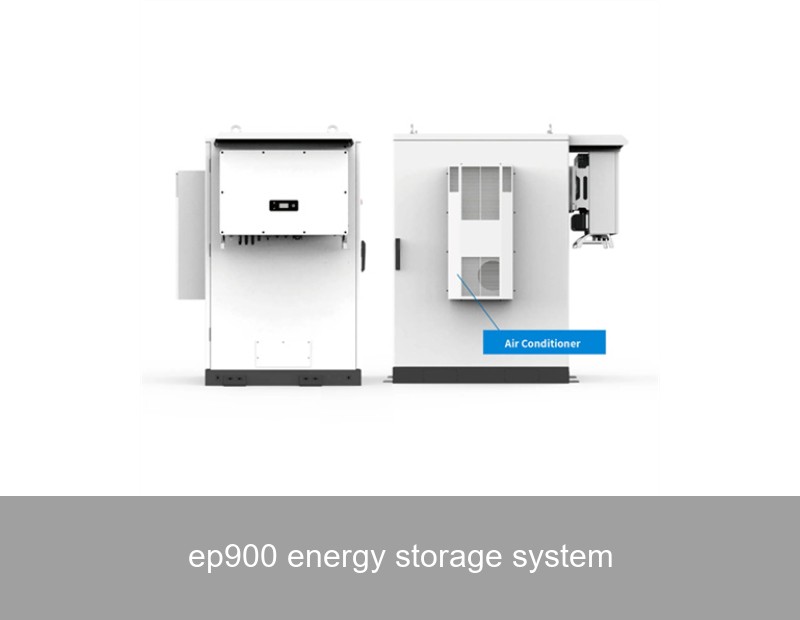
Have you ever watched your electricity bill climb steadily, felt uneasy during grid instability, or wondered how to make better use of your solar panels? You're not alone. Across Europe and the US, homeowners and businesses are grappling with energy volatility and seeking control. This is where advanced home battery systems, particularly the EP900 energy storage system and its counterparts, are changing the game. This isn't just about backup power; it's about intelligent energy management, maximizing self-consumption of renewable energy, and achieving true energy independence. As a leading provider since 2005, Highjoule designs solutions like these to be the intelligent core of a modern, resilient, and sustainable property.
Table of Contents
- The Modern Energy Challenge: More Than Just Outages
- What is an Energy Storage System Like the EP900?
- Key Benefits of Deploying a Modern ESS
- A Real-World Case Study: The Smith Residence in California
- Choosing the Right System: What to Look For
- The Highjoule Approach: Beyond the Hardware
The Modern Energy Challenge: More Than Just Outages
The energy landscape is shifting. While power outages—from storms in Europe to grid stress in the US—are a tangible concern, the challenge runs deeper. Electricity prices are notoriously volatile. In Germany, for instance, household electricity prices have remained persistently high, often above €0.40/kWh. In Texas, wholesale prices can spike from cents to dollars per kWh in minutes during peak demand. Simultaneously, millions have invested in rooftop solar, only to face a new dilemma: exporting excess energy back to the grid at low feed-in tariffs, often only to buy it back at night at a much higher price. This creates a frustrating cycle of underutilizing your own clean energy.
Image Source: Unsplash - Representative image of a modern home with solar energy.
What is an Energy Storage System Like the EP900?
Think of a system like the EP900 energy storage system as your home's personal energy bank and manager. At its heart, it's a sophisticated lithium-ion battery system, but its true value lies in its intelligence. Here’s how it works in simple terms:
- Energy Storage: It stores excess electricity generated from your solar panels during the day, instead of sending it all to the grid.
- Intelligent Discharge: It powers your home with that stored energy during the evening peak, during outages, or whenever grid electricity is expensive.
- Grid Interaction: Advanced systems can be programmed to interact strategically with the grid, participating in demand response programs where available.
A complete system typically includes the battery modules, a hybrid inverter that manages DC-AC conversion, a smart energy management system (EMS), and critical safety components. Highjoule's systems, such as our modular EP Series, are designed for seamless integration, whether you're retrofitting an existing solar array or building a new energy-independent property from the ground up.
Key Benefits of Deploying a Modern ESS
Investing in a robust energy storage system delivers tangible returns across several dimensions:
| Benefit | Description | Direct Impact |
|---|---|---|
| Maximized Self-Consumption | Use more of the solar energy you produce, sometimes increasing self-consumption rates from 30% to 70%+. | Lower electricity bills, better ROI on solar panels. |
| Backup Power & Resilience | Provides automatic, uninterrupted power during grid outages, keeping essential loads running. | Peace of mind, safety, and continuity for homes and businesses. |
| Peak Shaving | Reduces draw from the grid during high-rate "peak" hours, avoiding costly demand charges (crucial for businesses). | Significant reduction in commercial electricity bills. |
| Grid Support & Sustainability | By reducing peak demand and enabling more renewable use, you contribute to a more stable and greener grid. | Lower carbon footprint and enhanced energy independence. |
A Real-World Case Study: The Smith Residence in California
Let's look at concrete data from a typical installation. The Smith family in Sacramento, California, had a 8kW solar system but was still paying substantial bills due to high evening usage under Net Energy Metering (NEM) 2.0. In 2023, they installed a Highjoule EP900-equivalent system with 13.5kWh of storage.
- Pre-Installation (2022): Annual electricity cost after solar: ~$850. Self-consumption of solar: ~35%.
- Post-Installation (2023-24): Annual electricity cost: ~$120 (minimal grid import). Self-consumption of solar: increased to ~85%.
- Outcome: They achieved an annual saving of approximately $730. More importantly, during a planned public safety power shutoff (PSPS) event that lasted 18 hours, their home continued to operate normally—powering lights, refrigeration, internet, and essential medical equipment seamlessly. The system paid for itself in an estimated 7-8 years, a timeline accelerated by available state incentives (like the SGIP in California).
This case highlights the dual value proposition: economic efficiency and resilience.

Image Source: Unsplash - Representative image of a clean, installed home battery system.
Choosing the Right System: What to Look For
Not all energy storage systems are created equal. When evaluating options like the EP900 energy storage system, consider these critical factors:
- Usable Capacity & Power Rating: How much energy can it store (kWh) and how much can it output at once (kW)? Ensure it matches your critical load requirements and daily consumption patterns.
- Depth of Discharge (DoD) & Cycle Life: A battery with a 90% DoD and 6,000+ cycle life (like Highjoule's LFP chemistry) will deliver more usable energy over a much longer lifespan than one with 80% DoD and 3,000 cycles.
- Scalability & Modularity: Can you start with a smaller system and easily add more battery modules later? Highjoule's modular design makes this straightforward and cost-effective.
- Integration & Smart Management: The system should seamlessly integrate with your existing or new solar and feature intelligent software that optimizes for your goals (e.g., bill savings vs. backup priority).
- Safety & Warranty: Look for UL-certified systems with robust thermal management (like liquid cooling in some advanced models) and a clear, long-term warranty. Lithium Iron Phosphate (LFP) chemistry, used in Highjoule systems, is renowned for its thermal stability and safety.
The Highjoule Approach: Beyond the Hardware
At Highjoule, our expertise goes beyond supplying hardware. We provide end-to-end intelligent, efficient, and sustainable power solutions. For residential clients, this means a tailored system design, professional installation by certified partners, and access to our Highjoule Energy Hub monitoring platform. This platform gives you real-time insight into your energy production, consumption, and storage levels, allowing for ultimate control.
For commercial and industrial applications, our solutions scale to meet complex demands. We help businesses with peak shaving, demand charge management, and even microgrid formation, ensuring operational continuity and significant cost savings. Our systems are designed to be future-proof, complying with evolving grid standards and ready to adapt to new energy market opportunities. You can learn more about the importance of grid-interactive technologies from resources like the National Renewable Energy Laboratory (NREL).
Is Your Home or Business Truly Ready for the Next Decade of Energy?
The transition to a resilient, self-sufficient energy setup is no longer a distant future concept—it's a practical decision made today. With volatile prices and an increasing frequency of grid disruptions, the question isn't just about saving money; it's about taking control of a critical resource. What would it mean for you to have a predictable energy bill, unwavering power during a storm, and the satisfaction of maximizing your own clean energy? We invite you to explore what a solution designed for your specific needs could look like.
 Inquiry
 Online Chat