


Your Complete Guide to Choosing the Best Sistema Fotovoltaico para Vivienda (Home Photovoltaic System)
Thinking about powering your home with the sun? You're not alone. Across Europe and the U.S., homeowners are increasingly turning to a sistema fotovoltaico para vivienda (a home photovoltaic system) to gain energy independence, fight rising electricity costs, and reduce their carbon footprint. But with so many options and technical terms, where do you even begin? This guide cuts through the complexity. We'll explore how modern solar systems work, why battery storage is now a game-changer, and what you should consider for your own home. As a global leader in advanced energy storage since 2005, Highjoule is here to illuminate the path to a smarter, more sustainable home energy solution.
Table of Contents
- The New Reality: High Bills and Grid Uncertainty
- Beyond the Panels: The Critical Role of Energy Storage
- Key Components of a Modern Home Solar System
- Real-World Impact: A Case Study from Spain
- Choosing the Right System for Your Home
- Future Trends in Home Energy
The New Reality: High Bills and Grid Uncertainty
Let's face it: electricity prices are volatile. In Europe, the energy crisis of 2022 saw prices soar, with household electricity costs in some countries increasing by over 50% year-on-year (Eurostat, 2023). Similarly, in the United States, the EIA reports a steady long-term rise in residential electricity rates. This financial pressure is the first push for many families. The second push is the growing frequency of grid instability—from heatwaves straining infrastructure in California to winter storms causing outages in Texas. A standalone sistema fotovoltaico that only works when the sun shines offers partial relief. The true freedom comes from a system that can also store that sunshine for use anytime.
Image Source: Unsplash - A modern home equipped with solar panels.
Beyond the Panels: The Critical Role of Energy Storage
This is the heart of the modern home energy revolution. Think of your photovoltaic panels as excellent food producers, harvesting solar energy during the day. A battery storage system is your pantry. Without it, the "food" you don't use immediately gets sent back to the grid (often for minimal credit), and you go hungry (use grid power) at night. With a battery, you store your own production for use in the evening, during peak rate hours, or during a blackout.
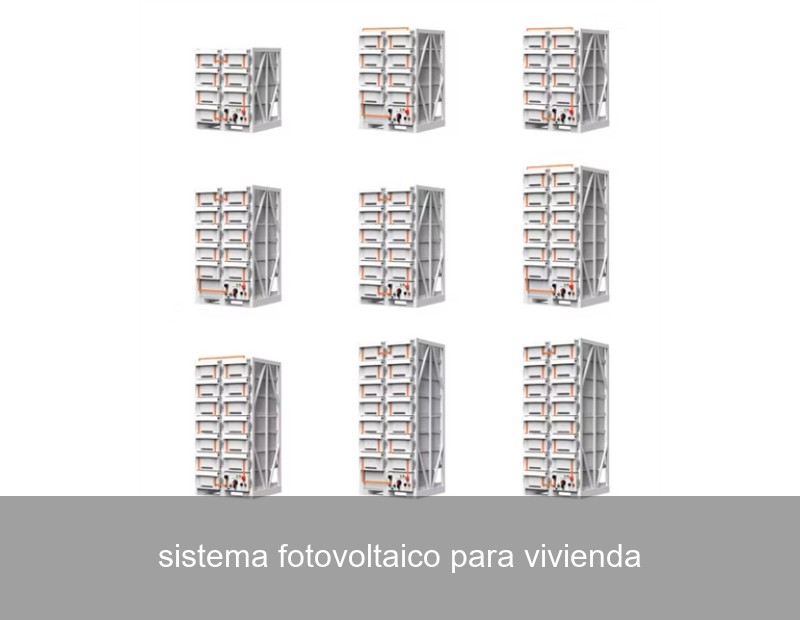
This is where companies like Highjoule specialize. We don't just sell batteries; we provide intelligent, integrated Battery Energy Storage Systems (BESS) designed specifically for residential use. Our Highjoule HomePower series, for example, is an all-in-one unit combining a hybrid inverter, battery management, and grid interaction in one sleek cabinet. It's designed for seamless integration with new or existing solar arrays, giving homeowners control, resilience, and maximum financial return on their solar investment.
Why Storage Makes Financial Sense
- Maximize Self-Consumption: Use more of the solar energy you produce, sometimes increasing self-consumption rates from 30% to 70% or more.
- Peak Shaving: Avoid drawing expensive power from the grid during high-demand "peak" hours.
- Backup Power: Keep your lights on and essential appliances running during grid outages.
- Grid Services: In some markets, advanced systems can participate in virtual power plant programs for additional revenue.
Key Components of a Modern Home Solar System
Understanding the parts will help you make informed decisions. A complete sistema fotovoltaico para vivienda with storage includes:
| Component | Function | Consideration |
|---|---|---|
| Solar Panels (PV Modules) | Convert sunlight into direct current (DC) electricity. | Efficiency rating, warranty, and aesthetics. |
| Inverter | Converts DC electricity from panels/battery to usable AC for your home. | Hybrid inverters (for storage) are now the smart choice for new installations. |
| Battery Storage System | Stores excess solar energy for later use. | Capacity (kWh), power output (kW), depth of discharge, cycle life, and integration intelligence. |
| Energy Management System (EMS) | The "brain" that optimizes energy flow between panels, battery, home, and grid. | Look for smart, user-friendly apps that allow for customization and monitoring. |
Highjoule's systems excel in the integration of the last three components. Our EnergyOS software platform is the intelligent EMS that learns your consumption patterns, weather forecasts, and tariff schedules to automatically optimize your home's energy flow for cost and efficiency. You can monitor and control everything from a simple smartphone app.
Real-World Impact: A Case Study from Málaga, Spain
Data and theory are one thing, but let's look at a real installation. The García family lives in a 180 m² single-family home in Málaga, a region with high solar irradiation. In 2021, they installed a 6 kWp solar system. While their daytime bills dropped, they still relied heavily on the grid at night.
In early 2023, they integrated a Highjoule HomePower 10 system (10 kWh storage, 5 kW continuous power) with their existing panels. The results after one year were compelling:
- Grid Independence: Increased self-consumption of solar energy from 35% to 82%.
- Cost Savings: Reduced their annual electricity bill from an average of €1,200 to €210—an 82.5% reduction.
- Resilience: Experienced two short grid outages. The system seamlessly provided backup power for all essential loads, including refrigeration and internet, for over 10 hours.
- Payback: The added storage system is projected to pay for itself in under 7 years, thanks to Spain's dynamic electricity pricing and their optimized usage.
"The peace of mind is priceless," noted Mr. García. "We're not just saving money; we feel in control of our energy for the first time."

Image Source: Unsplash - A modern home battery storage unit installed in a garage.
Choosing the Right System for Your Home
So, how do you select the best sistema fotovoltaico para vivienda for your needs? Follow this logical ladder:
- Assess Your Consumption: Analyze your last 12 months of electricity bills. Identify your average daily kWh usage and your peak consumption.
- Evaluate Your Site: Roof orientation, shading, and available space will determine viable solar panel capacity. A professional site survey is crucial.
- Define Your Goals: Is your primary driver bill savings, backup power, environmental impact, or a combination?
- Size the System Correctly: Your installer should model solar production and recommend a battery size that covers your critical evening load or desired backup duration. Oversizing can be as inefficient as undersizing.
- Prioritize Integration and Intelligence: Choose a system like Highjoule's where components are designed to work together harmoniously, managed by smart software that future-proofs your investment.
Questions to Ask Your Installer
- Can you provide a detailed simulation of production and savings?
- Is the battery chemistry (e.g., LiFePO4) safe and durable for home use?
- How does the system manage grid outages? What loads can it support and for how long?
- What does the warranty cover for performance and degradation over 10 years?
Future Trends in Home Energy
The home is becoming an active node in the energy grid. We're moving towards integrated ecosystems where your sistema fotovoltaico, battery, electric vehicle charger, and even smart appliances communicate to optimize overall home energy usage. Vehicle-to-Home (V2H) technology, where your EV battery can power your house, is on the horizon. Highjoule is actively developing solutions for these emerging paradigms, ensuring our customers' systems are ready for the next wave of innovation.
Highjoule's Commitment to Sustainable Solutions
From our efficient, long-life battery cells to our recyclable system designs, sustainability is engineered into every Highjoule product. We provide comprehensive support, from initial design consultation through installation and long-term monitoring, ensuring your transition to solar and storage is smooth and successful.
Ready to explore what a truly intelligent sistema fotovoltaico para vivienda with integrated Highjoule storage could do for your home energy independence and bills? What's the first question about solar and storage you'd like answered by an expert?
 Inquiry
 Online Chat