


Unlocking Energy Independence: The Power and Potential of Solar Energy Storage Cabinets
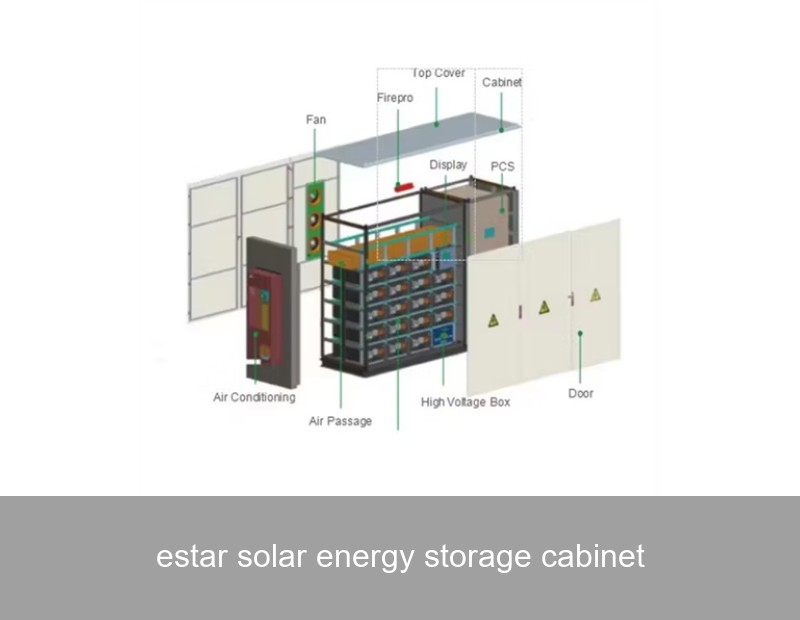
Imagine this: the sun is shining brightly, your solar panels are humming, generating more clean electricity than your home or business can use. But what happens when the clouds roll in, or night falls? Traditionally, that surplus energy would flow back to the grid, often for minimal compensation. Today, the game-changer is the solar energy storage cabinet. This intelligent system is the missing link, transforming solar power from an intermittent source into a reliable, 24/7 energy solution. For homeowners and businesses across Europe and the US, it's the cornerstone of true energy resilience and independence.
Table of Contents
- The Phenomenon: From Sunlight to Steady Power
- The Data: Why Storage is No Longer Optional
- The Case Study: A German Bakery's Recipe for Resilience
- The Insight: Key Features of a Modern Storage Cabinet
- Highjoule's Role: Engineering Smarter Storage Solutions
- Looking Ahead: What's Next for Your Energy System?
The Phenomenon: From Sunlight to Steady Power
Solar panels have seen massive adoption, but their inherent intermittency remains a challenge. A solar energy storage cabinet is essentially a sophisticated, all-in-one battery system. It captures the excess electricity your panels produce during peak sun hours, stores it in high-density batteries, and releases it precisely when you need it most—during evening demand peaks, power outages, or when grid electricity rates are at their highest. Think of it not just as a battery box, but as the intelligent brain of your personal energy ecosystem.
The Data: Why Storage is No Longer Optional
The drive towards storage isn't just theoretical; it's backed by compelling market and economic data. In the US, the residential solar-plus-storage market is projected to grow exponentially, with installations expected to continue their strong upward trend (Solar Energy Industries Association). In Europe, driven by energy security concerns and favorable policies, the demand is equally robust.
Let's break down the key value drivers with a simple table:
| Driver | Impact | Result for User |
|---|---|---|
| Rising Electricity Prices | Grid power costs continue to climb in many regions. | Maximizes self-consumption of cheap solar power, reducing bills. |
| Time-of-Use (TOU) Rates | Utilities charge more during peak evening hours. | Discharge stored energy during peak rates, avoiding high costs. |
| Grid Resilience Concerns | Increasing frequency of extreme weather events and outages. | Provides critical backup power, keeping lights and essentials on. |
| Maximizing Solar Investment | Without storage, up to 50% of solar energy may be exported. | Captures and uses more of the energy you produce, improving ROI. |

As you can see, the financial and practical case for integrating storage is becoming increasingly clear. It transforms your solar array from a cost-saver into a strategic asset.
The Case Study: A German Bakery's Recipe for Resilience
Let's make this real with a story from Bavaria, Germany. Bäckerei Schmidt (a mid-sized family bakery) installed a 50 kW solar system in 2020. While it cut daytime energy costs, their major energy expenses came in the early morning hours (3 AM - 6 AM) for ovens and refrigeration, when the sun wasn't shining. They were also vulnerable to brief grid fluctuations that could disrupt sensitive proving cabinets.
In 2023, they integrated a solar energy storage cabinet—a commercial-scale system with 120 kWh of storage capacity. The results after one year were telling:
- Energy Self-Consumption: Increased from 35% to over 85%.
- Grid Consumption During Peak Times: Reduced by 90%.
- Backup Power: Provided seamless power during two minor grid outages, preventing spoilage of dough and ingredients.
- Payback Period: Projected to be under 7 years, thanks to Germany's high energy prices and optimized consumption.
"The storage system is like a silent, reliable night-shift worker," the owner noted. "It ensures our ovens are heated with yesterday's sunshine. For us, it's about business continuity as much as savings." This case highlights the dual value proposition for commercial entities: economics and resilience.
The Insight: Key Features of a Modern Storage Cabinet
Not all storage solutions are created equal. When evaluating a solar energy storage cabinet, here are the non-negotiable features to look for, informed by nearly two decades of industry evolution that companies like Highjoule have helped shape.
Battery Chemistry & Longevity
Lithium Iron Phosphate (LFP) has become the industry standard for stationary storage. Why? It offers superior safety, a longer cycle life (often over 6,000 cycles), and excellent thermal stability compared to older chemistries. A quality cabinet will have a robust Battery Management System (BMS) to ensure each cell operates optimally for decades.
Integrated Energy Management System (EMS)
This is the true intelligence. A smart EMS can learn your consumption patterns, weather forecasts, and utility rate schedules. It automatically decides when to charge, when to discharge, and when to export, maximizing your financial return without you lifting a finger.

Scalability & Modular Design
Your energy needs may grow. A modular cabinet design allows you to start with a capacity that fits your current budget and needs, with the option to easily add more battery modules later. This future-proofs your investment.
Safety Certifications & Grid Compliance
Look for certifications like UL 9540 (US) or IEC 62619 (EU). These ensure the system has passed rigorous safety tests. Furthermore, the inverter within the cabinet should have relevant grid codes (like UL 1741 SA in the US) to ensure safe, compliant interaction with the utility grid.
Highjoule's Role: Engineering Smarter Storage Solutions
At Highjoule, we've been at the forefront of this energy transition since 2005. We understand that a solar energy storage cabinet is more than hardware; it's a critical component of a sustainable energy strategy. Our approach is built on three pillars:
- Intelligent Design: Our E-Star Series of storage cabinets embodies the principles above. Featuring LFP battery packs, a proprietary AI-driven EMS, and a modular, sleek design, they are engineered for reliability, safety, and maximum ROI. The system's software integrates seamlessly with major solar inverter brands and can be configured for complex use-cases like demand charge management for businesses.
- Application-Specific Solutions: We don't believe in one-size-fits-all. Our technical experts work with installers to tailor solutions. For a large home, a single E-Star 10 cabinet might suffice. For a microgrid powering a small community, we design scalable, containerized solutions using the same proven technology. Our systems are deployed across Europe and North America, from residential rooftops to industrial facilities.
- Full-System Support: Highjoule provides comprehensive support, from initial design consultancy and commissioning to remote monitoring and maintenance. We empower our network of certified installers with the training and tools they need to deliver a flawless customer experience. Our global service network ensures long-term peace of mind.
For example, a school district in California leveraged Highjoule's commercial storage cabinets not only to reduce energy costs but also to create a resilient "safe haven" shelter during public safety power shutoffs, a growing concern in the region (U.S. Department of Energy).
Looking Ahead: What's Next for Your Energy System?
The integration of solar, storage, and smart management is creating a new paradigm: the prosumer. You're no longer just a consumer of energy; you're an active manager and participant in a more decentralized, flexible grid. With vehicle-to-grid (V2G) technology on the horizon, your future electric vehicle could interact with your solar energy storage cabinet, creating an even more robust and dynamic home energy system. The question is no longer "Why should I get storage?" but rather, "What specific goals—financial savings, backup power, sustainability—do I want my integrated energy system to achieve for me?"
What is the one critical load in your home or business that you simply cannot afford to lose power to, and how would securing it change your approach to energy?
 Inquiry
 Online Chat