


Facility Energy Storage Cabinet: The Smart Heart of Modern Power Management
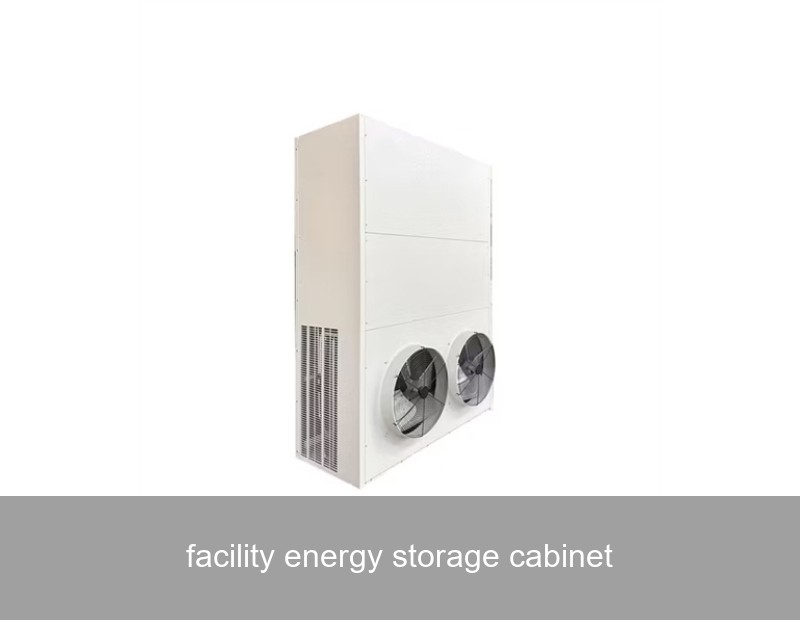
your facility's electricity bill arrives, and once again, the demand charges are sky-high. Or perhaps the grid is unstable, and a momentary outage disrupts your critical operations. This is a daily reality for countless businesses and institutions. The solution, however, is no longer just a backup generator. The modern answer lies in an intelligent, integrated system: the facility energy storage cabinet. This isn't just a battery in a box; it's the central nervous system for managing energy consumption, costs, and resilience. As a senior product technology expert at Highjoule, I've seen how these systems are revolutionizing how facilities think about power.
What is a Facility Energy Storage Cabinet?
A facility energy storage cabinet is a containerized, all-in-one system that houses lithium-ion battery modules, a battery management system (BMS), power conversion systems (PCS), thermal management, and safety controls. Think of it as a sophisticated, self-aware energy asset. Its primary functions are to store electricity (often from the grid during cheap off-peak hours or from on-site solar) and dispatch it precisely when needed. This capability unlocks four core benefits: peak shaving to cut demand charges, backup power for resilience, solar self-consumption optimization, and participation in grid services programs.
The Problem: Rising Costs and Unreliable Grids
For facility managers across Europe and the U.S., two major headaches dominate: volatile energy prices and aging grid infrastructure. Commercial and industrial (C&I) electricity tariffs often consist of two parts: the energy you use (kWh) and the peak power you draw (kW), known as demand charges. A single spike in power usage—like starting up heavy machinery or HVAC systems on a hot afternoon—can set a high "demand" rate for the entire billing cycle. Furthermore, extreme weather events are making power outages more frequent. The traditional diesel generator is a noisy, polluting, and single-purpose Band-Aid for these complex issues.

Image Source: Unsplash (Photographer: American Public Power Association)
The Data: Quantifying the Financial Drain
Let's talk numbers. In many U.S. regions, demand charges can constitute 30-70% of a commercial electricity bill. According to a report by the U.S. Department of Energy's National Renewable Energy Laboratory (NREL), strategic deployment of storage for demand charge management can yield payback periods of 4-7 years, with system lifespans exceeding 10 years. In Europe, with its higher penetration of variable renewables, price volatility is a key driver. A study by IRENA highlights that commercial storage can increase on-site consumption of solar PV by up to 50%, drastically reducing reliance on the grid. The financial argument is compelling and backed by hard data.
Case Study: A European Logistics Hub's Transformation
Consider a real-world example: a major logistics and distribution center in Germany. This facility operated 24/7, with high refrigeration loads and automated sorting systems leading to significant, unpredictable power peaks. Their annual electricity bill exceeded €500,000, with nearly 40% attributed to demand charges. They also had a 500 kW rooftop solar array that often exported power to the grid at low feed-in tariffs during midday.
Their solution was the installation of a 1 MWh facility energy storage cabinet system, integrated with their existing solar. The results over 18 months were striking:
| Metric | Before Installation | After Installation | Improvement |
|---|---|---|---|
| Average Monthly Demand Peak | 1.8 MW | 1.4 MW | Reduced by 22% |
| Annual Demand Charge Cost | ~€200,000 | ~€120,000 | Saved €80,000 (40%) |
| Solar Self-Consumption | 35% | 85% | Increased by 50 percentage points |
| Grid Backup During Brief Outages | None (process disruption) | Seamless 2-hour backup for critical loads | 100% uptime for core operations |
The system paid for itself in under 5 years, while providing invaluable operational resilience. This is the power of a smart, integrated energy storage cabinet in action.
Key Insights: More Than Just Backup Power
The key takeaway from leading deployments is that the true value of a facility energy storage cabinet is unlocked through intelligence and software. A simple, "dumb" battery will provide backup, but it won't optimize for financial return. The modern cabinet must be:
- Predictive: Using AI and weather forecasts to anticipate energy needs and solar production.
- Adaptive: Learning the facility's load patterns to automatically shave peaks without disrupting operations.
- Grid-Aware: In some markets, it can respond to grid signals, providing frequency regulation services for additional revenue streams, a concept explored in depth by research from NREL.
The Highjoule Solution: Intelligence in a Cabinet
At Highjoule, we've been engineering solutions for these exact challenges since 2005. Our IntelliBESS Cabinet Series is designed as the cornerstone of the smart facility. We don't just sell hardware; we provide a complete, intelligent power solution.
Our cabinets are built with industry-leading lithium iron phosphate (LFP) battery chemistry, renowned for its safety and long cycle life. What truly differentiates them is the Highjoule Energy Operating System (EOS). This proprietary platform turns the storage cabinet from a passive asset into an active, profit-generating tool. EOS continuously analyzes utility rate structures (be it time-of-use, demand charges, or feed-in tariffs), facility load profiles, and weather data to make real-time decisions on when to charge, discharge, or hold.
For a manufacturing plant, this might mean discharging during the 3 PM peak to avoid a $20,000 demand charge. For a school with solar, it means storing the midday solar surplus to power evening community events. Our systems are scalable from 100 kWh to multi-MWh configurations, making them perfect for commercial, industrial, and microgrid applications. We handle everything from initial consultancy and system design to installation, grid connection support, and ongoing performance monitoring.

Image Source: Unsplash (Photographer: Michael Fousert)
Future Trends: The Grid-Interactive Facility
The evolution of the facility energy storage cabinet is leading us toward the "Grid-Interactive Efficient Building" (GEB). In this future, your facility's energy assets—solar, storage, HVAC, even EV charging stations—will communicate seamlessly with each other and the wider grid. The storage cabinet acts as the central buffer and controller. This allows facilities to become active participants in energy markets and virtual power plants (VPPs), creating new revenue lines while supporting grid stability—a crucial step for integrating more renewables, as noted by the International Energy Agency.
 Inquiry
 Online Chat