


Unlocking Energy Independence: A Deep Dive into the Fenecon Energy Management System
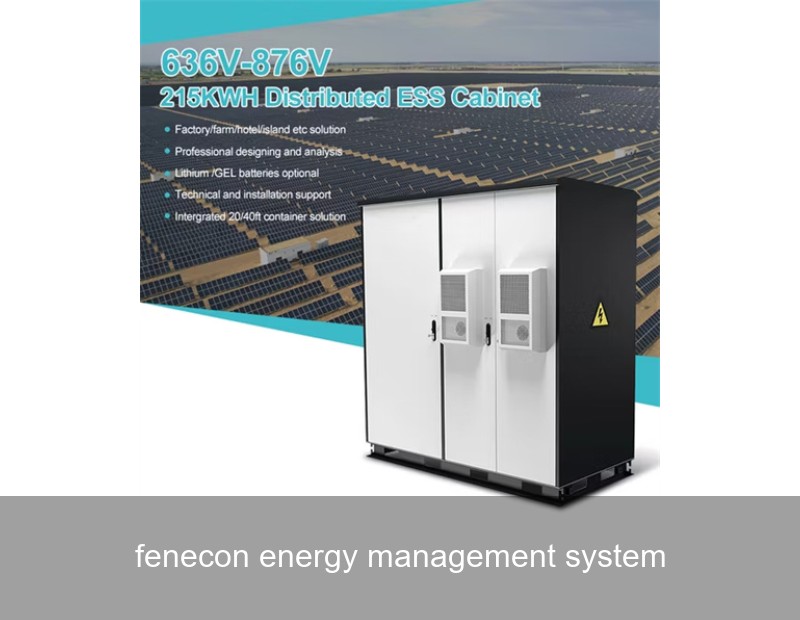
Imagine your business or home not just consuming electricity, but actively participating in the energy market. With volatile energy prices and a growing push for sustainability, this isn't just a futuristic dream—it's a present-day necessity. This is where a sophisticated Fenecon Energy Management System (EMS) becomes your strategic partner. At its core, a Fenecon EMS is the intelligent brain that orchestrates your solar panels, battery storage, and grid connection, optimizing every kilowatt-hour for maximum savings, resilience, and environmental benefit. As a global leader in advanced energy storage, Highjoule recognizes that the true power of modern energy assets lies not just in hardware, but in the software that makes them work in perfect, intelligent harmony.
Table of Contents
- The Modern Energy Challenge: More Than Just Bills
- What Exactly is a Fenecon Energy Management System?
- How It Works: The Intelligence Behind the Outlet
- Tangible Benefits: From Savings to Security
- The Highjoule Advantage: Integrating Fenecon EMS for Your Success
- A Real-World Case Study: Proof in Performance
- The Future of Energy is Managed
The Modern Energy Challenge: More Than Just Bills
Let's face it: energy management has become complex. For businesses across Europe and the U.S., it's a triple threat of rising costs, grid instability, and stringent carbon reduction targets. A 2024 IEA report highlights that while renewables are growing, grid demands and fossil fuel reliance remain high, leading to price volatility. For homeowners, blackouts caused by extreme weather are becoming more frequent, and the promise of solar often falls short if excess energy is simply fed back to the grid at low rates. The phenomenon is clear: generating your own power is step one, but optimizing its use is where real value is created.

Credit: Unsplash - Modern solar installation. The hardware generates power, but an EMS like Fenecon ensures it's used optimally.
What Exactly is a Fenecon Energy Management System?
Think of your energy setup as an orchestra. You have solar panels (strings), battery storage (percussion), and the grid (the brass section). Without a conductor, the result is noise. The Fenecon Energy Management System is that master conductor. It's a software-based platform, often paired with robust hardware, that makes real-time decisions based on a multitude of data points: your energy consumption patterns, weather forecasts for solar production, current electricity prices, and grid status.
Unlike simple inverters or basic battery controllers, a Fenecon EMS performs advanced, predictive energy management. It doesn't just react; it forecasts and plans. Its core functions include:
- Self-Consumption Optimization: Maximizing the use of your own solar energy on-site.
- Peak Shaving: Automatically using stored battery power to avoid drawing expensive electricity during peak tariff periods.
- Backup Power Management: Seamlessly providing power during an outage and managing critical loads.
- Grid Services Interaction: In some markets, allowing your system to participate in grid stabilization programs for additional revenue.
How It Works: The Intelligence Behind the Outlet
The magic of the Fenecon EMS lies in its continuous loop of data analysis and action. Here's a simplified breakdown of its logic ladder:
- Data Acquisition: The system constantly monitors energy flow from every source and to every load.
- Forecasting: Using AI and weather APIs, it predicts solar generation for the next 24-48 hours and anticipates building load.
- Optimization Calculation: It runs thousands of calculations per second to find the most economical or sustainable strategy, based on your preset goals (e.g., "minimize cost" or "maximize green energy").
- Execution: It sends commands to the inverter, battery, and smart switches: charge the battery now, discharge at 6 PM, shift this non-essential load to midday, etc.
| Scenario | Without Fenecon EMS | With Fenecon EMS |
|---|---|---|
| Cloudy Day Forecast | Battery drains overnight, system buys expensive morning grid power. | EMS conserves battery overnight, uses minimal grid power, prioritizes essential loads. |
| High Peak Tariff (4-9 PM) | Business draws power from grid at highest rates. | System discharges battery to cover most loads, avoiding peak charges entirely. |
| Grid Outage | Power cuts until grid returns. | EMS islanding feature activates instantly, powering critical circuits from battery/solar. |
Tangible Benefits: From Savings to Security
The data-driven approach of a Fenecon EMS translates into clear, measurable advantages:
- Financial ROI: By increasing self-consumption of solar energy from ~30% to 70% or more and avoiding peak demand charges, businesses often see a payback period on their entire storage system reduced by years. For a medium-sized enterprise, this can mean tens of thousands saved annually.
- Energy Resilience: It provides peace of mind. Whether it's a storm in Texas or grid maintenance in Germany, your essential operations keep running.
- Sustainability Credentials: It minimizes your carbon footprint by ensuring clean, self-generated power is used first and foremost, a key factor for ESG (Environmental, Social, and Governance) reporting.
- Future-Proofing: The software can be updated to adapt to new tariff structures, additional generation assets (like a wind turbine), or evolving grid rules.
The Highjoule Advantage: Integrating Fenecon EMS for Your Success
At Highjoule, we don't just sell components; we deliver integrated, intelligent power solutions. Our expertise lies in seamlessly pairing best-in-class hardware with powerful energy management brains like the Fenecon EMS. For our commercial and industrial clients, we design systems where the Fenecon EMS acts as the central command center for entire fleets of batteries and solar arrays, often across multiple sites.
Our residential solutions, such as the Highjoule HomePower Stack, come with an integrated, user-friendly EMS interface that gives homeowners simple control over complex optimization. You can set preferences via a smartphone app—like "prioritize backup" or "maximize savings"—and the Highjoule-tuned Fenecon logic executes it flawlessly. For microgrid projects, this management capability is indispensable, balancing generation, storage, and consumption within a closed community or industrial park.

Credit: Unsplash - A modern battery storage system. When integrated with a Fenecon EMS via Highjoule, it becomes a dynamic financial and resilience asset.
A Real-World Case Study: Proof in Performance
Let's look at a concrete example from a German bakery chain, a perfect fit for our European target market. This client had significant daytime energy consumption for ovens and cooling, alongside a large rooftop solar installation. Their challenge? Their solar peaks didn't always match their consumption peaks, and they faced high grid fees.
The Solution: Highjoule installed a tailored 100 kWh battery storage system at their central bakery, governed by a Fenecon Pro EMS. The system was programmed with the bakery's precise operational schedule and local electricity tariff rates.
The Data-Driven Outcome (12-month period):
- Self-Consumption Rate: Increased from 35% to 82%.
- Peak Grid Demand: Reduced by 60%, slashing capacity charges.
- Annual Energy Cost Savings: €28,500.
- CO2 Emissions Reduction: 42 metric tons.
The Fenecon EMS enabled the bakery to use its own solar energy to pre-cool facilities before peak hours and keep ovens running during brief grid dips. This case, documented in a Fraunhofer ISE study on energy economics, exemplifies the tangible synergy of storage and smart management.
The Future of Energy is Managed
As we move towards a decentralized, renewable-powered grid, the role of energy management systems will only become more critical. They are the key to unlocking not just personal energy independence, but also to providing vital stability to the public grid. The question is no longer if you need solar and storage, but how smart your system can be.
Is your current energy setup just a cost center, or have you transformed it into an intelligent, profit- and resilience-generating asset? What would a 40% reduction in your next energy bill enable your business or household to do?
 Inquiry
 Online Chat