


Why Your Next Supplier of ICT Cabinets Should Be an Energy Storage Expert
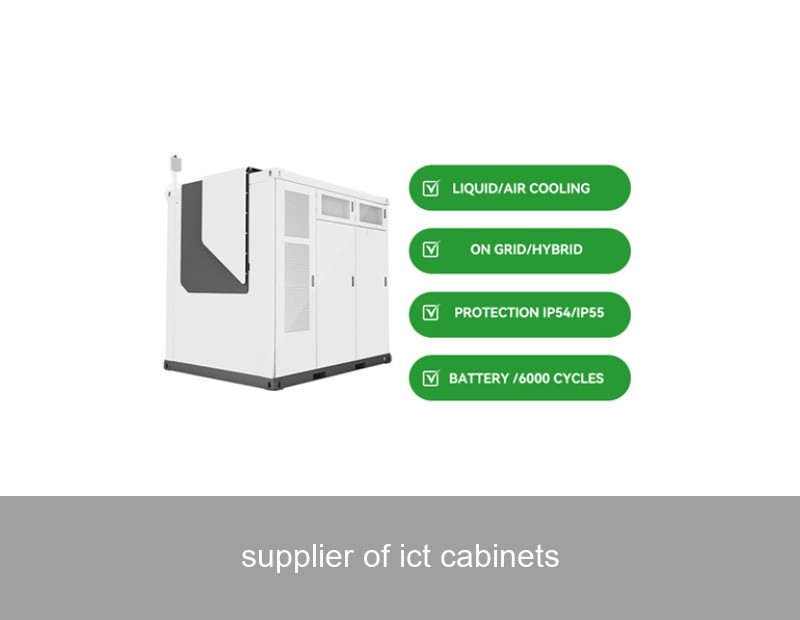
When you think about a supplier of ICT cabinets, you likely picture racks, cable management, and cooling systems. But in today's energy-intensive digital landscape, that picture is incomplete. The hidden challenge powering the data revolution is energy—specifically, its quality, reliability, and sustainability. This is where the role of a traditional cabinet provider is evolving, and why forward-thinking data center managers are looking to partners who understand energy at a fundamental level. At Highjoule, we've spent nearly two decades mastering smart, efficient energy storage. We've discovered that the most resilient and efficient ICT infrastructure isn't just about housing servers; it's about integrating the power that sustains them.
Table of Contents
The Silent Power Crisis in Data Infrastructure
Let's face a pressing phenomenon first. The demand for data processing and storage is exploding, driven by AI, IoT, and global digitalization. According to the International Energy Agency, data centers and transmission networks accounted for about 1-1.5% of global electricity use in 2022, a figure that is set to rise significantly. This isn't just a cost issue; it's a grid stability and resilience challenge. Power fluctuations, brief outages, or frequency dips that are imperceptible to a home user can cause catastrophic server crashes or data corruption in an ICT cabinet.
This is the critical data point: Uninterruptible Power Supply (UPS) systems, typically based on lead-acid batteries, have been the go-to solution. However, they often act as a passive, short-term bridge to generators. They address the symptom (a power outage) but not the underlying condition: an inefficient, unstable, and costly relationship with the energy grid. The modern ICT environment needs a proactive energy partner, not just a passive battery box supplier.
Image Source: Unsplash - A modern data center hall. The true challenge lies not in the cabinets themselves, but in the energy flowing through them.
Beyond the Box: The Energy Intelligence Gap
So, what's missing? The standard procurement process separates the supplier of ICT cabinets from the energy system provider. You get a perfectly engineered rack for heat dissipation, and from another vendor, a UPS system that takes up significant footprint and requires precise climate control of its own. This siloed approach creates an "energy intelligence gap." Your cabinet knows about airflow, and your UPS knows about voltage, but they don't communicate to optimize the entire ecosystem for efficiency, cost, and carbon footprint.
Consider this: Lithium-ion battery energy storage systems (BESS), like those developed by Highjoule, offer far more than backup power. They are dynamic grid assets. When integrated with the ICT infrastructure, they can:
- Perform Peak Shaving: Draw power from the grid during off-peak, low-cost hours, store it, and use it during expensive peak periods, drastically reducing electricity bills.
- Provide Frequency Regulation: Automatically inject or absorb power in milliseconds to stabilize grid frequency, potentially creating a new revenue stream.
- Enable Renewable Integration: Smooth out the intermittent supply from onsite solar or wind, allowing a data center to increase its use of green power.
The cabinet, therefore, transitions from a passive container to an active node in an intelligent energy network. This requires a supplier with deep expertise in both power electronics and the operational demands of critical digital infrastructure.
Case Study: A German Data Center's Green Transformation
Let's look at a real-world example from our European operations. A mid-sized colocation data center near Frankfurt, Germany, faced soaring energy costs and pressure from its clients to improve its sustainability profile. Its existing setup consisted of standard ICT cabinets and an aging, space-consuming lead-acid UPS system.
The Challenge: Reduce operational expenditure (OpEx), enhance power resilience, and increase the percentage of renewable energy used, without compromising on rack density or requiring a full facility rebuild.
The Highjoule Solution: We acted not just as a supplier of ICT cabinets, but as an energy systems integrator. Our proposal included:
| Component | Highjoule Offering | Direct Benefit |
|---|---|---|
| Energy Storage | High-density, containerized Lithium-Ion BESS (500 kWh) | Replaced old UPS; provided 2+ hours of backup; enabled peak shaving. |
| Power Management | Integrated Energy Management System (EMS) | Intelligently controlled power flow between grid, solar, batteries, and IT load. |
| Infrastructure | High-efficiency, compatible ICT cabinets with enhanced thermal management | Ensured seamless integration with the new power system, maintaining optimal operating temperatures. |
The Result: Within the first year of operation, the data center achieved a 22% reduction in peak-demand energy charges through intelligent load shifting. By coupling the BESS with a new onsite solar array, they increased their direct renewable consumption by 35%. Furthermore, the space saved from the old UPS room was converted into revenue-generating rack space. This case exemplifies how bridging the gap between cabinet supply and energy intelligence delivers tangible financial and environmental returns. You can explore more about data center energy trends from the Uptime Institute's annual surveys.
The Highjoule Approach: Integrated Power Resilience
Founded in 2005, Highjoule's core philosophy has always been to provide intelligent energy solutions. For the data center and critical IT facility sector, this means we don't just see cabinets, and we don't just see batteries. We see an integrated power ecosystem. Our product and service suite for this market is designed accordingly:
- Highjoule Hive-Cabinet Systems: More than just a robust supplier of ICT cabinets, our Hive series is designed with energy flow in mind. They feature optimized pathways for power distribution units (PDUs) and seamless connectivity points for integration with our storage systems, simplifying installation and monitoring.
- IntelliBESS Platform: Our flagship Battery Energy Storage System, built with automotive-grade Li-ion cells. Its modular design allows for scalable power (kW) and energy (kWh) capacity, fitting into server rooms, containerized data centers, or standalone energy pods. Its advanced EMS is the "brain" that performs peak shaving, frequency regulation, and solar smoothing.
- Microgrid Integration Services: For larger campuses or industrial clients with data-intensive operations, we design and deploy microgrids that may combine solar, storage, and backup generation. The ICT infrastructure becomes a prioritized load within a self-optimizing, resilient energy island.
Our role is to be the single point of accountability for both your physical ICT housing and the advanced energy system that makes it truly sustainable and cost-effective. This integrated approach future-proofs your investment against volatile energy prices and tightening carbon regulations.

Image Source: Unsplash - A technician interacts with a BESS control system. Intelligent energy management is now a critical IT operations skill.
What Does the Future ICT Cabinet Look Like?
The trajectory is clear. The next-generation ICT cabinet will have an embedded "energy identity." It will communicate its real-time power draw and thermal output to a facility-wide energy management system. The attached storage system will respond not only to grid failures but to price signals, carbon intensity metrics, and renewable generation forecasts.
This shifts the procurement question from "Who can provide me with the most durable racks?" to "Which partner can help me build the most resilient, efficient, and profitable power ecosystem for my digital assets?" The cabinet is a crucial component, but it is the node, not the network.
At Highjoule, we are already engineering this future. Our ongoing R&D focuses on even tighter integration, such as DC-powered cabinet clusters that reduce conversion losses, and AI-driven predictive energy scheduling for hyperscale computing loads. The goal is to make sustainable power resilience a default feature, not an expensive add-on.
Ready to Re-evaluate Your Infrastructure's Foundation?
We've explored how the lines between power infrastructure and IT infrastructure are blurring. The energy challenge is no longer a facilities management issue alone; it's a core determinant of IT operational viability and cost. So, we leave you with this open question: As you plan your next data hall expansion or infrastructure refresh, what specific energy pain point—be it cost, resilience, or sustainability—could be solved by choosing a partner who views your ICT cabinets as part of an intelligent energy system?
 Inquiry
 Online Chat