


Understanding the Photovoltaic Electric Generator: Your Key to Energy Independence
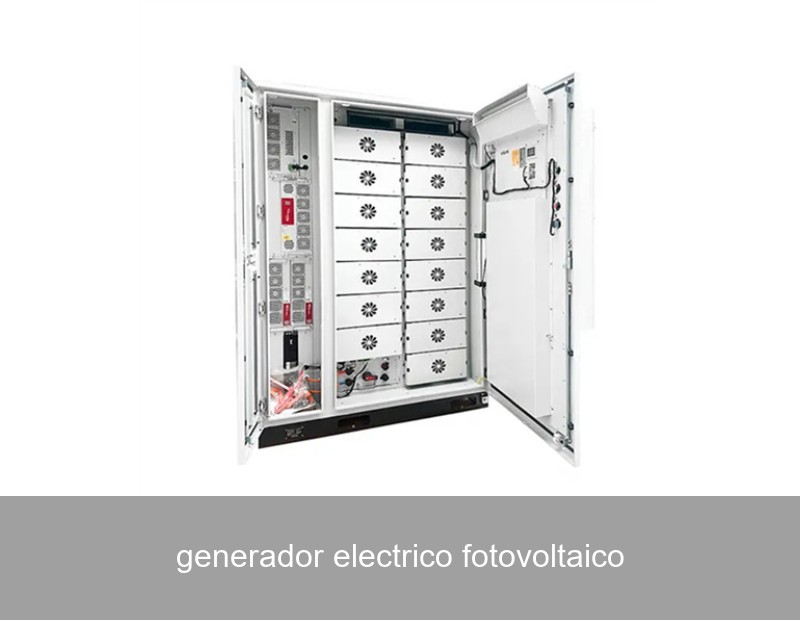
Have you ever looked at your rising electricity bill and wondered if there's a better way? Or perhaps you've considered backup power, only to be put off by the noise, fumes, and cost of a traditional fuel generator. If so, you're not alone. Across Europe and the United States, a quiet revolution is powering homes and businesses: the generador electrico fotovoltaico, or photovoltaic electric generator. Unlike its fossil-fueled counterpart, this system harnesses sunlight to create clean, silent, and increasingly affordable electricity. But is it a viable replacement, especially when the sun isn't shining? Let's explore how modern solar-plus-storage solutions are answering that very question.
Table of Contents
- What Exactly is a Photovoltaic Electric Generator?
- The Core Challenge: Sunlight Isn't 24/7
- The Game Changer: Battery Energy Storage Systems (BESS)
- Real-World Proof: A Spanish Agri-Business Case Study
- Choosing the Right System for Your Needs
- The Highjoule Approach: Intelligent, Integrated Energy Solutions
What Exactly is a Photovoltaic Electric Generator?
At its heart, a generador electrico fotovoltaico is a complete system designed to generate electricity from sunlight. It goes beyond just solar panels on a roof. Think of it as a personal power plant with three key components:
- Solar Panels (PV Modules): Capture sunlight and convert it into direct current (DC) electricity.
- Inverter(s): The "brain" of the operation, converting DC electricity into the alternating current (AC) used by your home or business appliances.
- Mounting & Wiring: The physical structure and electrical backbone that ties everything together safely.
For decades, this was the standard setup. Any excess power produced during the day would be fed back into the grid (where policies allow), and you'd draw power from the grid at night. This is effective but leaves you dependent on the utility, missing the true promise of energy independence.
The Core Challenge: Sunlight Isn't 24/7
Here's the fundamental issue we all recognize: solar production is intermittent. Energy demand peaks in the early morning and evening, often when solar output is low. This mismatch creates a problem known as the "duck curve," a phenomenon well-documented by grid operators in California and Europe.
According to the U.S. Department of Energy's Solar Energy Technologies Office, the key to unlocking solar's full potential lies in addressing this intermittency. The data is clear: without a means to store surplus daytime energy, a significant portion of a solar generator's potential value is lost, and reliance on the grid remains.

Image Source: National Renewable Energy Laboratory (NREL), illustrating the "duck curve" challenge.
The Game Changer: Battery Energy Storage Systems (BESS)
This is where the modern generador electrico fotovoltaico evolves into a truly resilient solution. By integrating a Battery Energy Storage System (BESS), the entire equation changes. The system transforms from a daytime-only generator into a round-the-clock power source.
- Energy Time-Shifting: Store excess solar energy produced at noon to use at 8 PM.
- Backup Power: Provide seamless electricity during grid outages, keeping essential loads running.
- Increased Self-Consumption: Dramatically reduce the amount of electricity you need to buy from the utility.
The technology behind these batteries, primarily lithium-ion with advanced battery management systems (BMS), has seen rapid improvements in energy density, safety, and lifespan, making them a practical cornerstone of modern energy systems.
Real-World Proof: A Spanish Agri-Business Case Study
Let's look at a concrete example from Southern Spain. A medium-sized winery with high energy demands for refrigeration and irrigation was struggling with peak demand charges and an unreliable local grid. Their existing 50 kW solar array covered only 40% of their total consumption because much of the energy was produced when they didn't need it immediately.
In 2022, they installed a 100 kWh integrated solar-storage system. The results after one year were telling:
| Metric | Before BESS | After BESS Integration |
|---|---|---|
| Solar Self-Consumption Rate | 40% | 92% |
| Grid Energy Import | 60% of needs | 15% of needs |
| Peak Demand Charges | Reduced by 70% | |
| ROI Period | N/A | Estimated 5.2 years |
This case, mirrored by many commercial operations in Italy, Germany, and California, demonstrates that a generador electrico fotovoltaico with storage isn't just an eco-statement—it's a robust financial decision that also ensures operational continuity.
Choosing the Right System for Your Needs
Not all systems are created equal. Whether for a home, business, or industrial facility, key considerations include:
- Energy Audit: Understanding your load profile and consumption patterns is step one.
- Storage Capacity: Measured in kWh, it should cover your critical loads during desired backup hours.
- Power Rating (kW): Determines how many appliances you can run simultaneously from the battery.
- System Intelligence: Can it prioritize loads, respond to time-of-use rates, and integrate with the grid intelligently?
The Highjoule Approach: Intelligent, Integrated Energy Solutions
This is where Highjoule's expertise becomes critical. Since 2005, we've moved beyond simply supplying components. We design and deliver intelligent, integrated systems where the solar array, the hybrid inverter, and the battery storage communicate seamlessly. Our H-Stack Commercial & Industrial BESS, for example, is engineered for scalability and durability, capable of managing the complex energy needs of a factory or a multi-building facility.
For residential and smaller commercial applications, our HomePower Series offers an all-in-one solution with built-in energy management software. This software allows users to customize their energy strategy—maximizing self-consumption, participating in potential grid services, or ensuring backup power for essential circuits—all from a simple smartphone app. We believe a true generador electrico fotovoltaico should be as smart as it is sustainable, providing not just power, but also control and insight.

Image Source: Unsplash (Representative image of a modern home solar and storage installation).
Looking Ahead: The Role of Microgrids
The ultimate expression of this technology is the community or commercial microgrid. Multiple generadores electricos fotovoltaicos with storage can interconnect to form a resilient local energy network. Highjoule is at the forefront of this technology, deploying systems that can "island" from the main grid during outages, keeping hospitals, universities, or entire neighborhoods powered by locally generated renewable energy. A report by GreenTech Media highlights that solar-plus-storage is becoming the default choice for new microgrid projects in the U.S., a trend we see growing in Europe as well.
So, as you consider taking control of your energy future, we leave you with this question: What would energy independence—freedom from outages, volatile prices, and carbon reliance—enable you to achieve in your home or business?
 Inquiry
 Online Chat